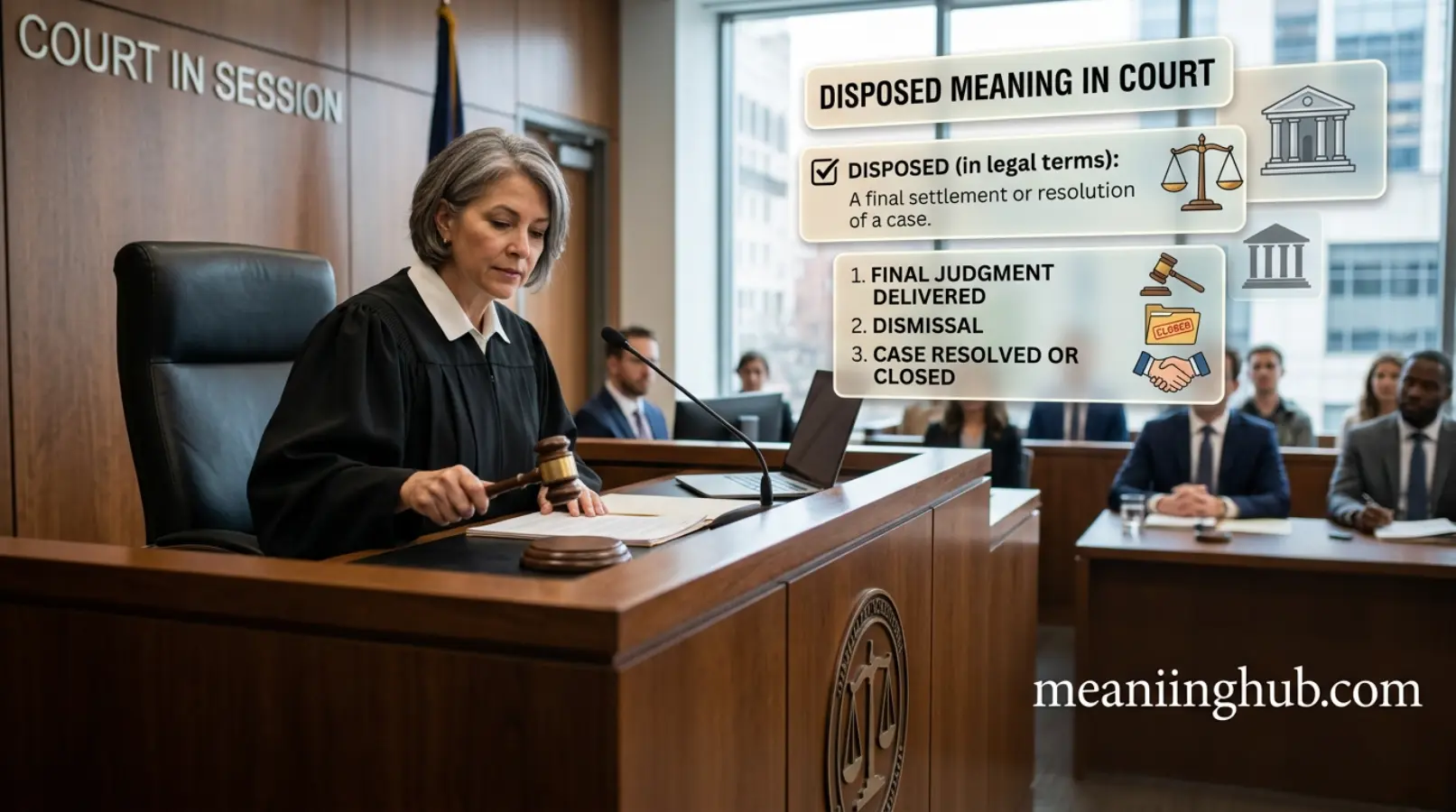
If you’ve checked the status of a court case online and noticed the word “disposed,” you may wonder what it actually means. Many people assume it means the case was dismissed or someone automatically won or lost.
Understanding the disposed meaning in court is important because it tells you the current status of a legal case. If you’re involved in a civil lawsuit, criminal matter, family dispute, or consumer complaint, knowing what “disposed” means can help you understand what happened and what steps, if any, come next.
This guide explains the meaning of a disposed case in simple English, covers different types of case disposal, provides real-life examples, compares similar legal terms, and answers the most common questions.
Quick Answer:
Disposed meaning in court refers to a case that has been officially completed by the court.
What Does Disposed Mean in Court?
In legal terms, disposed means that the court has finished handling a case.
- A final judgment after a trial
- A settlement between the parties
- A dismissal
- A plea agreement in a criminal case
- Withdrawal of the case
- Any other legal order that officially closes the matter
Simply put, a disposed case is one that has reached its legal conclusion.
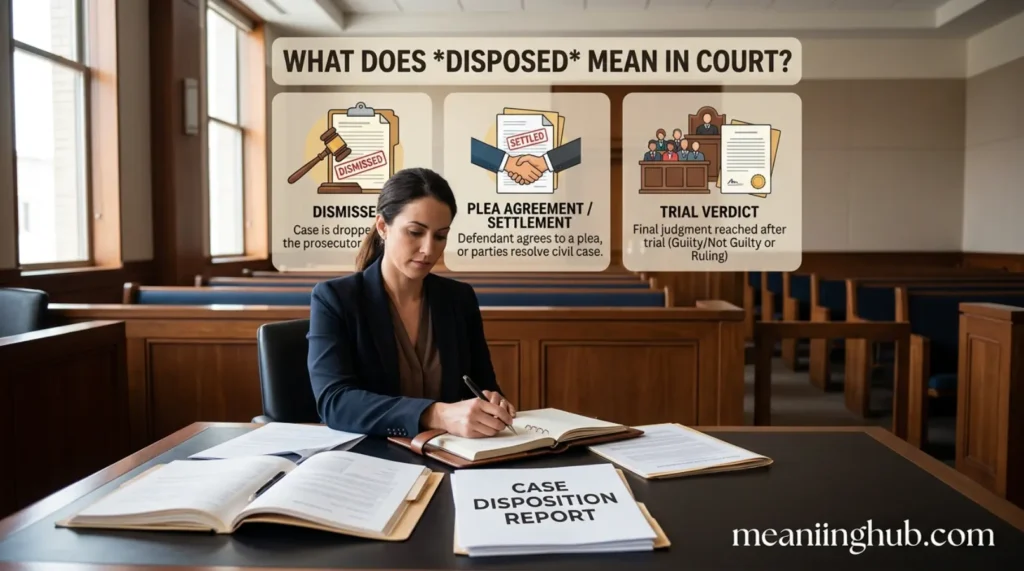
Disposed Meaning in Court: Full Definition
The disposed meaning in court is:
It does not describe the outcome itself. I
Does Disposed Mean the Case Was Dismissed?
No.
This is one of the biggest misconceptions.
Many people think a disposed case automatically means the judge dismissed it.
A disposed case may have been:
- Won by the plaintiff
- Won by the defendant
- Dismissed
- Settled
- Withdrawn
- Closed after sentencing
- Resolved through mediation
Always read the final court order to understand the actual result.
Different Types of Case Disposal
1. Disposed After Judgment
The judge hears the evidence and issues a final decision.
Example:
- The court awards damages to the plaintiff.
- The defendant is found not liable.
2. Disposed by Settlement
The parties agree to resolve the dispute outside the courtroom.
Example:
- Two businesses settle a contract dispute.
- The court records the settlement and closes the case.
3. Disposed by Dismissal
The judge dismisses the case for legal reasons.
Possible reasons include:
- Lack of evidence
- Failure to appear
- Lack of jurisdiction
- Procedural errors
4. Disposed After Plea
In criminal court, the accused may plead guilty or no contest.
The judge accepts the plea, imposes a sentence, and disposes of the case.
5. Disposed After Withdrawal
Sometimes the person who filed the case decides to withdraw it.
The court accepts the withdrawal and marks the case as disposed.
Is “Disposed” Good or Bad?
Neither.
The word itself is neutral.
For example:
- Losing the case may be disappointing.
- A settlement could benefit both parties.
The status only tells you the case has ended.
Where Is “Disposed” Commonly Used?
The term appears in many legal situations.
These include:
- Civil courts
- Criminal courts
- Family courts
- Consumer courts
- Labor courts
- Tax tribunals
- Administrative courts
- Small claims courts
- Online court case portals
- Pending
- Listed
- Reserved
- Disposed
Real-Life Examples of “Disposed” in Court
Here are some practical examples.
Example 1: Civil Lawsuit
A customer sues a contractor over unfinished work.
After hearing both sides, the judge awards compensation.
The case status becomes Disposed.
Example 2: Criminal Case
A defendant pleads guilty to a traffic offense.
The judge imposes a fine.
The case is marked Disposed.
Example 3: Divorce Case
The court approves the agreement.
The case is disposed.
Example 4: Consumer Complaint
The court records the settlement.
The complaint is disposed.
Difference Between Disposed and Pending
Many people confuse these two legal terms.
| Term | Meaning |
|---|---|
| Pending | The case is still active and waiting for a decision. |
| Disposed | The case has been completed and officially closed. |
Pending cases continue through the legal process.
Disposed cases have reached an official conclusion.
Difference Between Disposed and Closed
| Term | Meaning |
|---|---|
| Disposed | The court has resolved the legal issues. |
| Closed | Administrative work on the case is complete. |
Difference Between Disposed and Dismissed
This distinction is very important.
| Disposed | Dismissed |
|---|---|
| Refers to any completed case | Refers to one specific outcome |
| Includes settlements, judgments, pleas, and dismissals | Means the court threw out the case |
| Neutral status | Specific legal decision |
Every dismissed case is disposed.
What Happens After a Case Is Disposed?
Several things may happen depending on the judgment.
Possible next steps include:
- Paying compensation
- Serving a sentence
- Filing an appeal
- Enforcing the judgment
- Completing settlement terms
- Closing legal records
Sometimes the case ends completely.
Other times, an appeal begins a new stage of litigation.
Can a Disposed Case Be Reopened?
Sometimes.
- New evidence is discovered.
- A higher court orders reconsideration.
- A legal error occurred.
- An appeal is successful.
Why Do Courts Mark Cases as Disposed?
Courts use disposal status to:
- Track completed cases
- Update public records
- Reduce pending case statistics
- Improve court administration
- Help parties know the current status
It simply shows that judicial work on that particular case has finished.
Common Reasons People Search for “Disposed Meaning in Court”
- Checking court records online
- Reading legal notices
- Reviewing criminal case updates
- Looking up consumer court complaints
- Monitoring family court proceedings
Real-Life Examples of Usage
Friendly Conversation
“My court case finally got disposed last week.”
Casual Discussion
“The judge disposed of the case after both sides reached a settlement.”
Legal Office
“The file shows the matter has already been disposed.”
Social Media
“I checked my case status online, and it says ‘disposed.’ Does that mean it’s over?”
Argumentative Context
“The case wasn’t dismissed—it was disposed after the judge issued the final judgment.”
Similar Legal Terms Comparison
| Legal Term | Meaning | Case Status |
|---|---|---|
| Disposed | Officially completed | Closed |
| Pending | Still being heard | Active |
| Dismissed | Thrown out by the court | Closed |
| Adjourned | Delayed to another date | Active |
| Reserved for Judgment | Judge will announce the decision later | Active |
| Closed | Administrative process completed | Finished |
When Should You Be Careful Interpreting “Disposed”?
Do not assume the outcome without reading the court order.
The word “disposed” alone does not tell you:
- Who won
- Who lost
Always review the official judgment for complete details.
Why Understanding Legal Terms Matters
Legal terminology can affect important decisions.
Knowing the meaning of terms like disposed, dismissed, pending, and judgment helps you:
- Understand court updates
- Follow legal proceedings
- Avoid misunderstandings
- Communicate more confidently with lawyers
- Interpret online case status correctly
A basic understanding of legal language can make the court process much less confusing.
Is It Safe to Share Court Status on Social Media?
Yes, but be cautious.
If you share that a case has been disposed:
- Verify the information first.
- Avoid sharing confidential legal documents.
- Respect court privacy rules.
- Do not misrepresent the outcome.
- Wait until official records are available if necessary.
Sharing inaccurate legal information can create confusion or misunderstandings.
FAQs
What does disposed mean in court?
It means the court has officially completed the case, and it is no longer pending.
Does disposed mean someone won?
Not necessarily. It only means the case has ended.
Is a disposed case the same as dismissed?
No. A dismissed case is one type of disposed case, but many disposed cases end through judgments or settlements.
Can I appeal after a case is disposed?
Yes.
Is a disposed case completely over?
Usually yes, but some cases continue through appeals or enforcement proceedings.
Can I check why my case was disposed?
Yes. Review the final court order, judgment, or official case records to understand the exact reason and outcome.
Conclusion
Understanding the disposed meaning in court helps you interpret court records and legal case updates more accurately. When a case is marked as disposed, it simply means the court has finished handling it and the matter is no longer active.
Always read the final judgment or court order to understand the actual outcome. By knowing the difference between terms like disposed, pending, and dismissed, you can better navigate legal information and avoid common misunderstandings. Whether you’re checking your own case or learning about the legal system, understanding these terms makes court proceedings much easier to follow.

Alexander Ford is a passionate writer who specializes in modern text slang, internet culture, and digital communication trends. He is known for his simple, engaging, and reader-friendly writing style that makes online language easy to understand. With a love for research and creativity, Alexander enjoys helping readers stay updated with the latest social media expressions and texting terms.