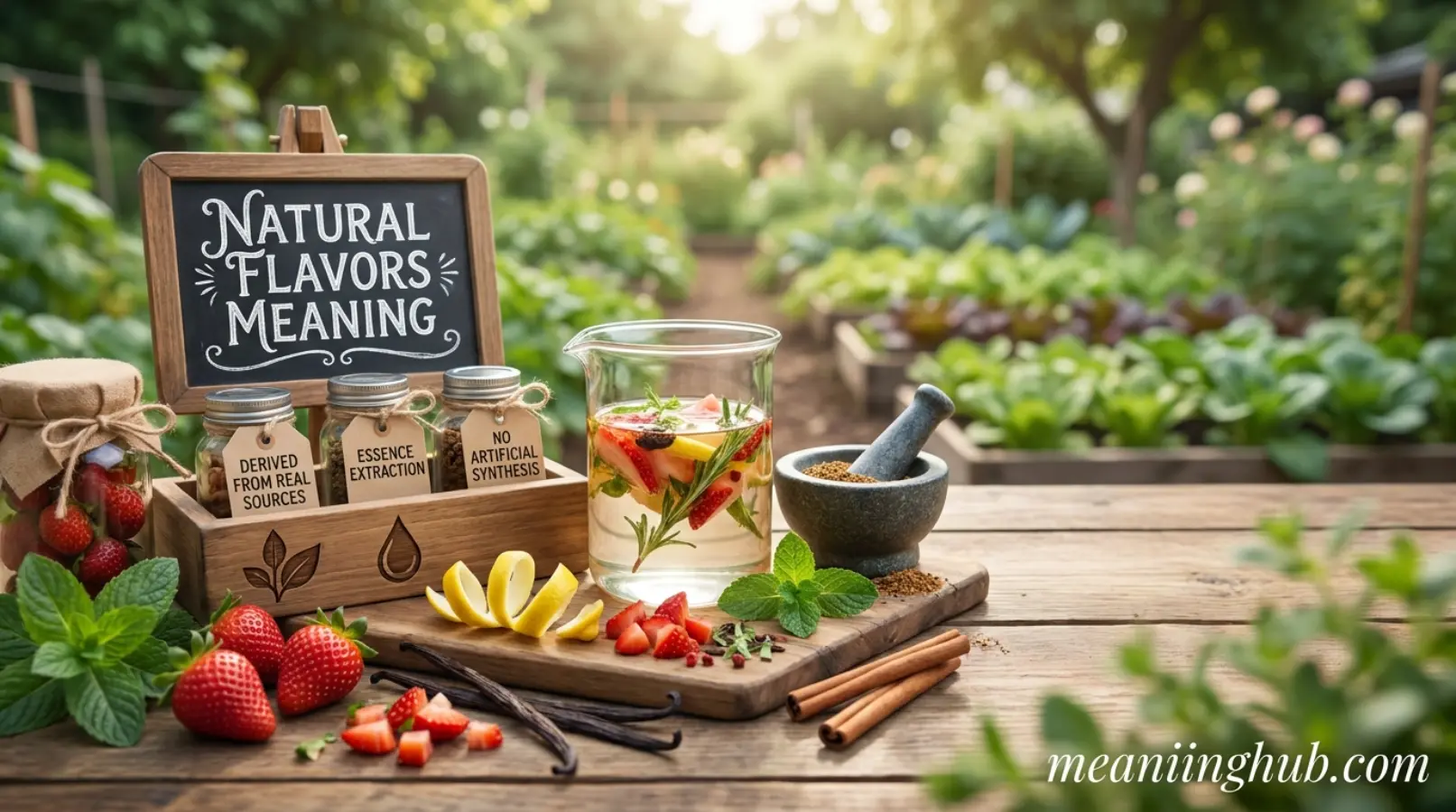
Natural Flavors Meaning is a common search because many people notice the words “natural flavors” on food labels but are not sure what they actually mean. Some believe they are simply fruits or herbs, while others think they are artificial ingredients with a different name. The truth is more detailed and worth understanding.
If you care about healthy eating, food labels, or ingredient lists, knowing the meaning of natural flavors can help you make better choices. This guide explains what natural flavors are, how manufacturers use them, and clears up some of the biggest myths surrounding them.
Quick Answer:
Natural flavors are flavoring ingredients made from natural sources such as fruits, vegetables, herbs, spices, meat, seafood, dairy, or plants. They are processed to enhance the taste of food without adding significant nutrition.
What Does Natural Flavors Mean?
Natural flavors refer to flavoring substances that come from natural sources instead of being created entirely through chemical synthesis.
Their main purpose is to improve or restore the taste of foods and beverages. They are added in very small amounts, so they usually do not affect the nutritional value of a product.
For example, a strawberry yogurt may contain natural flavors that strengthen the strawberry taste, even if the yogurt already contains real strawberries.
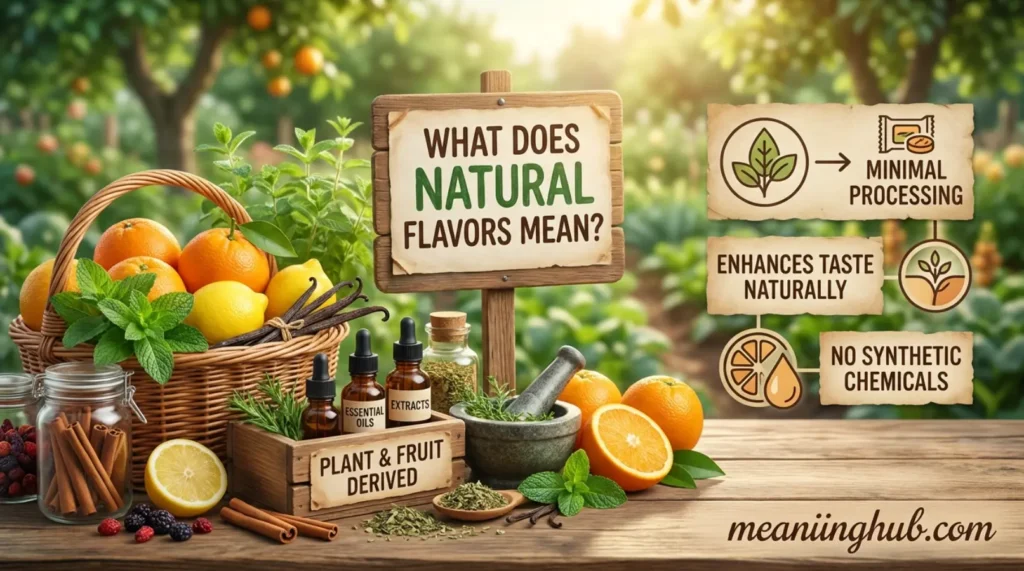
Natural Flavors Definition
A simple definition is:
Natural flavors are ingredients extracted from natural sources and processed to provide flavor in foods and drinks.
Natural flavor sources include:
- Fruits
- Vegetables
- Herbs
- Spices
- Flowers
- Seeds
- Leaves
- Meat
- Poultry
- Seafood
- Dairy products
- Fermented ingredients
The source is natural, but manufacturers often use modern food-processing methods to isolate the compounds responsible for flavor.
Natural Flavors Full Meaning
Unlike internet abbreviations, “natural flavors” is not an acronym or slang.
Instead, it is a labeling term used in the food industry to describe flavoring ingredients derived from natural materials.
People often search:
- Natural flavors meaning
- What are natural flavors?
- Natural flavors definition
- What do natural flavors mean on food labels?
All of these questions refer to the same concept.
How Are Natural Flavors Made?
Natural flavors begin with ingredients found in nature.
Food scientists identify the compounds responsible for a particular taste or aroma. They then extract these compounds using approved methods.
The extracted flavors may be:
- Distilled
- Heated
- Fermented
- Roasted
- Pressed
- Enzyme-treated
After extraction, the flavor is purified and blended before being added to food products.
Although processing is involved, the original source must be natural.
Where Are Natural Flavors Commonly Used?
Natural flavors appear in thousands of packaged foods.
You can find them in:
- Soft drinks
- Sparkling water
- Yogurt
- Ice cream
- Breakfast cereals
- Granola bars
- Protein shakes
- Chips
- Sauces
- Salad dressings
- Candy
- Frozen meals
- Snack foods
- Plant-based foods
Manufacturers use them to create a consistent taste every time you buy the product.
Why Do Companies Use Natural Flavors?
There are several reasons manufacturers include natural flavors.
Better Taste
Natural flavors help foods taste richer, fresher, or more enjoyable.
Consistency
Natural ingredients like fruits vary from season to season. Natural flavors help maintain the same taste year-round.
Restore Lost Flavor
Processing, freezing, or cooking can reduce natural taste. Flavoring helps replace what was lost.
Product Innovation
Food companies can develop unique flavor combinations without changing the main ingredients.
Are Natural Flavors Artificial?
No.
Natural flavors and artificial flavors are different because of where they come from.
Natural flavors originate from natural sources.
Artificial flavors are created from synthetic chemicals in laboratories, even if they taste nearly identical.
Interestingly, both may contain similar flavor molecules. The biggest difference is their source.
Natural Flavors vs Artificial Flavors
| Feature | Natural Flavors | Artificial Flavors |
|---|---|---|
| Source | Plants, animals, herbs, fruits, spices | Synthetic chemicals |
| Origin | Natural materials | Laboratory-made |
| Purpose | Improve flavor | Improve flavor |
| Nutrition | Very little | Very little |
| Taste | Often identical | Often identical |
Are Natural Flavors Healthy?
Natural flavors are generally considered safe when used according to food safety regulations.
However, “natural” does not automatically mean healthier.
Remember:
- They do not provide significant vitamins.
- They are not health supplements.
- They mainly improve taste.
- They are used in tiny amounts.
A food containing natural flavors can still be high in sugar, salt, or fat.
Always evaluate the entire nutrition label rather than focusing on one ingredient.
Are Natural Flavors Vegan?
Sometimes yes, but not always.
Natural flavors may come from:
Vegan sources
- Fruits
- Vegetables
- Herbs
- Spices
- Plants
Animal sources
- Milk
- Meat
- Chicken
- Fish
- Eggs
Unless a product specifically states “vegan,” it can be difficult to know the exact source of every natural flavor.
Are Natural Flavors Safe for People With Allergies?
This depends on the source.
Most natural flavors are highly processed, but some may still involve ingredients related to common allergens.
People with severe allergies should:
- Read ingredient labels carefully.
- Contact the manufacturer if necessary.
- Follow advice from healthcare professionals.
Common Foods That Contain Natural Flavors
Here are some everyday examples.
| Food | May Contain Natural Flavors |
|---|---|
| Flavored yogurt | Yes |
| Soda | Yes |
| Fruit juice | Sometimes |
| Potato chips | Yes |
| Ice cream | Yes |
| Cookies | Yes |
| Candy | Yes |
| Energy drinks | Yes |
| Protein bars | Yes |
| Breakfast cereal | Yes |
Common Misunderstandings About Natural Flavors
Many myths circulate online.
Myth 1: Natural Means Unprocessed
False.
Natural flavors usually go through multiple processing steps before reaching food manufacturers.
Myth 2: Natural Flavors Are Always Better
Not necessarily.
They improve taste but do not automatically make a food healthier.
Myth 3: Natural Flavors Are Just Fruit Juice
False.
Natural flavors can come from many different natural sources, including herbs, spices, dairy, seafood, and meat.
Myth 4: Natural Flavors Add Nutrition
False.
They contribute flavor rather than vitamins or minerals.
Real-Life Examples
Grocery Shopping
“I noticed natural flavors on the cereal box and wanted to know what they meant.”
Healthy Eating
“This snack contains natural flavors, but I still checked the sugar content.”
Reading Labels
“My nutrition coach explained that natural flavors improve taste without adding nutrition.”
Online Discussion
“Many people assume natural flavors are artificial, but the source is actually natural.”
Food Review
“The drink has natural flavors that make the fruit taste stronger.”
Why Do People Search for Natural Flavors Meaning?
People search this term because they want to:
- Understand ingredient labels.
- Make healthier food choices.
- Compare natural and artificial flavors.
- Learn about food manufacturing.
- Avoid ingredients they do not recognize.
- Understand what they are eating.
When Should You Pay Attention to Natural Flavors?
Natural flavors alone are usually not a reason to avoid a product.
Instead, pay attention to:
- Total sugar
- Sodium
- Saturated fat
- Calories
- Protein
- Fiber
- Overall ingredient quality
Looking at the complete nutrition label provides a more accurate picture of a food’s health value.
Is It Safe to Consume Foods With Natural Flavors?
For most people, yes.
Food safety authorities regulate the use of natural flavors in packaged foods.
As with any ingredient, moderation is important. Eating a balanced diet with plenty of whole foods remains the healthiest approach.
Related Terms
People also search for:
- Natural flavors definition
- What are natural flavors
- Natural flavors ingredients
- Natural flavors vs artificial flavors
- Natural flavoring
- Food label ingredients
- Natural flavors explained
- Are natural flavors healthy
FAQs
What is the meaning of natural flavors?
Natural flavors are flavoring ingredients extracted from natural sources such as fruits, vegetables, herbs, spices, dairy, or meat to improve the taste of foods.
Are natural flavors the same as artificial flavors?
No. Natural flavors come from natural sources, while artificial flavors are made from synthetic chemicals.
Do natural flavors contain real fruit?
Sometimes. They can come from fruit, but they may also come from vegetables, herbs, spices, dairy products, or animal sources.
Are natural flavors safe?
Yes. They are generally recognized as safe when used according to food safety regulations.
Do natural flavors make food healthier?
No. They improve flavor but usually add little or no nutritional value.
Can vegans eat foods with natural flavors?
Some products are vegan, while others may use animal-derived natural flavors. Look for certified vegan labels if this is important to you.
Conclusion
Understanding the Natural Flavors Meaning helps you read food labels with greater confidence. Natural flavors are ingredients derived from natural sources and processed to enhance the taste of foods and beverages. They are different from artificial flavors because of their origin, not necessarily because of their chemical composition.
While natural flavors are generally considered safe and widely used in the food industry, they should be viewed as flavor enhancers rather than health ingredients. The best way to evaluate any food is by looking at its complete nutrition profile, ingredient list, and how it fits into your overall diet. By understanding what natural flavors are and why manufacturers use them, you can make more informed choices every time you shop.

Alexander Ford is a passionate writer who specializes in modern text slang, internet culture, and digital communication trends. He is known for his simple, engaging, and reader-friendly writing style that makes online language easy to understand. With a love for research and creativity, Alexander enjoys helping readers stay updated with the latest social media expressions and texting terms.