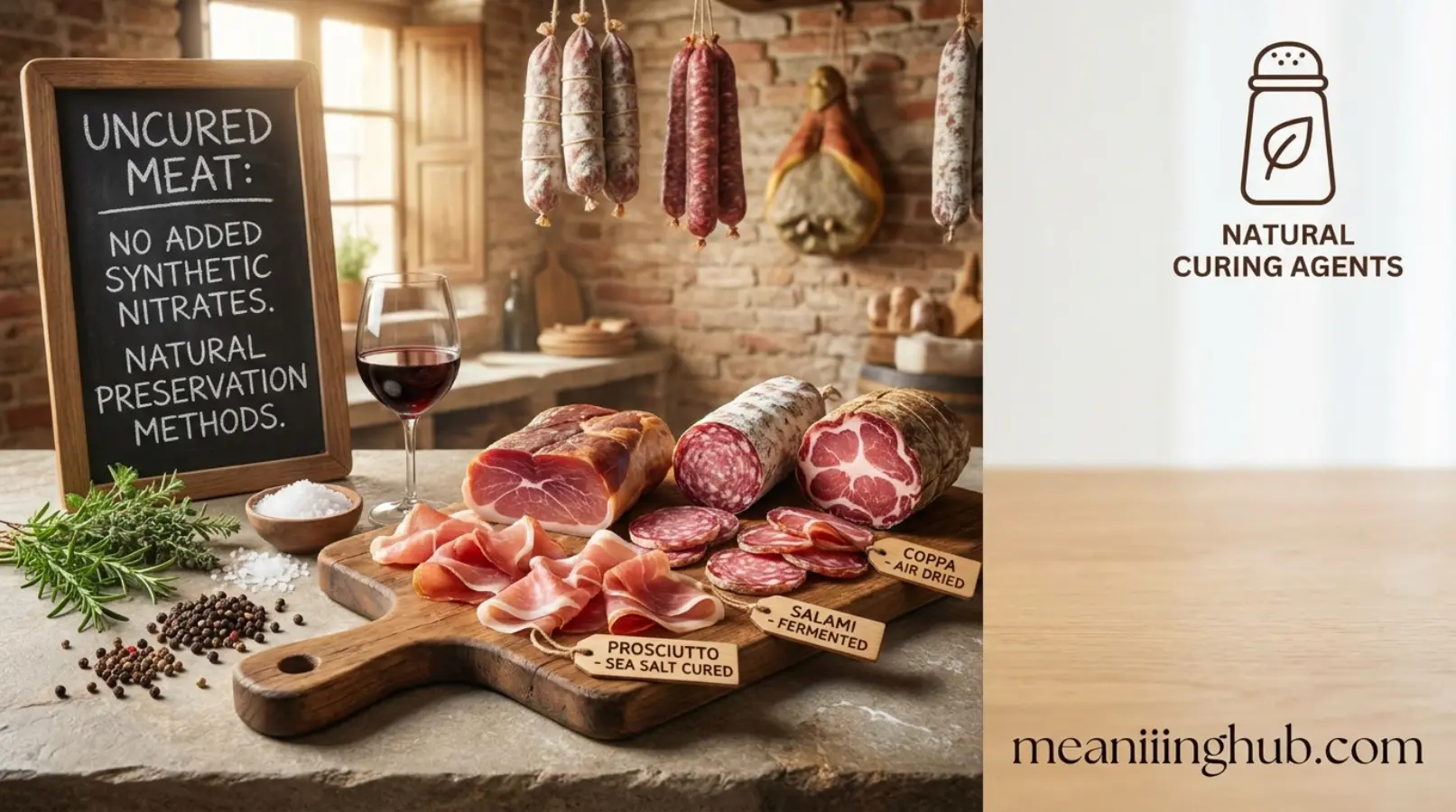
Uncured Meat Meaning is a common search because food labels can be confusing. Many people see the word “uncured” on bacon, ham, hot dogs, or deli meats and assume it means the product contains no preservatives at all. In reality, the meaning is more complex. Understanding this label helps you make informed choices about the food you buy and eat.
If you’ve ever wondered if uncured meat is healthier, safer, or more natural than cured meat, you’re not alone. This guide explains everything in simple language, including how uncured meat is made, why manufacturers use the label, and what it means for your health.
Quick Answer:
Uncured meat is meat preserved without synthetic nitrates or nitrites. Instead, it is usually cured with natural sources such as celery powder or sea salt, which still help preserve the meat.
What Is the Uncured Meat Meaning?
The uncured meat meaning refers to meat that has not been preserved using artificial or synthetic curing agents like sodium nitrite or sodium nitrate.
Instead, manufacturers use natural ingredients that contain naturally occurring nitrates. These ingredients perform the same basic function as synthetic curing agents by helping preserve the meat, improve its color, and reduce the growth of harmful bacteria.
Although the label says “uncured,” the meat is still preserved. The main difference lies in the source of the curing ingredients.
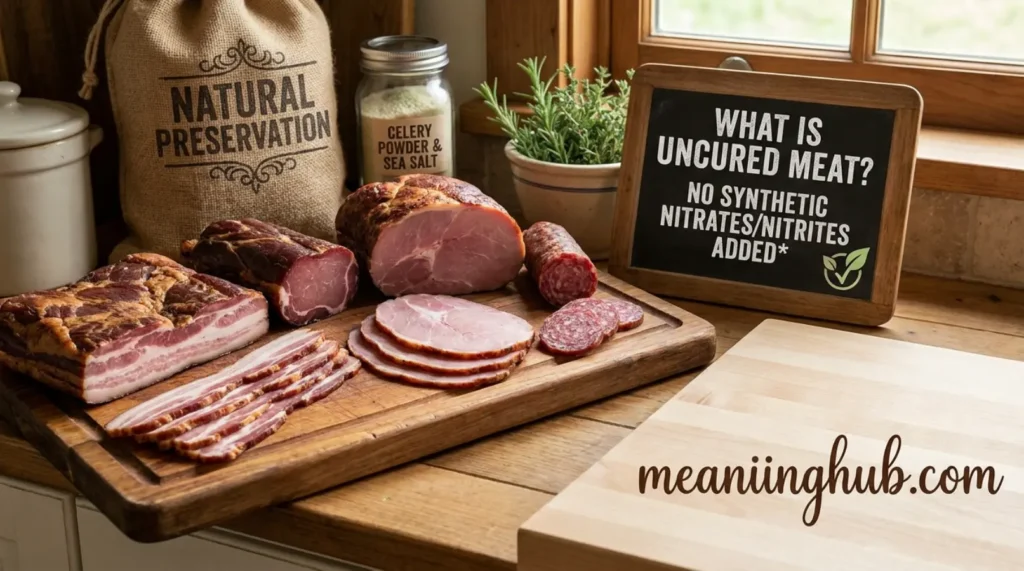
Uncured Meat Definition
In simple words:
Uncured meat is meat preserved using natural sources of nitrates instead of synthetic chemical preservatives.
Common examples include:
- Uncured bacon
- Uncured ham
- Uncured hot dogs
- Uncured sausage
- Uncured deli turkey
- Uncured salami
Why Is It Called “Uncured”?
This is one of the biggest sources of confusion.
Food regulations require products made without synthetic nitrates or nitrites to be labeled as uncured, even though natural curing ingredients are often used.
For example, manufacturers may use:
- Celery powder
- Celery juice
- Beet powder
- Sea salt
- Cherry powder
These natural ingredients contain nitrates that convert into nitrites during processing.
So, while the label says “uncured,” the meat still undergoes a curing process using natural ingredients.
How Is Uncured Meat Made?
The production process is similar to cured meat, except the preservatives come from natural sources.
The basic steps include:
- Selecting fresh meat
- Adding salt and natural curing ingredients
- Seasoning with herbs and spices
- Allowing the curing process to occur
- Smoking or cooking if required
- Packaging for sale
This process helps extend shelf life while maintaining flavor and texture.
Uncured Meat vs. Cured Meat
| Feature | Uncured Meat | Cured Meat |
|---|---|---|
| Preservatives | Natural sources | Synthetic nitrates or nitrites |
| Label | Uncured | Cured |
| Flavor | Very similar | Traditional cured flavor |
| Shelf Life | Often slightly shorter | Usually longer |
| Color | Slightly less uniform | Bright pink color |
| Processing | Natural curing agents | Artificial curing agents |
Is Uncured Meat Healthier?
Many shoppers believe uncured meat is automatically healthier.
The answer is not necessarily.
Both cured and uncured meats often contain:
- Salt
- Fat
- Protein
- Natural or synthetic nitrites
- Similar calorie counts
The biggest difference is where the nitrates come from.
Research suggests your overall diet matters much more than choosing cured versus uncured meat alone.
Does Uncured Meat Contain Nitrates?
Yes.
This surprises many people.
Natural ingredients like celery powder contain nitrates that become nitrites during processing.
As a result, uncured meat may contain nitrate levels similar to conventionally cured meat.
The label simply means the nitrates are naturally derived rather than synthetically produced.
Is Uncured Meat Safe?
Yes.
When handled and cooked properly, uncured meat is considered safe to eat.
Manufacturers follow food safety regulations to ensure products remain protected from harmful bacteria.
As with any meat product:
- Keep refrigerated
- Check expiration dates
- Cook properly when required
- Avoid cross-contamination
- Store leftovers safely
Common Foods Labeled as Uncured
You may find the word uncured on products like:
- Bacon
- Ham
- Turkey slices
- Chicken sausage
- Beef sausage
- Pepperoni
- Salami
- Hot dogs
- Lunch meat
Many grocery stores now carry both cured and uncured versions.
Why Do Companies Sell Uncured Meat?
Food companies know many consumers prefer products with simple ingredient lists.
People often associate natural ingredients with healthier lifestyles.
Using natural curing ingredients allows companies to market products as containing:
- No artificial nitrates
- No synthetic preservatives
- More natural ingredients
- Cleaner labels
This appeals to health-conscious shoppers.
Does Uncured Meat Taste Different?
Usually, the difference is very small.
Many people cannot tell the difference during a taste test.
Flavor depends more on:
- Smoking method
- Seasoning
- Meat quality
- Cooking style
- Brand
Some uncured meats may have a slightly different texture or color, but the overall taste remains very similar.
Why Is Uncured Meat More Expensive?
Several factors can increase the price.
These include:
- Premium natural ingredients
- Specialty production methods
- Organic sourcing
- Smaller production batches
- Higher manufacturing costs
For these reasons, uncured products often cost more than traditional cured meats.
Common Myths About Uncured Meat
Myth 1: Uncured Means No Preservatives
False.
Natural preservatives are commonly used.
Myth 2: Uncured Meat Is Completely Chemical-Free
False.
Everything, including natural foods, contains chemicals. The difference is the source of the ingredients.
Myth 3: Uncured Meat Never Contains Nitrites
False.
Natural nitrates often convert into nitrites during processing.
Myth 4: Uncured Meat Is Always Healthier
Not always.
Nutrition varies by brand and product.
Benefits of Choosing Uncured Meat
Some consumers prefer uncured products because they:
- Avoid synthetic preservatives
- Use recognizable ingredients
- Offer similar taste
- Fit clean-label diets
- Are widely available
Possible Drawbacks
There are also a few disadvantages.
These may include:
- Higher cost
- Shorter shelf life
- Similar sodium levels
- Similar nitrate exposure in some products
- Not significantly healthier in every case
How to Read an Uncured Meat Label
When shopping, look beyond the word uncured.
Read the ingredient list carefully.
Check for ingredients like:
- Celery juice powder
- Celery powder
- Sea salt
- Vinegar
- Beet powder
- Cherry powder
These indicate natural curing methods.
Also review:
- Sodium content
- Calories
- Serving size
- Protein
- Fat
Real-Life Examples
Grocery Shopping
“I bought uncured bacon because it uses natural curing ingredients.”
Family Breakfast
“We cooked uncured sausage with eggs this morning.”
Healthy Lifestyle
“She prefers uncured deli turkey for sandwiches.”
Reading Food Labels
“I didn’t realize uncured meat could still contain natural nitrates.”
Comparing Products
“The cured ham was cheaper, but I chose the uncured version.”
Who Should Choose Uncured Meat?
Uncured meat may be a good option for people who:
- Prefer natural ingredients
- Read food labels carefully
- Avoid synthetic preservatives
- Enjoy clean-label foods
- Want more ingredient transparency
However, choosing uncured meat does not automatically make a meal healthy.
A balanced diet remains the most important factor.
Tips for Buying Uncured Meat
Keep these tips in mind.
- Read the full ingredient list.
- Compare nutrition labels.
- Check sodium content.
- Buy from trusted brands.
- Store meat properly.
- Follow cooking instructions.
- Eat processed meats in moderation.
FAQs
What does uncured meat mean?
It means the meat is preserved using natural sources of nitrates instead of synthetic curing agents.
Is uncured meat healthier than cured meat?
Not always. Both types can have similar nutrition and nitrate levels.
Does uncured meat contain preservatives?
Yes. It often contains natural preservatives like celery powder and sea salt.
Can you eat uncured meat safely?
Yes. It is safe when produced, stored, and cooked according to food safety guidelines.
Why is uncured meat labeled uncured?
Food labeling rules require products made without synthetic nitrates or nitrites to use the term “uncured.”
Does uncured bacon taste different?
Most people notice very little difference. Flavor depends more on the recipe, seasoning, and cooking method.
Conclusion
The Uncured Meat Meaning is simpler than it first appears. Uncured meat is not completely free of curing ingredients. Instead, it uses natural sources of nitrates, such as celery powder, rather than synthetic preservatives. While many people choose uncured meat because they prefer natural ingredients, it is not automatically healthier than cured meat.
The best approach is to read food labels carefully, compare nutrition facts, and enjoy processed meats in moderation as part of a balanced diet. Understanding what “uncured” really means helps you make smarter choices the next time you shop for bacon, ham, sausage, or deli meat.

Alexander Ford is a passionate writer who specializes in modern text slang, internet culture, and digital communication trends. He is known for his simple, engaging, and reader-friendly writing style that makes online language easy to understand. With a love for research and creativity, Alexander enjoys helping readers stay updated with the latest social media expressions and texting terms.