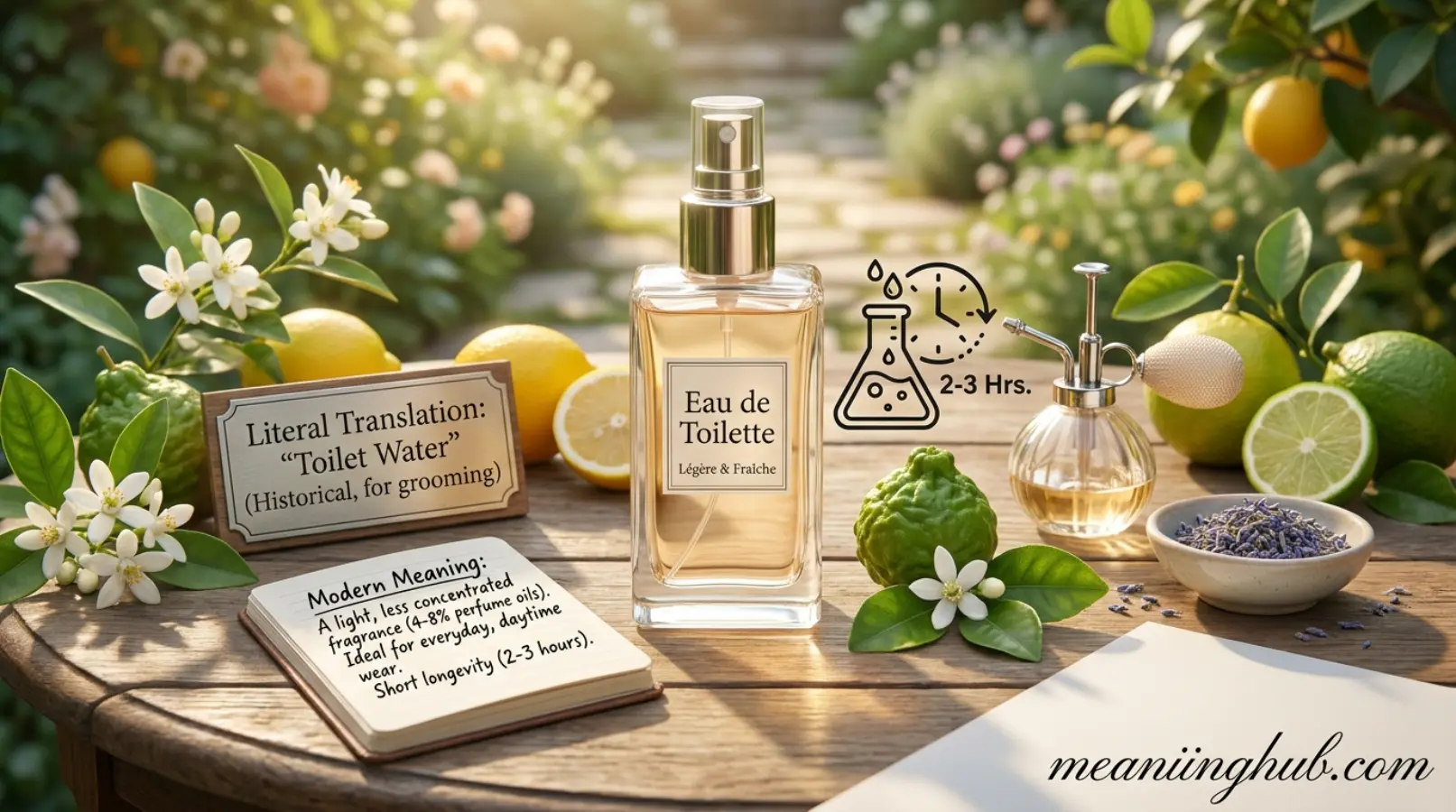
Eau de Toilette Meaning is one of the most searched perfume-related terms because many people see “EDT” on fragrance bottles but are not sure what it actually means. If you have ever wondered why some perfumes last longer than others or why certain fragrances are labeled Eau de Toilette instead of Eau de Parfum, you are not alone.
Understanding perfume labels can help you choose the right fragrance for work, casual outings, special events, or everyday wear. In this guide, you’ll learn what Eau de Toilette means, how it compares to other fragrance types, when to use it, and why it remains one of the most popular perfume choices worldwide.
Quick Answer:
Eau de Toilette is a type of fragrance that contains a moderate concentration of perfume oils, usually around 5% to 15%. It offers a fresh, light scent that typically lasts 3 to 6 hours, making it ideal for daily use.
What Does Eau de Toilette Mean?
The term Eau de Toilette comes from French.
- Eau means “water.”
- Toilette refers to the process of getting ready or grooming.
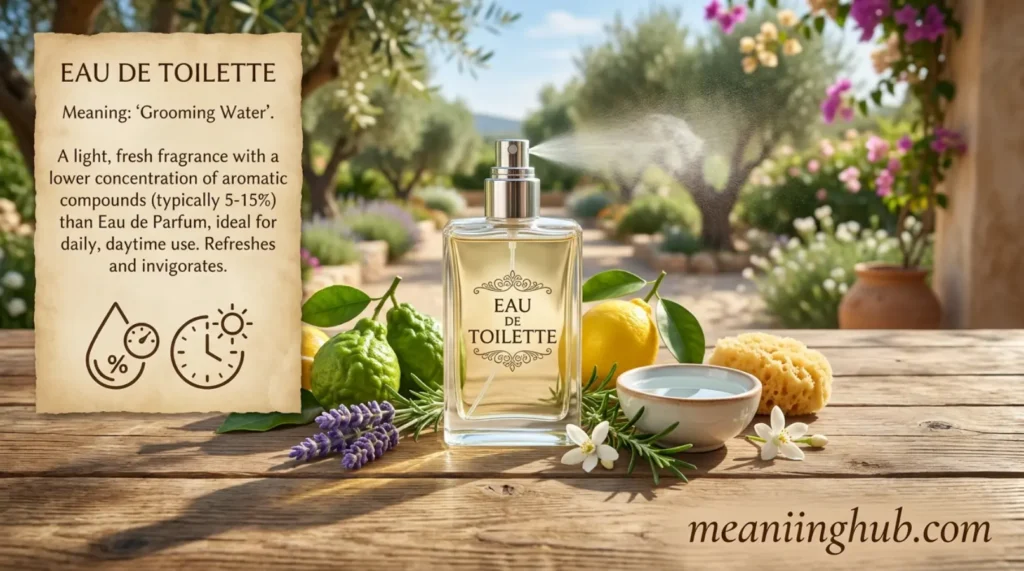
So, Eau de Toilette literally means “grooming water.” It does not refer to a bathroom or toilet as many English speakers mistakenly believe.
In modern fragrance terminology, Eau de Toilette describes a perfume with a medium strength. It provides a noticeable scent without being too heavy or overpowering.
Eau de Toilette Full Meaning
Many people search for Eau de Toilette full form, but it is important to know that it is not an abbreviation.
Instead, it is a complete French phrase that translates to grooming water or water used during personal grooming.
Today, the term simply identifies a fragrance with a moderate concentration of scented oils.
Eau de Toilette Pronunciation
Many people are unsure how to pronounce it correctly.
The common English pronunciation is:
“Oh duh twah-LET.”
You may also hear a pronunciation that sounds closer to French, but both are widely understood.
What Is the Concentration of Eau de Toilette?
One of the biggest differences between fragrance types is the amount of perfume oil they contain.
| Fragrance Type | Perfume Oil Concentration | Average Lasting Time |
|---|---|---|
| Eau Fraiche | 1–3% | 1–2 hours |
| Eau de Cologne | 2–5% | 2–3 hours |
| Eau de Toilette | 5–15% | 3–6 hours |
| Eau de Parfum | 15–20% | 6–8 hours |
| Parfum | 20–40% | 8–12+ hours |
As you can see, Eau de Toilette sits comfortably in the middle. It balances freshness, affordability, and longevity.
Why Is Eau de Toilette So Popular?
Millions of people choose Eau de Toilette because it offers several benefits.
Some of the main advantages include:
- Light and refreshing scent
- Comfortable for everyday use
- Less overwhelming than stronger perfumes
- Usually more affordable
- Suitable for warm weather
- Easy to reapply during the day
How Long Does Eau de Toilette Last?
Most Eau de Toilette fragrances last between 3 and 6 hours.
However, several factors affect longevity:
- Your skin type
- Weather conditions
- Humidity
- Fragrance ingredients
- Where you apply it
People with oily skin often notice that fragrances last longer than they do on dry skin.
Where Should You Apply Eau de Toilette?
For the best performance, spray Eau de Toilette on your pulse points.
These include:
- Wrists
- Neck
- Behind the ears
- Inside the elbows
- Chest
Avoid rubbing your wrists together after spraying because it can reduce the fragrance’s natural development.
Eau de Toilette vs Eau de Parfum
This is one of the most common perfume questions.
| Feature | Eau de Toilette | Eau de Parfum |
|---|---|---|
| Strength | Medium | Strong |
| Oil Content | 5–15% | 15–20% |
| Lasting Time | 3–6 hours | 6–8 hours |
| Best For | Daily wear | Evening or special occasions |
| Price | Usually lower | Usually higher |
If you want something fresh for work or school, Eau de Toilette is often the better choice.
If you want a fragrance that lasts all day or night, Eau de Parfum may be worth the extra cost.
Eau de Toilette vs Cologne
People often confuse these two fragrance types.
Eau de Toilette
- Stronger scent
- Longer lasting
- Suitable for everyday use
- More concentrated
Cologne
- Lighter fragrance
- Lower perfume oil concentration
- Refreshing
- Often needs frequent reapplication
Today, many brands use the word “Cologne” mainly for men’s fragrances regardless of concentration, so labels can sometimes be confusing.
Is Eau de Toilette Strong?
No.
Eau de Toilette is generally considered moderately strong.
It is noticeable without being overpowering, making it suitable for:
- Offices
- Schools
- Shopping
- Lunch dates
- Daily errands
- Family gatherings
Most people find it comfortable to wear around others.
Is Eau de Toilette Better Than Perfume?
There is no universal answer.
The better option depends on your needs.
Choose Eau de Toilette if you want:
- A lighter scent
- Everyday fragrance
- Lower price
- Fresh feeling
- Easy layering
Choose stronger perfumes if you want:
- Longer wear
- Richer fragrance
- Formal occasions
- Evening events
Both have their place in a fragrance collection.
When Should You Wear Eau de Toilette?
Eau de Toilette works well in many situations.
It is ideal for:
- Office work
- College
- School
- Spring
- Summer
- Daytime events
- Casual meetings
- Weekend outings
Its lighter composition makes it especially pleasant during warmer months.
Real Life Examples
Here are some examples showing how people naturally talk about Eau de Toilette.
Friendly Conversation
“I bought the Eau de Toilette version because I wanted something light for everyday wear.”
Shopping Discussion
“This Eau de Toilette smells amazing, but I might choose the Eau de Parfum if I need longer lasting fragrance.”
Beauty Review
“The scent stayed on my skin for almost five hours. That’s pretty good for an Eau de Toilette.”
Social Media Post
“My new Eau de Toilette has become my favorite daily fragrance.”
Gift Recommendation
“If you’re buying someone’s first perfume, an Eau de Toilette is usually a safe choice.”
Is Eau de Toilette Offensive or Neutral?
The term Eau de Toilette is completely neutral.
It is a professional fragrance classification used by perfume manufacturers around the world.
Although the word “toilette” may sound unusual to English speakers, it has no offensive meaning in French.
Where Is Eau de Toilette Commonly Used?
You will commonly see this term in:
- Perfume stores
- Department stores
- Beauty websites
- Online shopping platforms
- Fashion magazines
- Fragrance reviews
- Cosmetic brands
- Gift guides
It is one of the most recognized fragrance labels globally.
Why Do People Choose Eau de Toilette?
There are many reasons people prefer it.
Popular reasons include:
- Comfortable daily fragrance
- Affordable pricing
- Fresh scent profile
- Easy to wear at work
- Suitable for hot weather
- Less overwhelming in crowded places
Many fragrance enthusiasts even own both Eau de Toilette and Eau de Parfum versions of the same perfume.
Is Eau de Toilette Safe for Social Media?
Yes.
The phrase is completely safe to use on:
- TikTok
- YouTube
- Snapchat
- X
- Beauty blogs
It is a standard fragrance term and carries no hidden or offensive meaning.
Similar Fragrance Terms
Understanding related perfume labels makes shopping much easier.
| Term | Meaning | Strength |
|---|---|---|
| Eau Fraiche | Very light fragrance | Very Light |
| Eau de Cologne | Fresh fragrance | Light |
| Eau de Toilette | Medium strength fragrance | Moderate |
| Eau de Parfum | Strong fragrance | Strong |
| Parfum | Highest fragrance concentration | Very Strong |
Knowing these differences helps you choose the fragrance that matches your lifestyle.
Common Myths About Eau de Toilette
Myth 1: It Means Bathroom Water
False.
The French word “toilette” originally refers to personal grooming, not a bathroom.
Myth 2: It Is Only for Men
False.
Both men’s and women’s fragrances are available as Eau de Toilette.
Myth 3: It Is Poor Quality
False.
Many luxury perfume brands sell Eau de Toilette versions of their most popular fragrances.
Myth 4: It Does Not Last
False.
Most Eau de Toilette fragrances provide several hours of wear, which is ideal for everyday activities.
Tips for Making Eau de Toilette Last Longer
Try these simple techniques:
- Moisturize your skin before applying.
- Spray pulse points.
- Store the bottle away from heat and sunlight.
- Avoid rubbing the fragrance after spraying.
- Reapply later in the day if needed.
These habits can improve fragrance performance without using extra product.
FAQs
What does Eau de Toilette mean?
Eau de Toilette is a French fragrance category containing around 5% to 15% perfume oil. It offers a fresh scent that usually lasts 3 to 6 hours.
Is Eau de Toilette stronger than Eau de Parfum?
No. Eau de Parfum has a higher concentration of fragrance oils and typically lasts longer.
Is Eau de Toilette good for daily use?
Yes. Its light and refreshing scent makes it one of the best choices for everyday wear.
Why is it called Eau de Toilette?
Yes. Eau de Toilette is available in fragrances designed for men, women, and unisex wear.
Does Eau de Toilette expire?
Yes. Most fragrances remain in good condition for about three to five years if stored properly in a cool, dark place.
Conclusion
Understanding the Eau de Toilette Meaning makes choosing the right fragrance much easier. Eau de Toilette is a French term that refers to a moderately concentrated perfume designed for everyday use. It delivers a fresh, pleasant scent that generally lasts between three and six hours while remaining lighter than Eau de Parfum.
If you want a fragrance that feels clean, versatile, and comfortable for work, school, or casual outings, Eau de Toilette is an excellent option. Knowing the differences between fragrance types allows you to shop with confidence and select the scent that best matches your style, budget, and daily routine.

Alexander Ford is a passionate writer who specializes in modern text slang, internet culture, and digital communication trends. He is known for his simple, engaging, and reader-friendly writing style that makes online language easy to understand. With a love for research and creativity, Alexander enjoys helping readers stay updated with the latest social media expressions and texting terms.