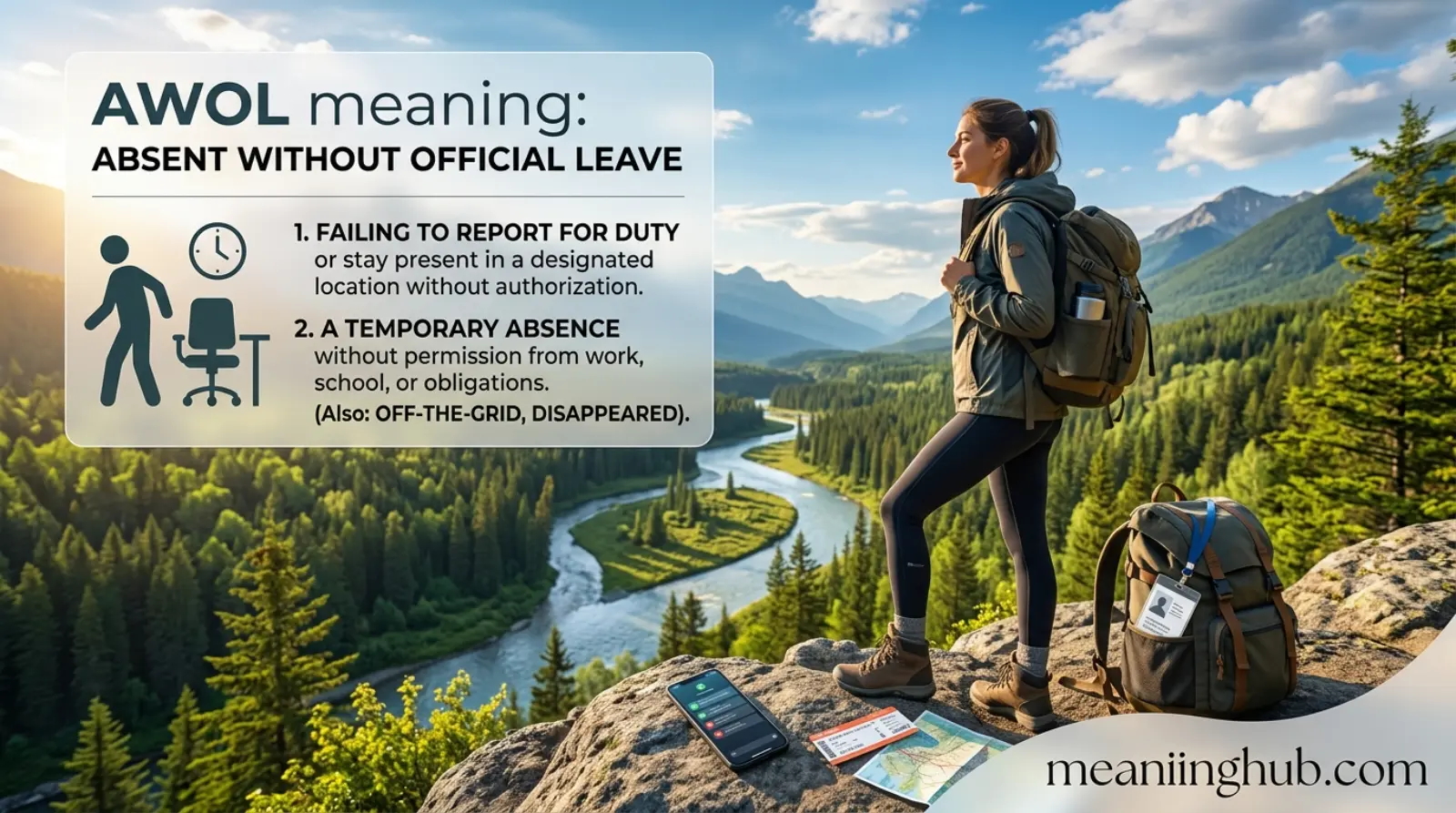
AWOL meaning in text is a common search because people often see this abbreviation in chats, social media posts, or online conversations. If someone says, “You’ve been AWOL,” they usually mean that a person has disappeared, stopped replying to messages, or has been absent for a while without explaining why.
Although the term started in the military, it is now widely used in everyday texting and online communication. Whether you’re chatting with friends, posting on social media, or playing online games, understanding what AWOL means can help you avoid confusion and communicate more naturally.
Quick Answer:
AWOL stands for Absent Without Official Leave. In text messages, it usually means someone has unexpectedly disappeared, gone silent, or hasn’t been around for some time.
What Does AWOL Mean in Text?
The AWOL meaning in text is much less formal than its original military definition. In casual conversations, it describes someone who has vanished, stopped responding, or hasn’t been active for a noticeable period.
For example, if your friend hasn’t replied to your messages for several days, you might jokingly text:
“Where have you been? You went AWOL!”
Here, AWOL simply means the person disappeared from the conversation without warning.
Unlike in the military, using AWOL in texting is often humorous or playful rather than serious.
AWOL Full Form
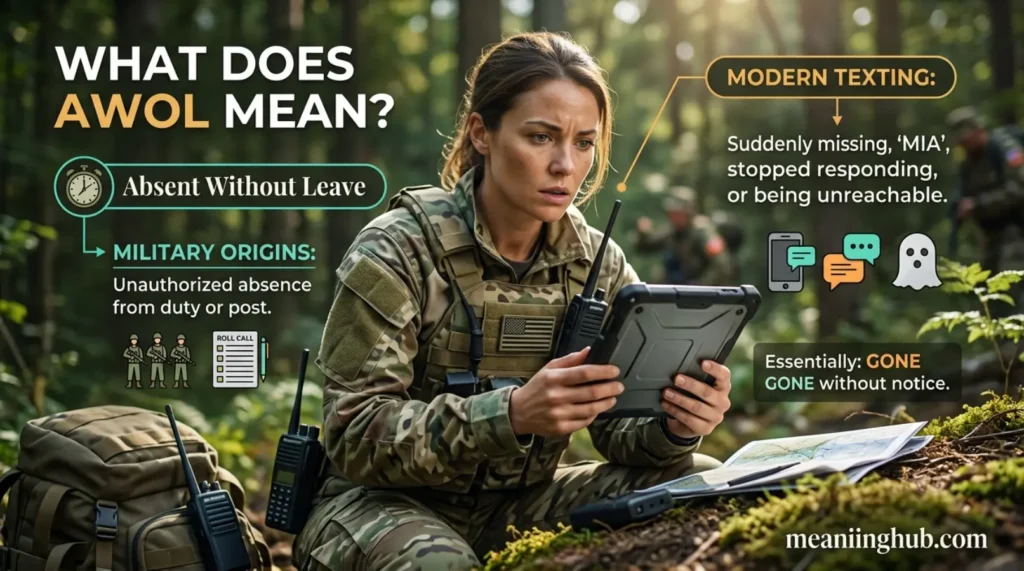
The AWOL full form is:
Absent Without Official Leave
Originally, this phrase referred to military personnel who left their assigned place or failed to report for duty without permission.
Today, the meaning has expanded beyond the military. Most people now use AWOL informally to describe someone who suddenly becomes unavailable or disappears from communication.
What Does AWOL Stand For?
If you’ve ever wondered what does AWOL stand for, the answer is simple:
- A – Absent
- W – Without
- O – Official
- L – Leave
While the full form remains the same, the modern slang meaning usually refers to someone who has gone missing from a conversation, group chat, workplace, or social media platform.
AWOL Meaning Slang
As a slang term, AWOL no longer has to involve official permission or military service.
Instead, AWOL meaning slang often includes situations like:
- Ignoring messages
- Taking a break without telling anyone
- Leaving a group chat unexpectedly
- Becoming inactive on social media
- Missing online gaming sessions
- Disappearing from work chats
People often use it jokingly instead of accusing someone of doing something wrong.
Is AWOL Rude, Offensive, or Neutral?
In most situations, AWOL is considered neutral.
However, the tone depends on how you use it.
| Situation | Tone |
|---|---|
| Talking with close friends | Friendly |
| Social media jokes | Casual |
| Gaming chats | Neutral |
| Workplace conversations | Slightly informal |
| Formal business emails | Not recommended |
AWOL is rarely offensive by itself. Still, saying someone “went AWOL” during a serious situation may sound insensitive if they had a valid reason for being absent.
Where Is AWOL Commonly Used?
You can see AWOL in many online and offline conversations.
Common places include:
- Text messages
- WhatsApp chats
- Facebook comments
- Instagram captions
- Snapchat
- Discord servers
- Online gaming communities
- Workplace messaging apps like Slack or Microsoft Teams
- Reddit discussions
In nearly all these situations, AWOL simply means someone disappeared or became inactive.
Real-Life Examples of AWOL in Text
Here are several examples showing how people naturally use AWOL.
Friendly Example
“You were AWOL all weekend! We missed you.”
Casual Conversation
“Sorry, I’ve been AWOL because I was studying for exams.”
Family Chat
“Dad went AWOL from the family group chat again.”
Workplace Chat
“Our manager has been AWOL since yesterday’s meeting.”
Gaming Example
“Our healer went AWOL during the final boss fight.”
Social Media Example
“Sorry I’ve been AWOL lately. Life has been incredibly busy.”
These examples show that AWOL usually refers to someone’s absence rather than anything illegal or offensive.
Origin and Background of AWOL
The history of AWOL dates back to military usage.
For many years, armed forces used the term Absent Without Official Leave to describe soldiers who were missing from their assigned duties without authorization.
Over time, civilians adopted the expression because it perfectly described people who suddenly disappeared.
As texting and social media became more popular, AWOL evolved into everyday internet slang.
Today, many younger users don’t even realize it originally came from the military.
Why People Use AWOL in Text Messages
People use AWOL because it quickly explains someone’s absence.
Some reasons include:
- It is short and easy to type.
- It adds humor to conversations.
- It sounds more interesting than simply saying “missing.”
- Most internet users recognize its meaning.
- It keeps conversations casual.
Instead of saying:
“You haven’t replied in five days.”
Someone may simply say:
“You’ve been AWOL.”
The message is shorter while expressing the same idea.
Comparison with Similar Slang
Many slang words describe disappearing or becoming inactive.
| Slang | Meaning | Usage |
|---|---|---|
| AWOL | Disappeared or absent unexpectedly | General conversations |
| Ghosting | Suddenly cutting off communication completely | Dating and friendships |
| AFK | Away from keyboard temporarily | Gaming and online chats |
| MIA | Missing or unavailable | Casual conversations |
| Offline | Not connected to the internet | General online communication |
AWOL vs Ghosting
People often confuse these two terms.
AWOL
- May be temporary
- Often humorous
- Doesn’t always involve ignoring someone intentionally
Ghosting
- Usually intentional
- Often permanent
- Common in dating or friendships
For example:
AWOL: Someone disappears because they’re busy.
Ghosting: Someone intentionally stops replying forever.
When Should You Avoid Using AWOL?
Although AWOL is generally harmless, there are situations where another phrase is better.
Avoid using it:
- During serious emergencies
- In formal business emails
- In legal documents
- When discussing sensitive personal issues
- If someone is absent due to illness or tragedy
In these situations, more respectful wording is usually appropriate.
Polite Alternatives to AWOL
If you want softer language, try these alternatives:
- Away for a while
- Taking a break
- Not available
- Temporarily inactive
- Out of touch
- Offline
- Busy recently
- Stepped away
These expressions sound more considerate, especially in professional settings.
Impact of Using Slang in Communication
Slang like AWOL can make conversations feel relaxed and friendly.
Benefits include:
- Faster communication
- More natural conversations
- Stronger connection with friends
- Better understanding of internet culture
However, slang also has disadvantages.
Some people may not recognize the meaning, especially older users or people who are not familiar with internet abbreviations.
That’s why it’s important to consider your audience before using slang.
Is AWOL Safe for Social Media?
Yes.
Using AWOL on social media is generally safe because it is not considered offensive or inappropriate.
Many users write captions like:
- “Sorry I’ve been AWOL lately.”
- “Back after being AWOL for a month!”
- “I’ve been AWOL because work has been .”
As always, think about the context before posting.
Examples of AWOL in Different Situations
Friendly Tone
Alex: “You’ve been AWOL all week!”
Jamie: “I know! I finally finished my exams.”
Casual Tone
“Sorry everyone, I’ve been AWOL because I’ve been traveling.”
Argumentative Tone
“You went AWOL when we needed your help.”
Gaming Context
“Don’t go AWOL during ranked matches!”
Social Media Context
“Back from being AWOL. Thanks for sticking around!”
Workplace Chat
“I’ve been AWOL from Slack while attending client meetings.”
These examples show that context changes the tone without changing the basic meaning.
Common Mistakes People Make
Many people misunderstand AWOL.
Here are some common misconceptions.
Thinking It Only Applies to Soldiers
While AWOL originated in the military, it is now common internet slang.
Assuming It’s Always Negative
Not necessarily.
Many people use AWOL humorously among friends.
Using It in Formal Writing
Professional emails usually require more formal language.
Instead of saying:
“The employee went AWOL.”
You could say:
“The employee has been absent without notice.”
FAQs
What does AWOL mean in text?
AWOL means someone has disappeared, stopped replying, or has been absent for a period of time.
What is the AWOL full form?
AWOL stands for Absent Without Official Leave.
Is AWOL a rude word?
No. It is generally considered neutral and is often used jokingly among friends.
Is AWOL military slang?
Yes. It originally came from military terminology but is now widely used in everyday conversations and texting.
Is AWOL the same as ghosting?
No. Ghosting usually means intentionally ending communication, while AWOL often suggests temporary absence.
Can I use AWOL on social media?
Yes. It is commonly used in captions, comments, and posts to explain being inactive or away for some time.
Conclusion
Understanding the AWOL meaning in text makes it much easier to follow modern online conversations. While AWOL originally stood for Absent Without Official Leave in the military, today’s slang meaning is much more casual. It usually describes someone who has disappeared, gone quiet, or stopped responding to messages for a while.
Whether you’re chatting with friends, posting on social media, or participating in online gaming communities, AWOL is a useful abbreviation that most internet users recognize. Just remember to consider your audience and the situation. In informal conversations, it adds personality and humor, while in professional or sensitive settings, more formal alternatives are usually the better choice.

Alexander Ford is a passionate writer who specializes in modern text slang, internet culture, and digital communication trends. He is known for his simple, engaging, and reader-friendly writing style that makes online language easy to understand. With a love for research and creativity, Alexander enjoys helping readers stay updated with the latest social media expressions and texting terms.