Chai Meaning is a popular search because people often see the word in text messages, social media posts, café menus, and everyday conversations. Some think it is just another word for tea, while others believe it refers to a special type of drink. This confusion makes many people wonder what “chai” really means and how to use it correctly.
If you have ever received a message saying, “Let’s grab chai,” or noticed people using the word online, you’re not alone. Understanding the meaning of chai helps you use the word naturally and avoid common mistakes. In this guide, you’ll learn its definition, origin, examples, and how it is used in different situations.
Quick Answer:
Chai simply means tea in many languages, especially Hindi, Urdu, and several other South Asian languages. Outside South Asia, the word often refers to spiced milk tea, commonly known as chai tea or masala chai.
What Does Chai Mean in Text?
In text messages, chai usually refers to a cup of tea or an invitation to meet over tea. It is not internet slang or an abbreviation. Instead, it is a normal word that has become popular worldwide.
For example:
- “Let’s meet for chai after work.”
- “I’m making chai. Want some?”
- “Nothing beats hot chai on a rainy day.”
The exact meaning depends on the people having the conversation. Someone from South Asia may simply mean “tea,” while someone in another country may specifically mean spiced tea.
Chai Full Form
Many people search for chai full form, but the truth is simple.
Chai does not have a full form.
It is not an acronym like LOL or BRB. It is a real word that comes from languages spoken across Asia.
So if you are wondering:
- Chai full form: None
- Chai meaning slang: It is generally not slang.
- What does chai stand for? It does not stand for anything.
Chai Definition
The word chai means tea in several languages.
Depending on the country and culture, it may refer to:
- Plain black tea
- Milk tea
- Spiced tea
- Herbal tea in some regions
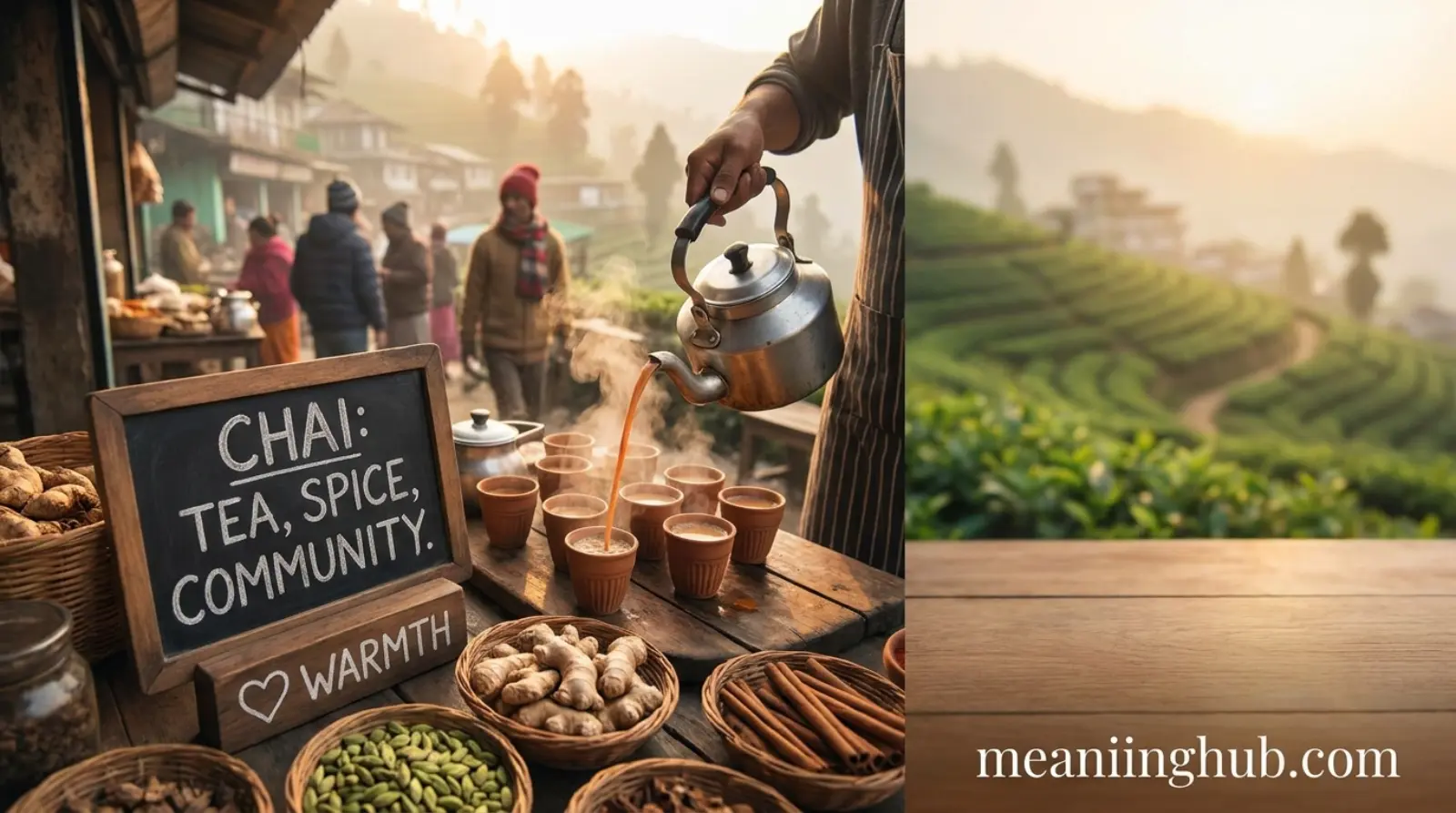
In many Western countries, ordering “chai” usually means a sweet, spiced tea made with milk and spices like:
- Cardamom
- Cinnamon
- Ginger
- Cloves
- Black pepper
Is Chai Slang?
No.
Chai is not slang. It is a normal dictionary word with cultural and historical importance.
People sometimes search for chai meaning slang because they see it used casually online, but it does not carry a hidden internet meaning.

Is Chai Rude, Offensive, or Neutral?
Chai is a neutral word.
It is polite and appropriate in:
- Daily conversations
- Family chats
- Text messages
- Social media
- Restaurants and cafés
However, using the phrase “chai tea” may sound repetitive to some South Asians because chai already means tea. Saying “chai tea” is similar to saying “tea tea.” Still, the phrase has become common in many English-speaking countries.
Where Is Chai Commonly Used?
The word chai appears in many places around the world.
In Text Messages
Friends often use it when planning to meet.
Example:
“Let’s have chai this evening.”
In Social Media
People post photos with captions like:
- Morning chai vibes
- Chai and good books
- Evening chai with friends
In Cafés
Many coffee shops offer:
- Chai latte
- Masala chai
- Iced chai
- Dirty chai
At Home
Millions of families enjoy chai every day as part of their morning or evening routine.
Origin and Background of Chai
The history of chai goes back thousands of years.
The word chai comes from the Chinese word “cha,” which spread through trade across Asia. Different languages adopted similar versions of the word.
In India, Pakistan, Bangladesh, Nepal, and nearby countries, chai simply means tea.
Masala chai, the famous spiced version, became especially popular in India. It combines black tea with milk, sugar, and aromatic spices.
Today, chai has become an international drink enjoyed in cafés and homes worldwide.
Why People Use the Word Chai
People use chai because it is:
- Short and simple
- Culturally meaningful
- Widely recognized
- Associated with comfort and relaxation
- Popular in food and café culture
Many people also use it to express hospitality.
Inviting someone for chai often means spending quality time together.
Real-Life Examples of Chai Usage
Friendly
“Come over for chai this evening.”
Casual
“I need chai before I start work.”
Family Conversation
“Mom makes the best chai.”
Workplace
“Let’s discuss the project over chai.”
Social Media
“Rain + chai + good music = perfect evening.”
Travel
“You have to try local chai when visiting India.”
Chai in Different Contexts
Cultural Context
In South Asia, chai is much more than a drink. It often represents friendship, hospitality, and daily life.
Restaurant Context
Many menus include:
- Masala chai
- Chai latte
- Ginger chai
- Cardamom chai
Lifestyle Context
People often connect chai with:
- Reading books
- Relaxing
- Family gatherings
- Morning routines
Comparison with Similar Terms
| Term | Meaning | Common Usage |
|---|---|---|
| Chai | Tea or spiced tea | South Asia and worldwide |
| Tea | General English word for tea | Global |
| Masala Chai | Spiced milk tea | India and cafés worldwide |
| Chai Latte | Café version made with steamed milk | Coffee shops |
| Herbal Tea | Tea made without black tea leaves | Health drinks |
Chai vs Tea
Many people ask if chai and tea are different.
The answer depends on where you are.
In South Asia:
- Chai = Tea
In many Western countries:
- Tea usually means regular tea.
- Chai often means spiced milk tea.
Both uses are correct within their cultural contexts.
When Should You Avoid Using Chai?
Avoid using the word incorrectly when discussing traditional cultures.
For example:
If someone says,
“Would you like some chai?”
There is no need to reply,
“I love chai tea.”
Simply saying,
“I love chai.”
is often more accurate.
Also avoid assuming everyone means the same type of tea. Some people mean regular tea, while others mean masala chai.
Are There Polite Alternatives?
Since chai is not offensive, you usually do not need an alternative.
Depending on the situation, you can say:
- Tea
- Black tea
- Milk tea
- Masala chai
- Herbal tea
- Green tea
Choose the term that best matches the drink you mean.
Impact of Using Chai in Communication
Using the correct word helps conversations become clearer.
It can also show cultural awareness and respect.
When you understand what chai means, you are less likely to misunderstand menus, social media posts, or conversations with friends from different backgrounds.
Is Chai Safe for Social Media?
Yes.
The word chai is completely safe to use on:
- X
- TikTok
- Snapchat
It does not violate platform rules and has no offensive meaning.
Examples of Chai in Different Situations
Friendly
“Want to grab chai after class?”
Casual
“I’m enjoying hot chai while watching my favorite show.”
Family
“Grandma always makes fresh chai in the morning.”
Social Media
“Nothing feels better than chai on a cold day.”
Workplace
“Let’s take a chai break before the meeting.”
Travel
“The roadside chai was one of the best parts of my trip.”
Common Misunderstandings About Chai
Many people believe chai is a special type of tea.
Actually, the word simply means tea in many languages.
Another common misunderstanding is that chai is internet slang.
It is not.
Finally, people often think chai has a full form.
It does not.
Related Keywords
People also search for:
- Chai full form
- Chai meaning slang
- What does chai stand for
- Chai meaning in text
- Masala chai meaning
- Chai tea meaning
- Chai definition
- Chai origin
FAQS
What does chai mean in text?
In most text conversations, chai means tea or an invitation to have tea together.
Does chai have a full form?
No. Chai is a complete word and not an abbreviation.
Is chai internet slang?
No. It is a regular word used in many languages.
Is chai the same as tea?
In South Asia, yes. In many Western countries, chai often refers to spiced milk tea.
Is chai offensive?
No. It is a neutral and respectful word.
Why do people say chai tea?
Many cafés use “chai tea” to describe spiced tea for customers, even though the phrase technically repeats the word “tea.”
Conclusion
Chai Meaning is simple once you understand its cultural background. The word chai means tea in many Asian languages and is not slang or an abbreviation. In many English-speaking countries, it commonly refers to spiced milk tea, while in South Asia it simply means tea in general.
Knowing the correct meaning helps you communicate more naturally, understand café menus, and appreciate the cultural importance of this beloved drink. The next time someone invites you for chai or you see the word online, you’ll know exactly what it means and how to use it with confidence.

Alexander Ford is a passionate writer who specializes in modern text slang, internet culture, and digital communication trends. He is known for his simple, engaging, and reader-friendly writing style that makes online language easy to understand. With a love for research and creativity, Alexander enjoys helping readers stay updated with the latest social media expressions and texting terms.