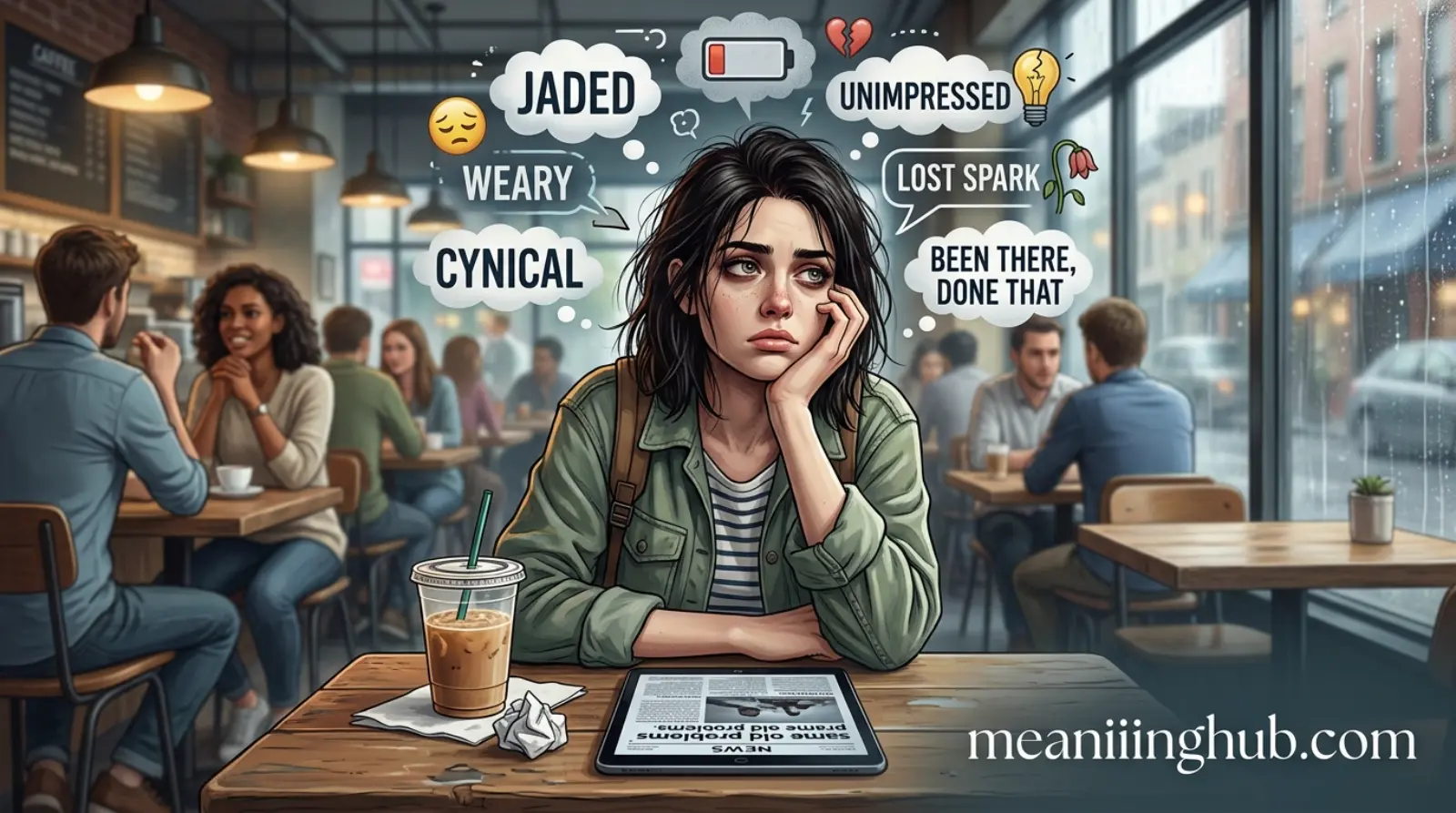
Jaded meaning in text is a topic many people search for after seeing the word in messages, social media posts, comments, or online conversations. While it is not a modern internet slang term, “jaded” is commonly used in texting and digital communication to describe a person’s emotional state or attitude.
People often use this word when talking about someone who has become tired, bored, disappointed, or emotionally worn out because of repeated experiences. Understanding the meaning of jaded can help you better interpret conversations and avoid misunderstandings when chatting online.
Quick Answer
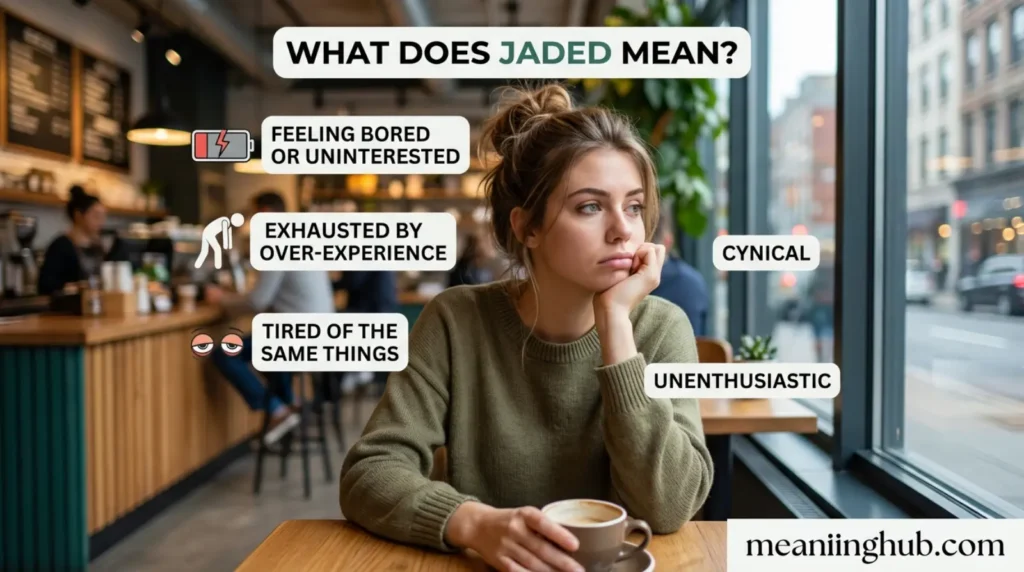
Jaded means feeling tired, bored, or less enthusiastic because of having experienced something too many times. In text messages, it usually describes someone who has become emotionally exhausted or cynical about a situation.
What Does Jaded Mean in Text?
The term jaded refers to a person who has lost excitement, interest, or enthusiasm because of repeated exposure to something.
In texting, someone might say they feel jaded about:
- Relationships
- Work
- Social media
- Dating apps
- School
- Life experiences
The word often suggests emotional fatigue rather than physical tiredness.
Example
“I’ve been through so many job interviews lately that I’m feeling pretty jaded.”
This means the person has become tired and less excited about the process because they have experienced it repeatedly.
Jaded Full Form
Many internet users search for jaded full form, but the truth is that jaded is not an acronym or abbreviation.
Unlike terms such as LOL, BRB, or IMO, jaded is a regular English adjective.
Definition
Jaded (adjective):
Feeling tired, bored, or lacking enthusiasm because of too much experience with something.
What Does Jaded Stand For?
People sometimes ask, “What does jaded stand for?”
The answer is simple:
Jaded does not stand for anything.
It is a standard English word used to describe emotional exhaustion, boredom, or cynicism developed over time.
Is Jaded Rude, Offensive, or Neutral?
Generally, jaded is considered neutral.
However, its tone depends on context.
Neutral Usage
“I’m a little jaded after years of working in customer service.”
Slightly Negative Usage
“He’s so jaded that he doesn’t believe anyone’s intentions anymore.”
Potentially Critical Usage
“She’s become jaded and complains about everything.”
Although not offensive, calling someone jaded can sometimes sound like criticism.
Where Is Jaded Commonly Used?
The word appears in many forms of communication.
Text Messages
Friends often use it when discussing emotions or life experiences.
Example:
“I’m jaded from all the drama lately.”
Social Media
People use it in captions, tweets, comments, and personal posts.
Example:
“After years online, I’m completely jaded by internet arguments.”
Workplace Conversations
Employees may describe themselves as jaded after facing repeated challenges.
Example:
“Many workers become jaded after experiencing burnout.”
Dating Discussions
The term is extremely common in conversations about dating.
Example:
“Too many bad dates have made me feel jaded.”
Real-Life Examples of Jaded Usage
Here are several examples showing how people naturally use the word.
Example 1: Friend Conversation
Friend A: “Want to try another dating app?”
Friend B: “Honestly, I’m too jaded for that right now.”
Example 2: School Life
“I’m jaded after studying for exams all month.”
Example 3: Workplace
“Years of office politics have made him a little jaded.”
Example 4: Social Media
“Seeing the same trends every week makes me feel jaded.”
Example 5: Entertainment
“I’m jaded when it comes to superhero movies because there are so many.”
Origin and Background of Jaded
The word jaded has existed for centuries.
Historically, it referred to a tired or worn-out horse that had been overworked. Over time, the meaning evolved and began describing people who felt emotionally exhausted or worn down by repeated experiences.
Today, the term is widely used in modern English and online communication.
Historical Meaning
- Tired from overwork
- Worn out physically
Modern Meaning
- Emotionally exhausted
- Cynical
- Less enthusiastic
- Bored due to repeated experiences
Why People Use the Word Jaded
People use the word because it communicates a specific emotional state that words like “tired” cannot fully explain.
When someone says they are jaded, they usually mean:
- They have seen something many times before.
- They no longer feel excited about it.
- Their expectations have changed.
- They have become more skeptical.
The word efficiently expresses emotional burnout and disappointment.
Jaded Meaning Slang vs Standard English
Although many people search for jaded meaning slang, the word is not actually slang.
Standard English
Jaded is a recognized English dictionary word.
Informal Use
People often use it casually online, which can make it seem like slang.
For example:
“I’m jaded with social media.”
Even though it sounds informal, the word itself remains standard English.
Comparison with Similar Terms
The following table compares jaded with related words.
| Term | Meaning | Tone |
|---|---|---|
| Jaded | Emotionally tired from repeated experiences | Neutral |
| Burned Out | Exhausted from stress or work | Negative |
| Cynical | Distrustful of others’ motives | Negative |
| Bored | Lacking interest | Neutral |
| Fed Up | Frustrated and annoyed | Strong Negative |
| Disillusioned | Disappointed after losing beliefs | Negative |
Key Difference
A person can be:
- Bored after one event.
- Jaded after many repeated experiences.
When Should You Avoid Using Jaded?
There are situations where using the word may not be appropriate.
Professional Reports
In formal reports, use more precise language.
Instead of:
“The employee is jaded.”
Use:
“The employee appears disengaged.”
Sensitive Discussions
If someone is experiencing serious emotional distress, “jaded” may sound dismissive.
Making Assumptions
Avoid labeling someone as jaded without understanding their situation.
Polite Alternatives to Jaded
If you want softer wording, consider these alternatives:
- Tired
- Discouraged
- Disappointed
- Less enthusiastic
- Emotionally drained
- Feeling worn out
- Unmotivated
Example
Instead of:
“I’m jaded.”
You could say:
“I’m feeling emotionally drained.”
Impact of Using Jaded in Communication
The word can influence how people perceive a message.
Positive Effects
- Communicates emotions clearly
- Shows self-awareness
- Helps explain frustration
Negative Effects
- May sound pessimistic
- Can appear cynical
- Might seem dismissive in some contexts
Always consider your audience before using it.
Is Jaded Safe for Social Media?
Yes, jaded is generally safe for social media platforms.
The word:
- Is not offensive
- Is not considered hate speech
- Is widely accepted
- Appears in professional and casual conversations
However, excessive negativity may affect how your audience responds to your content.
Examples of Jaded in Different Contexts
Friendly Tone
“I’m a little jaded about reality TV, but I’ll watch it with you.”
Casual Tone
“After years of scrolling, I’m jaded by social media trends.”
Argumentative Tone
“You’re not being realistic—you’re just jaded because of past experiences.”
Gaming Context
“I’m jaded after grinding this game for months.”
Social Media Context
“Anyone else feeling jaded by influencer culture?”
Relationship Context
“I’m jaded from dating apps right now.”
FAQs
What is the jaded meaning in text?
Jaded means feeling tired, bored, or emotionally worn out because of repeated experiences.
Is jaded a slang word?
No. Jaded is a standard English word, although it is commonly used in casual conversations online.
What does jaded stand for?
Jaded does not stand for anything. It is not an abbreviation or acronym.
Is calling someone jaded an insult?
Usually no. However, depending on context, it can sound critical or imply negativity.
Can jaded be used positively?
Generally, it has a negative or neutral meaning because it describes emotional fatigue or loss of enthusiasm.
Is jaded the same as cynical?
Not exactly. A jaded person may become cynical, but jaded mainly refers to emotional exhaustion from repeated experiences.
Conclusion
Understanding the jaded meaning can help you better interpret conversations both online and offline. The word describes someone who feels emotionally tired, less enthusiastic, or skeptical after repeated experiences. While it is not slang or an abbreviation, it is frequently used in text messages, social media posts, workplace discussions, and everyday conversations.
Using the term correctly can make your communication more precise and relatable. Just remember that context matters. In most situations, jaded is a neutral way to describe emotional fatigue, but it can sometimes sound critical if directed toward someone else. By understanding its meaning and tone, you can use the word effectively and avoid misunderstandings.

Alexander Ford is a passionate writer who specializes in modern text slang, internet culture, and digital communication trends. He is known for his simple, engaging, and reader-friendly writing style that makes online language easy to understand. With a love for research and creativity, Alexander enjoys helping readers stay updated with the latest social media expressions and texting terms.