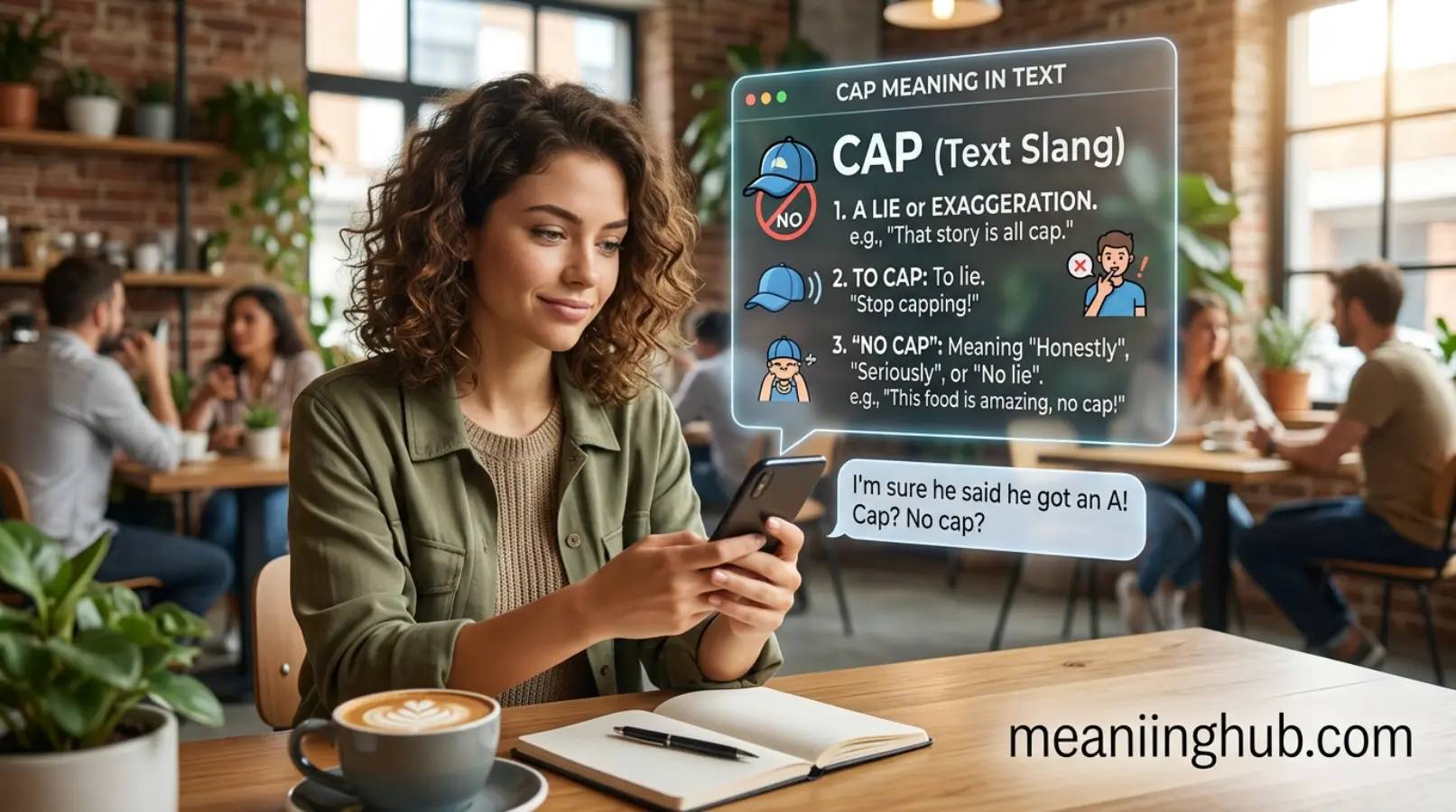
Cap meaning in text is one of the most searched internet slang terms today, especially among social media users, gamers, and younger generations. If you’ve ever seen someone reply with “cap” or “no cap” in a chat, comment section, or text message, you may have wondered what it actually means.
Online slang evolves quickly, and understanding these terms helps you communicate better and avoid misunderstandings. Whether you’re chatting with friends, browsing TikTok, scrolling through Instagram, or playing online games, you’ll likely encounter the term “cap.”
In this guide, you’ll learn the meaning of cap in text, where it came from, how people use it, and when it may or may not be appropriate to use.
Quick Answer
Cap means “lie” or “something that is not true.” When someone says “that’s cap,” they mean that a statement is false or exaggerated. The phrase “no cap” means “I’m telling the truth” or “I’m being honest.”
What Does Cap Mean in Text?
In texting and online conversations, cap is slang used to call out a lie, exaggeration, or false statement.
When someone says:
“That’s cap.”
They mean:
“That’s not true.”
The term is commonly used in casual conversations, social media posts, and gaming communities.
Examples
- “You scored 100 points in one game? That’s cap.”
- “He said he met a celebrity. Cap.”
- “I finished the project in one hour. No cap.”
The slang is simple but powerful because it quickly expresses disbelief.
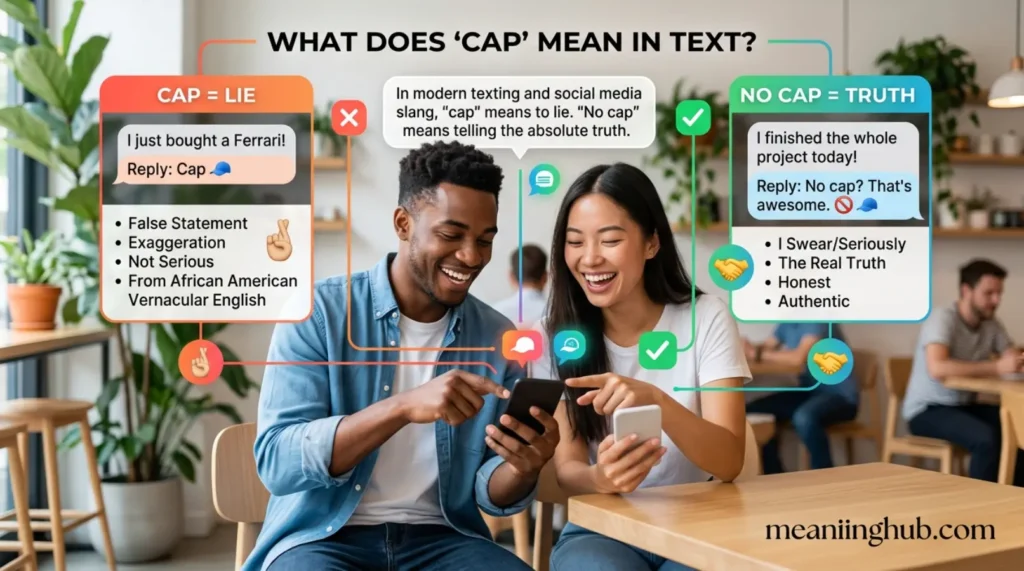
Cap Full Form and Definition
Many people search for cap full form, but cap is not actually an acronym.
Definition of Cap
Cap (Slang): A lie, false statement, exaggeration, or misleading claim.
No Cap Meaning
The phrase no cap means:
- No lie
- Seriously
- Honestly
- I’m telling the truth
Examples:
- “This pizza is the best I’ve ever had, no cap.”
- “That movie made me cry, no cap.”
So while cap = lie, no cap = truth.
Is Cap Rude, Offensive, or Neutral?
Generally, cap is considered a neutral slang term.
However, context matters.
When It’s Neutral
- Friendly conversations
- Social media comments
- Gaming chats
- Casual texting
Example:
“You’re saying you ran five miles today? That’s cap.”
This is usually playful.
When It May Sound Rude
Calling someone a liar directly can sometimes create conflict.
Example:
“Everything you say is cap.”
This sounds more aggressive and disrespectful.
Overall Tone
| Situation | Tone |
|---|---|
| Friends joking | Neutral |
| Social media comments | Casual |
| Gaming chats | Common |
| Arguments | Potentially rude |
| Professional communication | Inappropriate |
Where Is Cap Commonly Used?
The word cap is popular across many online platforms.
Social Media
People frequently use it on:
- TikTok
- Snapchat
- X (Twitter)
Examples:
- “Best burger ever. No cap.”
- “You’re definitely capping.”
Text Messages
Friends often use cap when questioning a statement.
Example:
“You bought a new car?”
“Cap.”
Gaming Communities
Gamers use cap to challenge claims.
Example:
“I got 50 kills in one match.”
Reply:
“Cap.”
Online Forums
Internet communities frequently use the term when discussing rumors or unbelievable stories.
Real-Life Examples of Cap Usage
Understanding examples makes the slang easier to recognize.
Friendly Example
Friend 1:
“I can eat ten burgers.”
Friend 2:
“That’s cap.”
Casual Example
“This is the best song ever, no cap.”
Social Media Example
Post:
“I woke up at 4 AM and worked out.”
Comment:
“No cap?”
Gaming Example
Player:
“I never lose.”
Other Player:
“Cap.”
Argument Example
Person A:
“I never said that.”
Person B:
“That’s cap and you know it.”
Origin and Background of the Slang
The term cap has roots in African American Vernacular English (AAVE).
For many years, the word has been used informally to mean:
- Lying
- Boasting
- Exaggerating
Over time, musicians, social media influencers, and internet culture helped spread the term worldwide.
Rise in Popularity
The phrase became especially popular through:
- Hip-hop culture
- Rap lyrics
- TikTok videos
- Meme culture
- Online gaming communities
Today, cap and no cap are recognized by millions of internet users.
Cap vs Similar Slang Terms
Many slang words have meanings similar to cap.
Comparison Table
| Slang Term | Meaning | Example |
|---|---|---|
| Cap | Lie or false statement | “That’s cap.” |
| No Cap | Truth or honesty | “I’m serious, no cap.” |
| Fake | Not genuine | “That story is fake.” |
| BS | Nonsense or lies | “That’s BS.” |
| Facts | True statement | “Facts!” |
| For Real | Genuine or truthful | “For real?” |
Key Difference
Cap specifically targets a statement that is believed to be false, while terms like “fake” can refer to people, products, or situations.
When to Avoid Using Cap
Although popular, cap isn’t suitable everywhere.
Avoid in Professional Settings
Don’t use cap in:
- Business emails
- Job interviews
- Academic papers
- Workplace communication
Instead of saying:
“That’s cap.”
Say:
“I don’t think that’s accurate.”
Avoid During Serious Discussions
In sensitive conversations, using slang may appear dismissive.
For example:
- Family conflicts
- Workplace disagreements
- Customer service interactions
More respectful language is often better.
Polite Alternatives to Cap
If you want a softer way to disagree, try these alternatives.
Better Options
- “I don’t think that’s correct.”
- “I’m not sure that’s true.”
- “That seems inaccurate.”
- “Could you verify that?”
- “I disagree with that statement.”
Example
Instead of:
“Cap.”
Use:
“I’m not convinced that’s true.”
This sounds more professional and respectful.
Why Do People Use This Slang?
The popularity of cap comes from its simplicity.
Reasons People Use It
- Quick communication
- Trendy internet language
- Expresses doubt instantly
- Fits social media culture
- Creates a casual tone
Instead of typing:
“I believe that statement is false.”
People simply write:
“Cap.”
The message is short and easy to understand.
Impact of Using Slang in Communication
Slang can make conversations more engaging and relatable.
Positive Effects
- Builds connection
- Creates a friendly atmosphere
- Reflects internet culture
- Makes texting faster
Negative Effects
- Can confuse older audiences
- May appear unprofessional
- Sometimes causes misunderstandings
Understanding your audience is important before using slang.
Is Cap Safe for Social Media?
Yes, cap is generally safe for social media use.
It is not considered:
- Profanity
- Hate speech
- Harassment
- Offensive language
However, repeatedly accusing others of “capping” may create unnecessary arguments.
Best Practice
Use it:
- Playfully
- Casually
- With friends
- In lighthearted discussions
Avoid using it aggressively toward strangers.
Examples of Cap in Different Contexts
Friendly Tone
“You finished the whole pizza yourself? Cap.”
Casual Tone
“That new phone is amazing, no cap.”
Argumentative Tone
“You’re changing your story. That’s cap.”
Gaming Context
“I reached level 100 in one day.”
Reply:
“Cap.”
Social Media Context
Post:
“This was the best concert ever.”
Comment:
“No cap!”
FAQs
What does cap mean in text?
Cap means a lie, exaggeration, or false statement.
What does no cap mean?
No cap means “I’m telling the truth” or “seriously.”
Is cap a bad word?
No. Cap is generally considered harmless slang.
What does stop capping mean?
It means “stop lying” or “stop exaggerating.”
Is cap used by young people?
Yes. The term is especially popular among teenagers, young adults, gamers, and social media users.
Can I use cap at work?
It’s best to avoid slang like cap in professional communication.
Conclusion
Understanding the cap meaning in text helps you navigate modern online conversations with confidence. In internet slang, cap means a lie, exaggeration, or false statement, while no cap means honesty or truthfulness. The term is widely used across social media, texting apps, and gaming communities because it provides a quick way to express disbelief or sincerity.
While cap is generally harmless and widely accepted in casual settings, it’s important to consider your audience and the context. Using it among friends can be fun and relatable, but professional or serious discussions usually require more formal language. By understanding when and how to use cap, you can communicate more effectively and stay up to date with modern digital slang.

Alexander Ford is a passionate writer who specializes in modern text slang, internet culture, and digital communication trends. He is known for his simple, engaging, and reader-friendly writing style that makes online language easy to understand. With a love for research and creativity, Alexander enjoys helping readers stay updated with the latest social media expressions and texting terms.