
High platelet count meaning is one of the most searched medical phrases by people who receive unexpected blood test results. Seeing that your platelet count is above the normal range can be worrying, especially if you don’t know what it means or whether it is dangerous. Fortunately, a high platelet count does not always indicate a serious health condition. In many cases, it is a temporary response to another issue, such as an infection or inflammation.
High platelet count meaning Understanding what a high platelet count means can help you have informed conversations with your healthcare provider and reduce unnecessary anxiety. This guide explains the definition, causes, symptoms, diagnosis, treatment options, and when you should seek medical advice in simple and easy-to-understand language.
Quick Answer:
A high platelet count means there are more platelets than normal in your blood. It may be caused by temporary conditions like infection or by bone marrow disorders, so further evaluation depends on your overall health and medical history.
What Does High Platelet Count Mean?
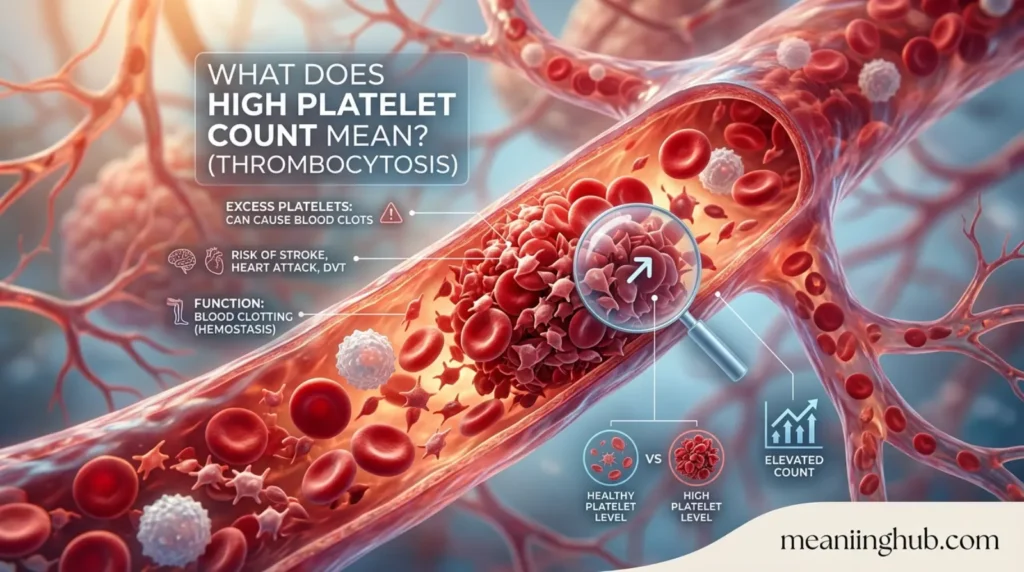
A high platelet count refers to having more platelets in your bloodstream than the normal range.
Platelets, also called thrombocytes, are tiny blood cells that help stop bleeding by forming blood clots when you are injured.
Most laboratories consider a platelet count above 450,000 platelets per microliter (450 × 10⁹/L) as high, although the exact reference range may vary slightly.
Having a high platelet count does not automatically mean something is seriously wrong. Many people discover it during routine blood work without experiencing any symptoms.
High Platelet Count Full Form or Definition
There is no full form for the term “high platelet count.”
The medical condition is commonly known as:
- Thrombocytosis
- Elevated platelet count
- High thrombocyte count
There are two main types:
Primary (Essential) Thrombocytosis
This occurs because of a problem in the bone marrow, where blood cells are produced. The bone marrow makes too many platelets without an obvious external cause.
Secondary (Reactive) Thrombocytosis
This is much more common. It happens when another condition causes the body to produce extra platelets temporarily.
Is a High Platelet Count Dangerous?
Not always.
Many cases are mild and temporary. However, extremely high platelet counts can increase the risk of blood clots or, in some situations, bleeding problems.
The level of risk depends on:
- The platelet count
- The underlying cause
- Your age
- Other medical conditions
- Personal or family history of blood clots
Only a healthcare professional can determine whether treatment is necessary.
What Causes a High Platelet Count?
Many different health conditions can increase platelet production.
Common Causes
- Recent infection
- Inflammation
- Iron deficiency
- Recovery after surgery
- Recovery after significant blood loss
- Certain cancers
- Removal of the spleen
- Chronic inflammatory diseases
Bone Marrow Disorders
Sometimes the bone marrow itself produces too many platelets because of diseases such as:
- Essential thrombocythemia
- Polycythemia vera
- Other myeloproliferative disorders
These conditions usually require evaluation by a blood specialist.
Symptoms of a High Platelet Count
Many people experience no symptoms at all.
When symptoms occur, they may include:
- Headaches
- Dizziness
- Weakness
- Chest pain
- Tingling in the hands or feet
- Vision changes
- Easy bruising
- Nosebleeds
- Unusual blood clotting
Symptoms often relate more to the underlying cause than to the elevated platelet count itself.
How Is High Platelet Count Diagnosed?
Doctors usually discover a high platelet count through a Complete Blood Count (CBC).
If the platelet count is elevated, additional tests may include:
- Repeat CBC
- Iron studies
- Inflammation markers
- Blood smear examination
- Genetic testing
- Bone marrow biopsy (in selected cases)
These tests help identify whether the condition is reactive or due to a bone marrow disorder.
Where Is High Platelet Count Commonly Discussed?
The phrase is commonly used in:
- Blood test reports
- Hospital records
- Medical consultations
- Health websites
- Laboratory reports
- Patient education materials
People often search for the term after seeing abnormal CBC results online.
Real-Life Examples
Here are some examples of how the term is commonly used.
Example 1
“My blood test showed a high platelet count. Should I be worried?”
Example 2
“The doctor said my infection probably caused my high platelet count.”
Example 3
“My platelet count returned to normal after my iron deficiency was treated.”
Example 4
“The specialist ordered additional tests to find out why my platelet count is elevated.”
Origin and Medical Background
The word platelet refers to the tiny blood cells responsible for clotting.
The medical term thrombocytosis comes from:
- Thrombo meaning clot
- Cyte meaning cell
- Osis meaning condition
Doctors have recognized thrombocytosis for many decades, and advances in blood testing now make it easier to identify the condition early.
High Platelet Count vs Similar Blood Test Results
| Blood Test Result | Meaning | Common Causes |
|---|---|---|
| High platelet count | Too many platelets | Infection, inflammation, bone marrow disorders |
| Low platelet count | Too few platelets | Viral infections, autoimmune diseases, medications |
| High white blood cells | Increased infection-fighting cells | Infection, inflammation, leukemia |
| High red blood cells | Increased oxygen-carrying cells | Dehydration, lung disease, bone marrow disorders |
Although these blood test abnormalities may occur together, they have different causes and require separate evaluation.
When Should You Be Concerned?
Contact your healthcare provider if:
- Your platelet count remains high on repeat testing.
- You develop severe headaches.
- You experience chest pain.
- You notice sudden vision changes.
- You have swelling or pain in one leg.
- You experience shortness of breath.
- You have unexplained bleeding.
Prompt medical evaluation helps determine whether treatment is necessary.
Treatment for High Platelet Count
Treatment depends on the cause rather than the platelet number alone.
Reactive Thrombocytosis
Doctors usually treat the underlying condition, such as:
- Infection
- Iron deficiency
- Inflammatory disease
Once the underlying problem improves, platelet levels often return to normal.
Primary Thrombocytosis
Treatment may include:
- Low-dose aspirin (when appropriate)
- Platelet-lowering medications
- Regular monitoring
- Specialist care
Never start medications without medical advice.
Why Do People Search for “High Platelet Count Meaning”?
People commonly search this phrase because:
- They received abnormal blood test results.
- They want to understand medical terminology.
- They are preparing for a doctor’s appointment.
- A family member has been diagnosed with thrombocytosis.
- They are experiencing symptoms and looking for answers.
Understanding the meaning helps patients ask better questions and participate in their healthcare decisions.
Can Lifestyle Affect Platelet Count?
Lifestyle alone usually does not cause major platelet increases, but maintaining good overall health supports normal blood function.
Healthy habits include:
- Eating a balanced diet
- Staying hydrated
- Treating iron deficiency if present
- Following medical advice
- Managing chronic diseases
- Attending regular checkups
Lifestyle changes should complement—not replace—professional medical care.
Real-Life Examples in Different Contexts
Friendly Conversation
“My doctor said my high platelet count is probably temporary after my recent infection.”
Casual Discussion
“I searched the high platelet count meaning after getting my blood work.”
Concerned Tone
“My blood report shows elevated platelets, and I’m waiting for my follow-up appointment.”
Social Media
“My CBC showed a high platelet count. Has anyone else experienced this before?”
Healthcare Setting
“The physician recommended repeat blood tests to monitor the elevated platelet count.”
Comparison Table: High Platelet Count vs Low Platelet Count
| Feature | High Platelet Count | Low Platelet Count |
|---|---|---|
| Medical term | Thrombocytosis | Thrombocytopenia |
| Platelet level | Above normal | Below normal |
| Main concern | Blood clots | Bleeding |
| Common causes | Infection, inflammation, bone marrow disorders | Viral illness, medications, immune disorders |
| May require specialist | Sometimes | Sometimes |
Common Misconceptions
A High Platelet Count Always Means Cancer
False. Most cases are caused by temporary conditions such as infections or inflammation.
You Will Always Have Symptoms
False. Many people have no symptoms and learn about it during routine blood testing.
High Platelets Always Need Medication
False. Many cases only require monitoring and treatment of the underlying cause.
The Number Alone Determines Risk
False. Doctors consider your medical history, symptoms, and the reason for the elevated count before recommending treatment.
FAQs
What does a high platelet count mean?
It means your blood contains more platelets than the normal range, which can happen for many different reasons.
What does high platelet count stand for?
It does not stand for anything. The medical term is thrombocytosis.
Is a high platelet count serious?
Sometimes, but not always. Many cases are temporary and caused by infections or inflammation.
Can stress cause a high platelet count?
Stress alone is not usually a direct cause, although illness and physical stress on the body may contribute indirectly.
Can a high platelet count return to normal?
Yes. Reactive thrombocytosis often resolves once the underlying condition is treated.
Should I see a doctor for a high platelet count?
Yes. Any abnormal blood test result should be discussed with your healthcare provider for proper evaluation.
Conclusion
Understanding high platelet count meaning can make an unexpected blood test result much less confusing. A high platelet count, also known as thrombocytosis, simply means that your body has more platelets than normal. In many cases, it is a temporary response to infections, inflammation, or iron deficiency, while some cases are linked to bone marrow disorders that require specialist care.
The most important step is identifying the underlying cause rather than focusing only on the platelet number. If your blood test shows an elevated platelet count, follow your healthcare provider’s recommendations, attend follow-up appointments, and avoid self-diagnosing based solely on online information. With proper evaluation and treatment when needed, many people manage or completely resolve a high platelet count successfully.

Alexander Ford is a passionate writer who specializes in modern text slang, internet culture, and digital communication trends. He is known for his simple, engaging, and reader-friendly writing style that makes online language easy to understand. With a love for research and creativity, Alexander enjoys helping readers stay updated with the latest social media expressions and texting terms.