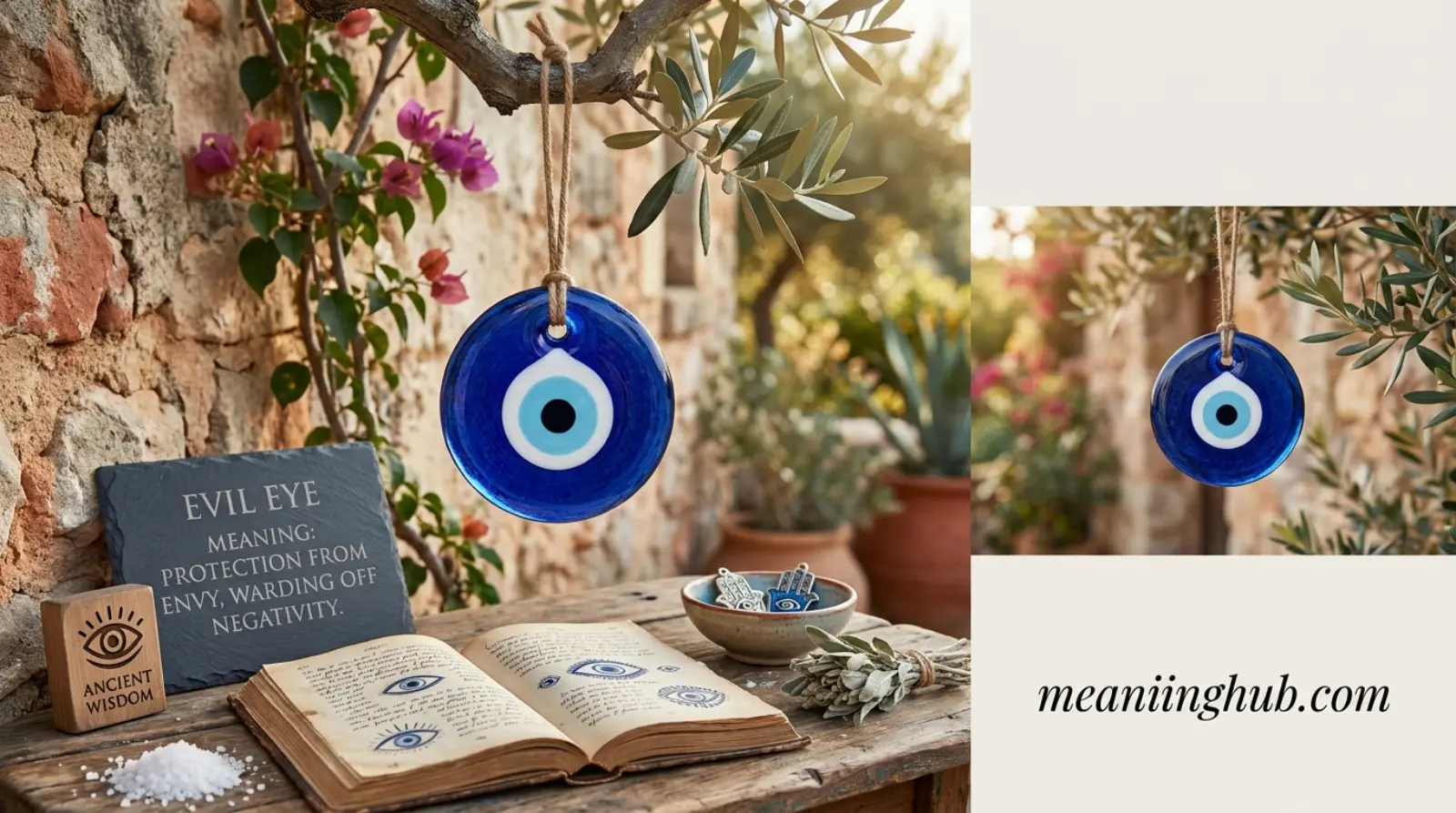
Evil Eye Meaning is one of the most searched spiritual and cultural topics because people often see the famous blue eye symbol on jewelry, bracelets, necklaces, and home decorations without knowing what it represents. Others hear someone mention the “evil eye” after receiving compliments or experiencing unexpected bad luck and want to understand the belief behind it.
The concept of the evil eye has existed for thousands of years across many cultures. While beliefs and traditions differ from one country to another, the general idea remains similar. Many people believe that jealousy, envy, or negative intentions from others can bring bad luck or misfortune. Today, the evil eye symbol is also popular as a fashion accessory and cultural icon.
Quick Answer:
The Evil Eye Meaning refers to the belief that jealousy or envy from another person can bring bad luck or harm. The evil eye symbol is traditionally used as a protective charm to ward off this negative energy.
What Does Evil Eye Mean?
The evil eye is a belief found in many cultures that a person’s jealous or envious look can cause harm, misfortune, or bad luck to someone else.
According to this tradition, envy creates negative energy. People use protective symbols, prayers, or rituals to defend themselves against this harmful influence.
Today, the evil eye symbol is recognized around the world as a sign of protection rather than fear.
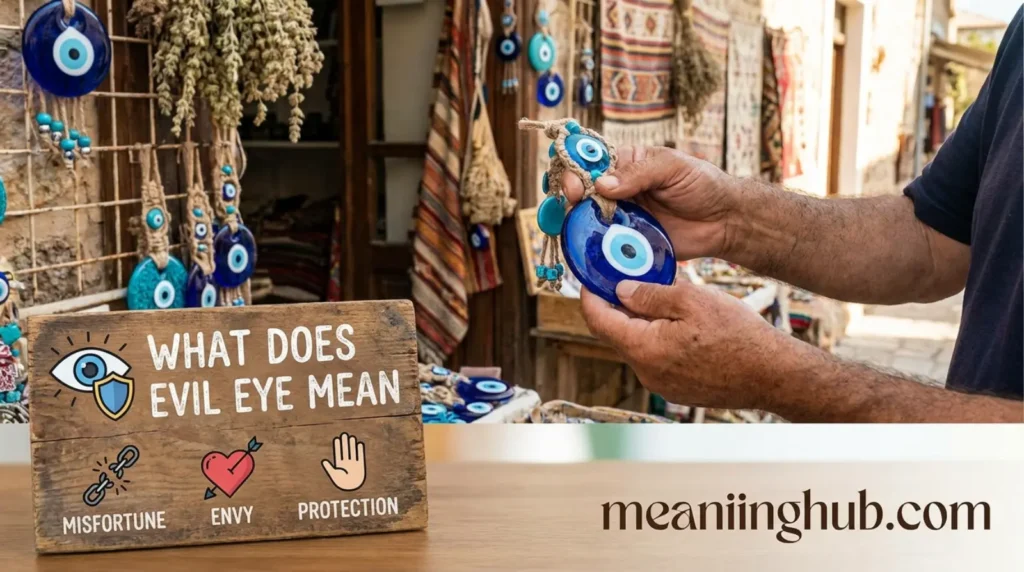
Evil Eye Full Meaning
Unlike internet abbreviations or text slang, the evil eye does not have a full form because it is not an acronym.
Instead, it represents a traditional spiritual and cultural belief.
It generally symbolizes:
- Protection from envy
- Defense against negative energy
- Good fortune
- Spiritual safety
- Positive intentions
Is the Evil Eye Good or Bad?
This is one of the most common questions people ask.
The answer depends on what you mean.
The evil eye itself represents harmful envy or jealousy.
The evil eye symbol, however, is considered protective in many cultures.
| Evil Eye | Evil Eye Symbol |
|---|---|
| Represents harmful envy | Represents protection |
| Associated with bad luck | Associated with safety |
| Negative belief | Positive protective charm |
Where Is the Evil Eye Commonly Used?
The evil eye appears in many parts of everyday life.
People often wear it as:
- Bracelets
- Necklaces
- Rings
- Earrings
- Keychains
- Home decorations
- Car ornaments
- Baby accessories
- Wall hangings
Many people believe these items help protect them from negative energy.
Others simply wear them because they appreciate the design and cultural meaning.
Evil Eye Meaning in Different Cultures
The belief in the evil eye exists across many civilizations.
Mediterranean Countries
Countries like Greece and Italy have long traditions surrounding the evil eye. Many families use charms or prayers for protection.
Turkey
The famous blue glass eye, often called the Nazar symbol, is commonly displayed in homes, businesses, and vehicles.
Middle East
Many communities believe that envy can unintentionally affect another person’s success or happiness.
South Asia
In countries like India and Pakistan, people often use black dots, charms, or protective prayers for babies, homes, and businesses to guard against the evil eye.
Latin America
Many cultures believe that excessive admiration without blessings may unintentionally bring bad luck, especially to young children.
Why Do People Believe in the Evil Eye?
People have believed in the evil eye for thousands of years because it helps explain unexpected events that seem difficult to understand.
Common reasons include:
- Sudden illness
- Unexpected financial problems
- Relationship difficulties
- Bad luck
- Loss of success
Although there is no scientific evidence proving the evil eye exists, many people continue to value the tradition because it is deeply connected to their culture, family beliefs, and spirituality.
Real Life Examples of Evil Eye Usage
Here are some common situations where people mention the evil eye.
Friendly Conversation
“I bought an evil eye bracelet for good luck.”
Casual Conversation
“My grandmother says not to brag too much or you’ll attract the evil eye.”
Family Context
“The baby is wearing an evil eye charm for protection.”
Social Media
“Love this new evil eye necklace.”
Travel
“I brought home an evil eye souvenir from Turkey.”
Origin and History of the Evil Eye
The belief dates back more than 3,000 years.
Historians have found references in:
- Ancient Greece
- Ancient Rome
- Ancient Egypt
- Mesopotamia
- Persia
Over time, the belief spread across Europe, Asia, Africa, and the Middle East.
Although customs vary, the central idea has remained remarkably similar across generations.
Evil Eye Symbol Colors and Their Meanings
Different colors are believed to represent different forms of protection.
| Color | Common Meaning |
|---|---|
| Blue | General protection |
| Dark Blue | Calmness and peace |
| Light Blue | Positive energy |
| White | Purity and focus |
| Red | Strength and courage |
| Green | Growth and health |
| Yellow | Happiness and confidence |
| Purple | Wisdom and spirituality |
| Black | Power and resilience |
Keep in mind that these meanings may differ between cultures and traditions.
Is the Evil Eye a Religious Symbol?
Not exactly.
The evil eye is generally considered a cultural and traditional belief, although some religions mention concepts related to envy and protection.
Many followers of different faiths either:
- Accept the belief
- Reject it
- View it as cultural rather than religious
Personal beliefs vary widely.
Comparison with Similar Protective Symbols
| Symbol | Purpose |
|---|---|
| Evil Eye | Protection from envy |
| Hamsa Hand | Protection and blessings |
| Four Leaf Clover | Good luck |
| Horseshoe | Fortune and protection |
| Dreamcatcher | Filters negative dreams |
Each symbol comes from a different cultural tradition.
When Should You Avoid Using the Evil Eye Symbol?
Although the symbol is widely accepted, consider these situations.
Avoid assuming everyone shares the same belief.
Respect religious or cultural differences.
Do not use the symbol to mock traditions or spiritual practices.
Avoid making false claims that it guarantees protection or good luck.
Why Do People Wear the Evil Eye?
People wear the evil eye for many personal reasons.
Some wear it because:
- It reminds them to stay positive.
- It connects them to their heritage.
- Their family traditions encourage it.
- They appreciate its artistic design.
- They believe it offers spiritual protection.
Others simply enjoy it as a fashionable accessory.
Impact of the Evil Eye in Modern Communication
The evil eye has become a global symbol.
Today it appears in:
- Fashion
- Jewelry
- Home décor
- Social media posts
- Emojis and stickers
- Gift items
- Art and design
Many influencers and celebrities have also helped popularize the symbol worldwide.
Is It Safe to Use the Evil Eye on Social Media?
Yes.
Using the evil eye emoji or symbol is generally safe on social media.
People often use it to express:
- Protection
- Positive vibes
- Spiritual beliefs
- Cultural identity
- Stylish aesthetics
However, always respect cultural and religious perspectives when discussing it online.
Common Myths About the Evil Eye
Many misunderstandings surround the evil eye.
Myth: Everyone believes in the evil eye.
Fact: Beliefs vary greatly across cultures and individuals.
Myth: Wearing an evil eye charm guarantees protection.
Fact: It is a traditional belief and cultural practice, not a scientifically proven method of protection.
Myth: The evil eye symbol is always religious.
Fact: Many people view it primarily as a cultural or decorative symbol.
Common Related Search Terms
People also search for:
- Evil Eye meaning
- Evil Eye meaning slang
- Evil Eye full meaning
- Evil Eye symbol meaning
- What does Evil Eye mean?
- Evil Eye bracelet meaning
- Blue Evil Eye meaning
- Evil Eye necklace meaning
- Evil Eye charm meaning
- What does the Evil Eye stand for?
FAQs
What is the Evil Eye meaning?
The evil eye refers to the belief that jealousy or envy can bring bad luck or harm, while the evil eye symbol is used for protection against that negative energy.
Is the evil eye real?
There is no scientific evidence proving the existence of the evil eye. It remains a cultural and spiritual belief practiced in many parts of the world.
What does the blue evil eye symbolize?
The blue evil eye commonly symbolizes protection, peace, and defense against negative energy.
Can anyone wear an evil eye bracelet?
Yes. Many people wear evil eye jewelry for cultural, spiritual, or fashion reasons.
Is the evil eye connected to one religion?
No. The belief appears in many cultures and traditions and is not exclusive to a single religion.
What happens if an evil eye charm breaks?
Some traditions believe a broken charm has absorbed negative energy and should be replaced. Others simply treat it as normal wear and tear.
Conclusion
The Evil Eye Meaning combines history, culture, and spirituality into one of the world’s oldest beliefs about envy and protection. While many people believe that negative thoughts or jealousy can bring bad luck, the evil eye symbol is widely recognized as a sign of protection and positive intentions.
Today, millions of people wear evil eye jewelry, decorate their homes with the symbol, or simply admire its cultural significance. Regardless of personal beliefs, understanding the Evil Eye meaning, its history, and its symbolism helps us appreciate the traditions that have connected communities across generations. Always respect different cultural perspectives and remember that the symbol’s meaning often depends on personal belief, heritage, and context.

Alexander Ford is a passionate writer who specializes in modern text slang, internet culture, and digital communication trends. He is known for his simple, engaging, and reader-friendly writing style that makes online language easy to understand. With a love for research and creativity, Alexander enjoys helping readers stay updated with the latest social media expressions and texting terms.