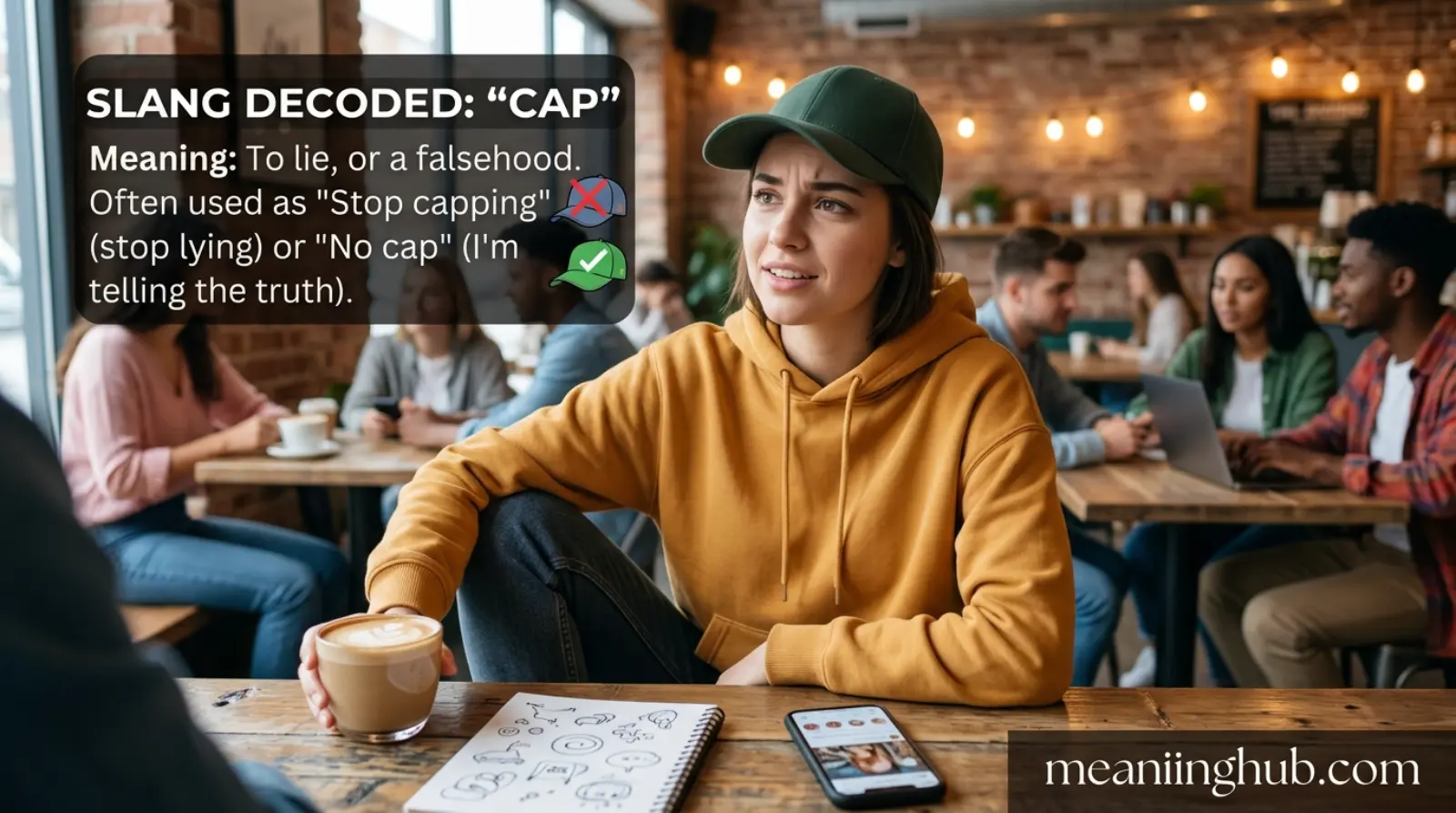
cap meaning in slang is a popular phrase people search when they see words like “that’s cap” or “no cap” in chats, TikTok comments, or social media posts. Internet slang evolves quickly, and “cap” has become one of the most widely used expressions among Gen Z and online communities. Many users get confused because the word “cap” normally means a hat, but in texting, it carries a completely different meaning.
This slang is mostly used to talk about truth and lies in a fun, casual way. If you are trying to understand online conversations, memes, or social media trends, knowing this term is very important.
Quick Answer:
“Cap” in slang means a lie or something not true. “No cap” means someone is telling the truth honestly.
What does cap meaning in slang mean in text?
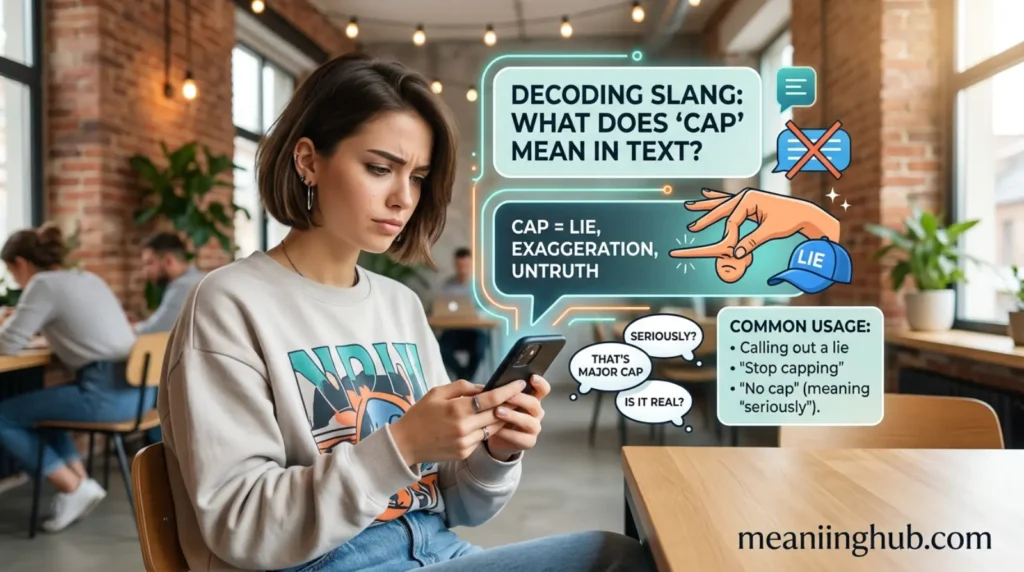
In text messages and social media, “cap” simply means a lie or false statement. When someone says “that’s cap,” they are saying the person is not telling the truth.
For example:
- “He said he has a private jet. That’s cap.”
On the other hand, “no cap” means “no lie” or “I am being completely honest.”
For example:
- “I made $100 today, no cap.”
So, the slang works in two opposite ways:
- Cap = lie / fake statement
- No cap = truth / honest statement
This simple contrast is what makes the slang popular in everyday digital communication.
Full form / definition of the slang
There is no official full form of “cap.” It is not an acronym. Instead, it is modern internet slang derived from African American Vernacular English (AAVE).
In slang usage:
- Cap = lie, exaggeration, or false claim
- No cap = truth, honesty, or sincerity
The term became mainstream through hip-hop culture and later spread across platforms like Twitter (X), TikTok, Instagram, and Snapchat.
Is it rude, offensive, or neutral?
“Cap” is generally considered informal and neutral, but tone matters a lot.
- Neutral usage: Friendly chats, memes, casual talks
- Playful teasing: “Bro, that’s cap 😂”
- Slightly confrontational: Can sound like calling someone a liar
It is not a highly offensive word, but it can hurt feelings if used aggressively. So, context and tone are very important when using it.
Where is it commonly used?
The slang “cap” is widely used in:
- Social media platforms (TikTok, Instagram, X/Twitter)
- Online gaming chats
- WhatsApp and Snapchat conversations
- Meme culture
- Rap lyrics and music communities
Young internet users especially use it in short, fast conversations where expressing truth or disbelief quickly is important.
Real-life examples of usage
Here are some real-world examples showing how “cap” is used in different situations:
1. Friendly conversation
- A: “I can run 10 km without stopping.”
- B: “No cap or you lying?”
2. Casual social media comment
- “He said he woke up at 5 AM every day this week. That’s cap.”
3. Gaming chat
- Player 1: “I can beat anyone in this lobby easily.”
- Player 2: “Big cap bro 😂”
4. Honest statement
- “I actually studied 6 hours today, no cap.”
5. Argument situation
- “Stop capping, you didn’t do all that work alone.”
Origin and background of the slang
The word “cap” originally comes from African American Vernacular English (AAVE), where “capping” meant exaggerating or lying.
It gained mainstream popularity through rap music in the 2010s, where artists used phrases like “no cap” to emphasize honesty.
Later, social media platforms like TikTok and Twitter helped spread it globally. Today, it is one of the most recognized slang terms among teenagers and young adults worldwide.
Comparison with similar slang
To better understand “cap,” here is a comparison with similar internet slang:
| Slang Term | Meaning | Usage Context |
|---|---|---|
| Cap | Lie or fake statement | “That’s cap” |
| No cap | Truth or honesty | “No cap, I’m serious” |
| Lie | False statement | Formal or direct speech |
| Fr (for real) | Agreeing or confirming truth | “Fr, that was” |
| Facts | Strong agreement with truth | “Facts, I agree with you” |
This shows that “cap” is part of a larger internet slang system used to express truth and emotions quickly.
When to avoid using it
Even though “cap” is common, there are times when you should avoid using it:
- Professional emails or workplace communication
- Formal academic writing
- Talking to elders or unfamiliar people
- Sensitive or serious discussions
- Situations where tone may be misunderstood
Using slang in the wrong context can make communication unclear or unprofessional.
Polite alternatives
If you want to sound more formal or respectful, you can use:
- “That is not true”
- “I don’t think that’s correct”
- “I’m being honest”
- “That sounds exaggerated”
- “I’m serious”
These alternatives are safer in formal conversations.
Why people use this slang
People use “cap” and “no cap” because:
- It is short and easy to type
- It adds emotion and personality to messages
- It fits modern fast-paced communication
- It is popular in memes and online culture
- It helps express honesty or disbelief quickly
Slang like this also makes conversations feel more casual and relatable.
Impact of using slang in communication
Slang like “cap” has changed the way people communicate online:
Positive impacts:
- Makes conversations more expressive
- Builds online community identity
- Helps people connect through trends
Negative impacts:
- Can confuse people unfamiliar with slang
- May reduce clarity in serious conversations
- Can be misinterpreted across cultures
So, while it is fun and modern, balance is important.
Is it safe for social media?
Yes, “cap” is generally safe for social media use. It is widely accepted on platforms like TikTok, Instagram, and YouTube comments.
However, avoid using it:
- In harassment or bullying contexts
- In professional brand communication
- In sensitive discussions where clarity matters most
Used properly, it is harmless and just a fun part of internet culture.
Examples in real-life conversations
Here are more detailed examples across different tones:
Friendly
- “You said you forgot my birthday? That’s cap, you always remember everything.”
Casual
- “I’m going to start working out daily, no cap this time.”
Argumentative
- “Stop capping, everyone knows that didn’t happen.”
Gaming
- “He said he’s the best player in the server… big cap energy 😂”
Social media
- “This movie is the best of the year, no cap.”
Conclusion
Understanding cap meaning in slang helps you stay updated with modern internet language. In simple terms, “cap” means a lie, while “no cap” means truth. It is widely used in social media, texting, and pop culture to express honesty or disbelief in a quick and casual way.
However, like all slang, it depends on context. Using it with friends is fine, but in formal or serious situations, clearer language is better. As online communication continues to evolve, knowing terms like this helps you stay connected and confident in digital conversations.

Alexander Ford is a passionate writer who specializes in modern text slang, internet culture, and digital communication trends. He is known for his simple, engaging, and reader-friendly writing style that makes online language easy to understand. With a love for research and creativity, Alexander enjoys helping readers stay updated with the latest social media expressions and texting terms.