WTW meaning in text is a common question people ask when they receive this abbreviation in a message, social media post, or online chat. Internet slang changes quickly, and keeping up with new abbreviations can sometimes feel confusing.
If you’ve ever received a text saying “WTW?” and wondered what the sender meant, you’re not alone. This popular slang term is widely used on platforms like Snapchat, Instagram, TikTok, WhatsApp, and regular text messages. Understanding its meaning can help you respond appropriately and avoid misunderstandings.
Quick Answer
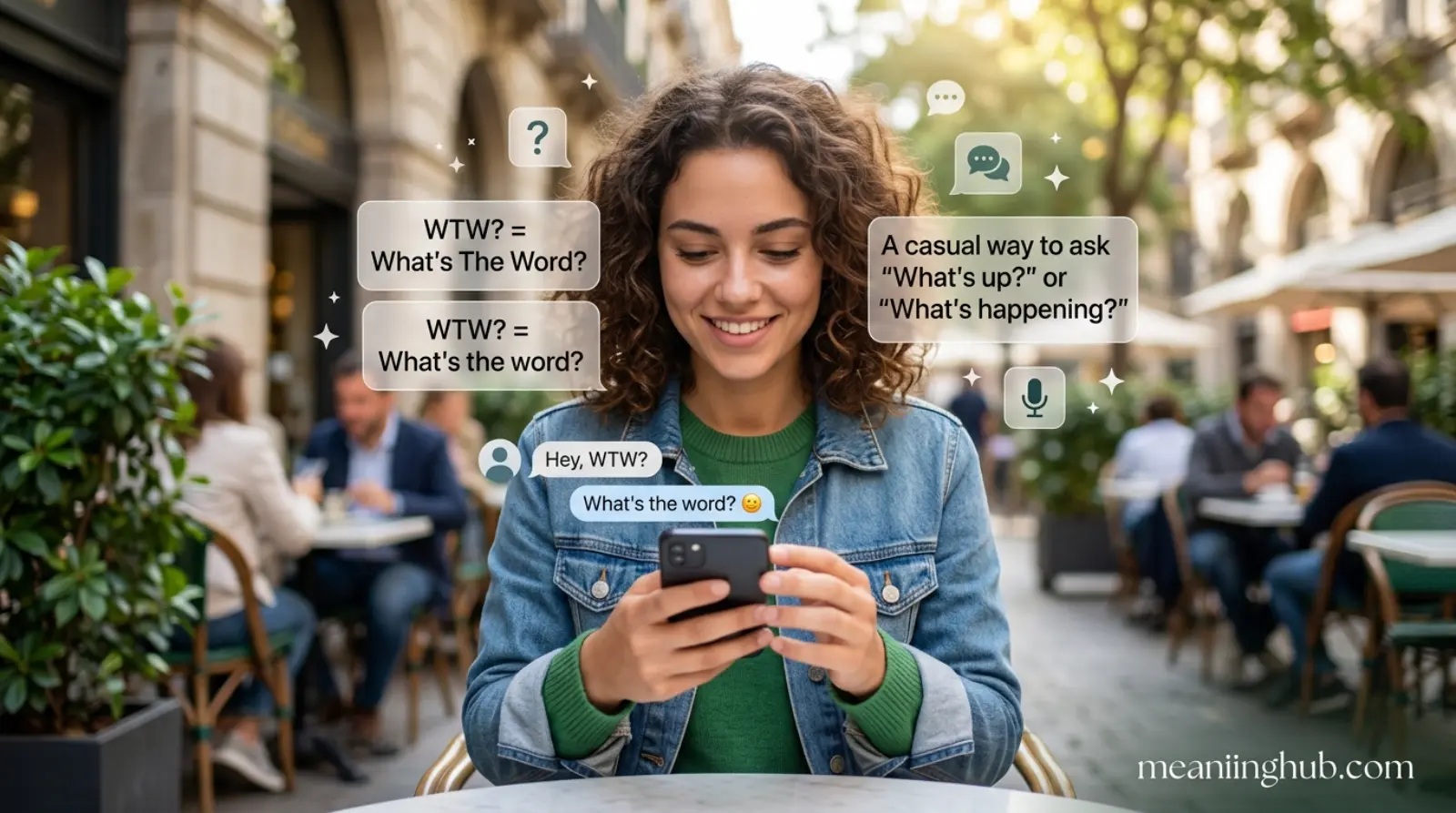
WTW stands for “What’s the Word?” In texting, it is usually used to ask what is happening, what someone’s plans are, or what’s going on.
What Does WTW Mean in Text?
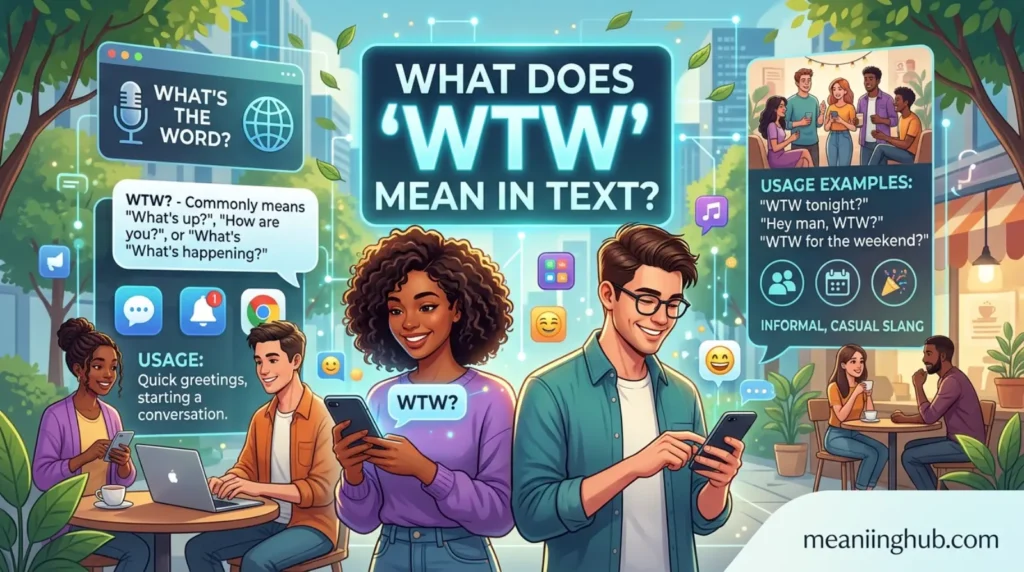
The most common WTW meaning in text is “What’s the Word?”
People use it as a casual way to ask:
- What’s going on?
- What’s happening?
- What are you doing?
- Any plans today?
- What’s the update?
The phrase is often used to start a conversation or check in with someone.
For example:
Friend: WTW tonight?
You: Nothing much. Thinking about watching a movie.
In this situation, WTW is asking about your plans for the evening.
WTW Full Form
The WTW full form is:
WTW = What’s the Word?
The phrase originated as a casual greeting that asks for news, updates, or plans. Over time, it became shortened to the abbreviation WTW, making it faster to type in digital conversations.
Some people may occasionally use WTW with slightly different meanings depending on context, but “What’s the Word?” remains the most widely accepted definition.
What Does WTW Stand For in Slang?
If you’re searching for what does WTW stand for, the answer is usually:
What’s the Word?
In slang culture, it acts as a conversation starter rather than a direct question.
For example:
- WTW this weekend?
- WTW bro?
- WTW after class?
- WTW later?
In each example, the sender wants to know what is happening or what plans are being made.
Is WTW Rude, Offensive, or Neutral?
WTW is generally considered neutral and friendly.
It is not an offensive slang term and is commonly used among:
- Friends
- Classmates
- Family members
- Online gaming communities
- Social media users
However, because it is very informal, it may not be suitable for professional communication.
Appropriate Situations
Texting friends
Casual social media chats
Group conversations
Gaming communities
Less Appropriate Situations
Business emails
Professional meetings
Formal communication
Academic reports
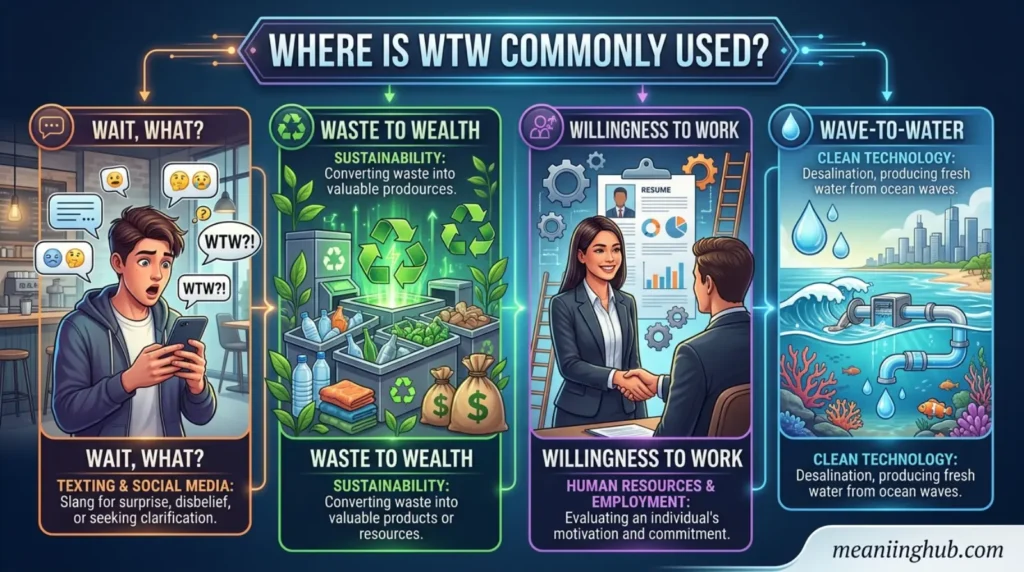
Where Is WTW Commonly Used?
WTW appears frequently across digital communication platforms.
Social Media
Users often send WTW in direct messages to start conversations.
Examples:
- WTW today?
- WTW this weekend?
Text Messages
Many people use WTW as a quick replacement for longer questions.
Example:
- WTW after work?
Gaming Communities
Gamers often use WTW when looking for teammates or discussing plans.
Example:
- WTW? Anyone running ranked matches tonight?
Group Chats
WTW is commonly used to organize activities.
Example:
- WTW this Friday?
Real-Life Examples of WTW Usage
Understanding examples makes the slang easier to recognize.
Friendly Example
Alex: WTW today?
Jordan: Just relaxing at home.
Casual Example
Friend: WTW tonight?
You: Thinking about grabbing some food.
Social Media Example
Message: WTW this weekend?
Reply: I’m going to a concert on Saturday.
Planning Example
Person 1: WTW after class?
Person 2: Let’s meet at the coffee shop.
Origin and Background of WTW
The phrase “What’s the Word?” existed long before texting became popular.
Historically, people used the expression to ask:
- What’s the news?
- What’s happening?
- Any updates?
As texting and social media became more common, users started shortening phrases into abbreviations to save time.
Just as:
- BRB means “Be Right Back”
- LOL means “Laugh Out Loud”
- IMO means “In My Opinion”
The phrase “What’s the Word?” eventually became WTW.
Today, it is widely recognized among younger internet users and social media communities.
Why People Use WTW
People use WTW because it is:
Quick
Typing three letters is faster than writing a full question.
Casual
It sounds friendly and relaxed.
Flexible
WTW can fit many different situations.
Conversation Starter
Many people use it simply to begin chatting.
Modern
Internet slang helps users communicate efficiently in fast-paced digital environments.
Impact of Using Slang in Communication
Slang terms like WTW influence how people communicate online.
Positive Effects
- Faster communication
- More casual conversations
- Builds social connections
- Creates a friendly tone
Potential Drawbacks
- Not everyone understands the meaning
- Can create confusion across generations
- May appear unprofessional in formal settings
Using slang effectively requires understanding your audience and the context of the conversation.
Comparison With Similar Slang Terms
Many abbreviations have meanings similar to WTW.
| Slang | Meaning | Usage |
|---|---|---|
| WTW | What’s the Word? | Asking what’s happening |
| WYD | What Are You Doing? | Asking about current activity |
| WSG | What’s Good? | Casual greeting |
| SUP | What’s Up? | Friendly greeting |
| HMU | Hit Me Up | Contact me later |
| WYA | Where You At? | Asking someone’s location |
WTW vs WYD
WTW asks about plans, updates, or what’s happening.
WYD asks specifically what someone is currently doing.
Example:
WTW tonight? = Any plans tonight?
WYD right now? = What are you doing at this moment?
WTW vs WSG
Both are casual greetings.
WTW often focuses on plans or updates.
WSG is more like saying “What’s up?” or “How are things?”
When Should You Avoid Using WTW?
Although WTW is harmless, there are situations where it may not be appropriate.
Professional Emails
Instead of:
“WTW regarding the project?”
Use:
“Do you have any updates regarding the project?”
Formal Business Communication
Professional language creates a better impression.
Academic Writing
Slang should generally be avoided in essays, reports, and research papers.
Communicating With People Unfamiliar With Slang
Older relatives or people who rarely use social media may not understand WTW.
Polite Alternatives to WTW
If you need a more formal approach, consider these alternatives:
- What’s happening?
- Do you have any updates?
- What are your plans?
- How are things going?
- What’s new?
- How have you been?
These phrases work in both casual and semi-professional conversations.
Is WTW Safe for Social Media?
Yes, WTW is generally safe to use on social media.
It is:
- Non-offensive
- Family-friendly
- Commonly understood
- Widely accepted
You can safely use it on:
- Snapchat
- TikTok
- Facebook Messenger
- Discord
The only concern is whether your audience understands the abbreviation.
Examples of WTW in Different Contexts
Friendly Tone
Friend: WTW this weekend?
You: I’m visiting my cousins.
Casual Tone
Person: WTW later?
Reply: Probably going to the gym.
Argumentative Tone
Person 1: WTW? Why aren’t you answering?
Person 2: I’ve been busy all day.
Gaming Context
Player 1: WTW tonight?
Player 2: Let’s run some matches.
Social Media Context
DM: WTW after the event?
Reply: Everyone is meeting downtown.
Group Chat Context
Member: WTW Friday?
Group: Movie night sounds good.
Frequently Asked Questions
What does WTW mean in text?
WTW usually means “What’s the Word?” It is used to ask what is happening or what someone’s plans are.
What is the WTW full form?
The WTW full form is “What’s the Word?”
Is WTW a bad word?
No. WTW is a neutral and friendly slang abbreviation.
What does WTW mean on Snapchat?
On Snapchat, WTW typically means “What’s the Word?” and is often used to ask about plans, updates, or current activities.
Is WTW the same as WYD?
No. WTW asks what’s happening or what the plans are, while WYD asks what someone is currently doing.
Can I use WTW in professional emails?
It is not recommended. Use complete and professional phrases instead.
Conclusion
Understanding the WTW meaning in text can help you communicate more confidently in modern digital conversations. The abbreviation most commonly stands for “What’s the Word?” and is used to ask what’s happening, what someone’s plans are, or to simply start a conversation.
WTW is friendly, casual, and widely used across social media, texting, and gaming communities. While it is perfectly acceptable in informal conversations, it should generally be avoided in professional or formal settings. By understanding the context and tone behind WTW, you can use it naturally and respond appropriately whenever it appears in your messages.

Emily Johin is a passionate writer who enjoys creating simple, engaging, and reader-friendly content. She specializes in topics like text meanings, online trends, and modern lifestyle ideas. Her writing style is clear, conversational, and designed to connect with everyday readers. Outside of writing, Emily loves reading blogs, exploring new cafés, and discovering fresh creative inspiration.