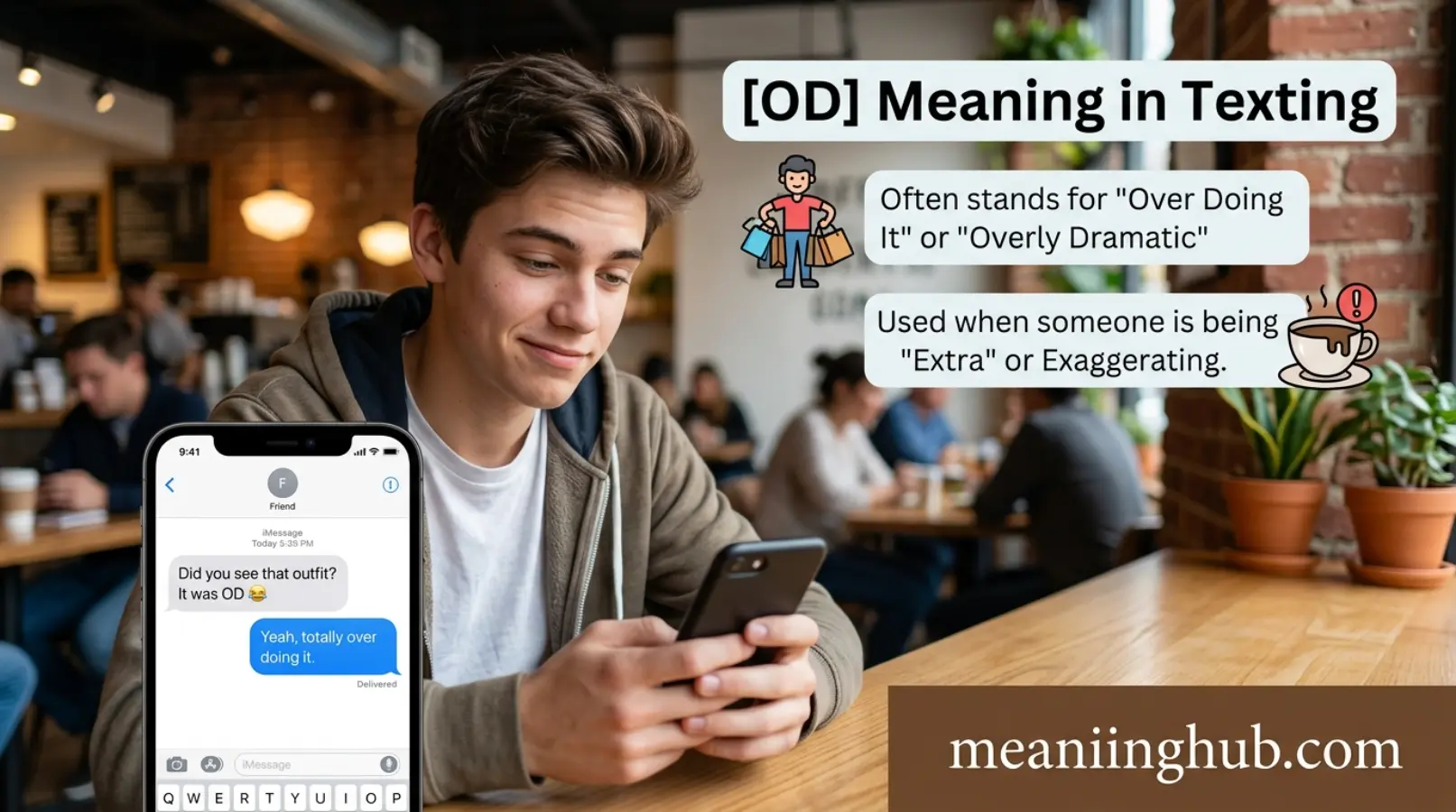
OD meaning in text is something many people search when they come across this short slang in messages, chats, or social media.
If you’ve ever received a message like “That’s OD funny” or “You’re doing too much, OD,” you might have paused and wondered what it actually means.
In today’s digital world, slang evolves quickly.
Words like “OD” can carry different meanings depending on the context, tone, and platform.
Understanding these meanings helps you communicate better and avoid confusion or awkward situations.
Quick Answer:
OD in text usually means “overdoing” or “overdose,” used to describe something excessive or extreme. It can be positive (very funny) or negative (too much behavior), depending on context.
What Does OD Mean in Text?
The OD meaning in text generally refers to something being too much, excessive, or extreme. It’s often used casually in conversations to emphasize intensity.
Common meanings include:
- Overdoing something (doing too much)
- Overdose (slang exaggeration) — not always literal
- Extremely or very (used like “super” or “really”)
Example:
- “That video was OD funny” → Extremely funny
- “You’re OD right now” → You’re doing too much
The meaning depends heavily on tone and context.
OD Full Form / Definition
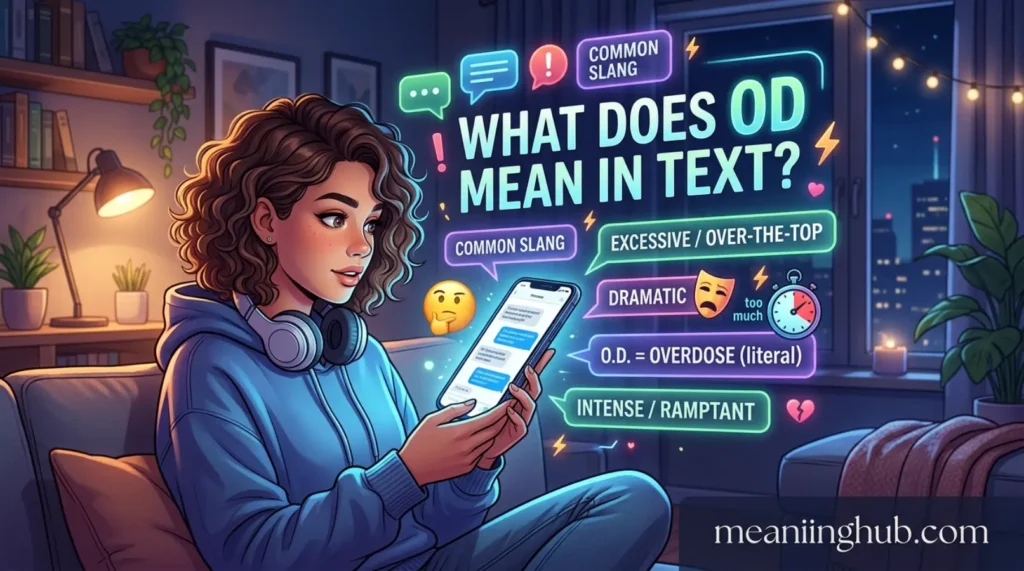
There isn’t just one official full form, but here are the most common interpretations:
| Term | Meaning |
|---|---|
| OD | Overdose |
| OD | Overdoing |
| OD | Overly Dramatic (rare use) |
In slang, “overdose” is rarely used in a serious medical sense. Instead, it’s used metaphorically to describe excess.
Is OD Rude, Offensive, or Neutral?
The tone of OD meaning slang can vary:
✅ Neutral / Positive:
- “That joke was OD funny”
- Means something is extremely good or entertaining
⚠️ Slightly Negative:
- “You’re OD right now”
- Implies someone is overreacting or being annoying
❌ Potentially Offensive:
- In serious contexts, referencing “overdose” can be sensitive
👉 Conclusion: OD is generally casual and harmless, but tone matters
Where Is OD Commonly Used?
You’ll find OD meaning in text across many digital platforms:
📱 Social Media:
- Instagram captions
- TikTok comments
- Snapchat messages
💬 Chat Apps:
- Messenger
- Discord
🎮 Gaming Communities:
- Used to describe gameplay or reactions
- Example: “That move was OD!”
It’s especially popular among younger audiences and online communities.
Real-Life Examples of OD in Text
Here are practical examples showing how OD is used:
Friendly:
- “Bro, that meme is OD funny 😂”
Casual:
- “You’re OD with those filters today”
Argumentative:
- “Stop being OD, it’s not that serious”
Gaming Context:
- “That combo was OD powerful!”
Social Media:
- “This outfit is OD 🔥”
Origin and Background of OD Slang
The slang version of OD meaning in text comes from the word “overdose.”
Originally:
- It referred to taking too much of something (medical/drug context)
Over time:
- Internet culture turned it into slang meaning “too much” or “extreme”
This transformation is common in modern language, where serious words become exaggerated expressions.
Comparison With Similar Slang
Here’s how OD compares with other popular slang:
| Slang | Meaning | Usage |
|---|---|---|
| OD | Too much / extreme | “That’s OD funny” |
| Extra | Over-the-top behavior | “She’s being extra” |
| Too much | Annoying/excessive | “You’re too much” |
| Wild | Crazy/unbelievable | “That’s wild” |
👉 Key Difference:
“OD” is shorter and more expressive, often used for emphasis.
When to Avoid Using OD
Even though it’s common, there are times when using OD isn’t appropriate:
🚫 Avoid in:
- Professional emails
- Academic writing
- Serious discussions
- Sensitive topics (health or addiction)
Why?
Because slang can:
- Sound unprofessional
- Be misunderstood
- Offend in serious contexts
Polite Alternatives to OD
If you want to sound more formal or respectful, try these:
“OD funny”:
- Very funny
- Extremely funny
“You’re OD”:
- You’re overreacting
- That’s a bit too much
“OD good”:
- Excellent
- Really impressive
Why Do People Use OD in Text?
People love using slang like OD for several reasons:
1. Quick Communication
Short words save time while typing.
2. Express Emotions Better
“OD funny” sounds stronger than just “funny.”
3. Trend & Culture
Slang keeps conversations modern and relatable.
4. Social Identity
Using slang helps people feel part of a group or trend.
Impact of Using Slang in Communication
Using slang like OD can have both positive and negative effects:
👍 Positive:
- Makes chats fun and engaging
- Builds connection with peers
- Shows personality
👎 Negative:
- Can confuse others
- May seem unprofessional
- Might be misunderstood
👉 Balance is key—use slang where appropriate.
Is OD Safe for Social Media?
Yes, OD meaning in text is generally safe for social media.
✔ Safe when:
- Used casually with friends
- In memes or entertainment posts
⚠ Be careful:
- Around sensitive audiences
- In public or professional profiles
Always consider your audience before posting.
Examples Section (Different Tones)
😊 Friendly Tone:
- “Your new haircut is OD nice!”
😎 Casual Tone:
- “That party was OD fun last night”
😠 Argumentative Tone:
- “You’re OD right now, relax”
🎮 Gaming Tone:
- “That weapon is OD overpowered!”
📲 Social Media Tone:
- “This song is OD 🔥🔥”
FAQs About OD Meaning in Text
1. What does OD stand for in texting?
OD usually stands for “overdoing” or “overdose,” meaning something excessive or extreme.
2. Is OD a bad word?
No, it’s not a bad word, but it can sound rude depending on tone.
3. Does OD always mean overdose?
No. In slang, it rarely refers to actual overdose—it usually means “too much.”
4. Can I use OD in formal writing?
No, it’s best to avoid slang like OD in professional or academic contexts.
5. What is OD meaning slang in social media?
It means extremely, very, or too much, often used for emphasis.
6. Is OD popular among teenagers?
Yes, it’s widely used among younger audiences and online communities.
Conclusion
Understanding the OD meaning in text helps you stay updated with modern slang and communicate more effectively. Whether it means “overdoing,” “too much,” or “extremely,” the key is context.
Used correctly, OD can make your conversations more expressive and fun. But like all slang, it should be used wisely especially in professional or sensitive situations.

Emily Johin is a passionate writer who enjoys creating simple, engaging, and reader-friendly content. She specializes in topics like text meanings, online trends, and modern lifestyle ideas. Her writing style is clear, conversational, and designed to connect with everyday readers. Outside of writing, Emily loves reading blogs, exploring new cafés, and discovering fresh creative inspiration.