
MCH meaning blood test is a common search term because many people see “MCH” on their complete blood count (CBC) report and are unsure what it means. Whether you’re reviewing routine lab results or checking values after experiencing fatigue, weakness, or other symptoms, understanding MCH can help you better interpret your blood test.
MCH meaning blood test Although MCH is only one part of a CBC test, it provides valuable information about your red blood cells and can help healthcare providers identify different types of anemia and other blood-related conditions. MCH meaning blood test It’s important to remember that MCH is not interpreted on its own. Doctors usually evaluate it alongside other blood test values for an accurate diagnosis.
Quick Answer:
MCH (Mean Corpuscular Hemoglobin) measures the average amount of hemoglobin inside each red blood cell. It helps doctors evaluate oxygen-carrying capacity and detect different types of anemia.
What Does MCH Mean in a Blood Test?
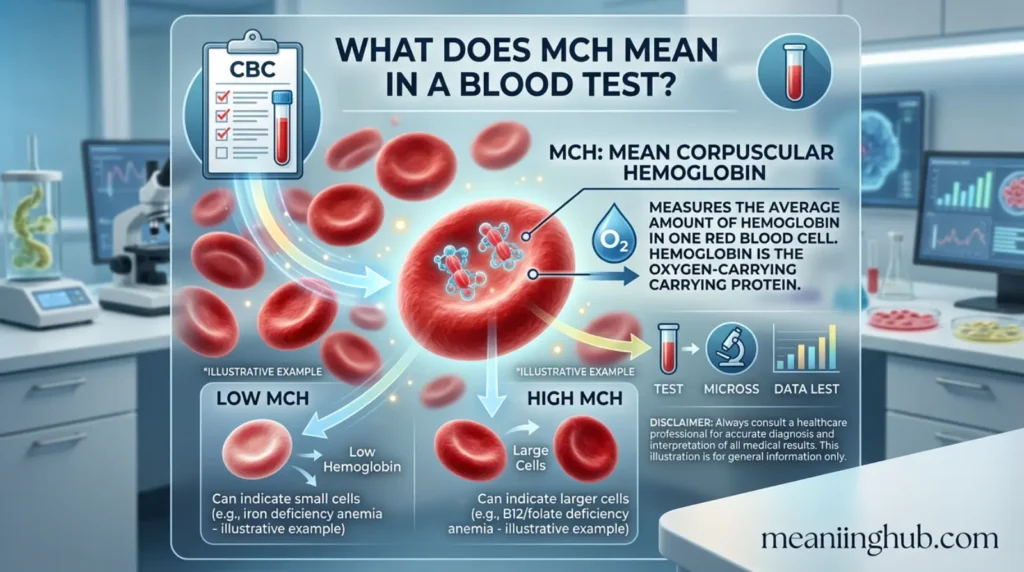
MCH stands for Mean Corpuscular Hemoglobin. It measures the average amount of hemoglobin contained in each individual red blood cell.
Hemoglobin is the iron-rich protein responsible for carrying oxygen from your lungs to the rest of your body. Since every cell depends on oxygen, healthy hemoglobin levels are essential for normal body function.
MCH is included as part of a Complete Blood Count (CBC), one of the most commonly ordered laboratory tests.
Doctors use MCH to:
- Diagnose anemia
- Evaluate red blood cell health
- Identify nutritional deficiencies
- Monitor ongoing treatment
- Investigate symptoms like tiredness or dizziness
MCH Full Form
The MCH full form is:
Mean Corpuscular Hemoglobin
Breaking it down:
- Mean = Average
- Corpuscular = Related to red blood cells
- Hemoglobin = Protein that carries oxygen
Together, the term means the average amount of hemoglobin inside each red blood cell.
How Is MCH Measured?
MCH is calculated using two blood measurements:
- Hemoglobin level
- Red blood cell count
The result is expressed in:
Picograms (pg) per red blood cell
Most laboratories automatically calculate MCH as part of your CBC, so no additional testing is required.
What Is the Normal MCH Range?
The normal range may vary slightly between laboratories, but typical values are:
| MCH Result | Interpretation |
|---|---|
| 27–33 pg | Normal |
| Below 27 pg | Low MCH |
| Above 33 pg | High MCH |
Always compare your results with your laboratory’s reference range.
What Does Low MCH Mean?
Low MCH means your red blood cells contain less hemoglobin than normal.
This usually indicates that your blood carries less oxygen throughout the body.
Common causes include:
- Iron deficiency anemia
- Chronic blood loss
- Heavy menstrual bleeding
- Poor nutrition
- Certain inherited blood disorders such as thalassemia
- Chronic disease
Possible symptoms
People with low MCH may experience:
- Fatigue
- Weakness
- Pale skin
- Shortness of breath
- Dizziness
- Cold hands and feet
- Headaches
Treatment depends on identifying and correcting the underlying cause.
What Does High MCH Mean?
High MCH means your red blood cells contain more hemoglobin than average.
This often occurs because the red blood cells are larger than normal.
Common causes include:
- Vitamin B12 deficiency
- Folate deficiency
- Liver disease
- Alcohol misuse
- Thyroid disorders
- Certain bone marrow disorders
Symptoms
Depending on the cause, symptoms may include:
- Fatigue
- Numbness or tingling
- Poor balance
- Pale skin
- Weakness
- Memory problems
Your doctor may recommend additional blood tests to determine the exact reason.
Why Is MCH Important?
MCH provides valuable information about how effectively your blood transports oxygen.
It helps healthcare professionals:
- Detect anemia early
- Differentiate different types of anemia
- Monitor treatment response
- Evaluate nutritional deficiencies
- Investigate unexplained fatigue
Since MCH alone cannot diagnose disease, it is interpreted with other CBC measurements.
MCH vs Other Blood Test Values
Several CBC measurements work together to evaluate red blood cells.
| Test | Measures | Purpose |
|---|---|---|
| MCH | Average hemoglobin per red blood cell | Detects anemia type |
| MCV | Average red blood cell size | Classifies anemia |
| MCHC | Hemoglobin concentration inside red blood cells | Evaluates hemoglobin density |
| Hemoglobin | Total oxygen-carrying protein | Detects anemia severity |
| Hematocrit | Percentage of blood made up of red blood cells | Assesses blood volume |
Doctors consider all of these values together rather than relying on one number alone.
What Conditions Can Affect MCH?
Many health conditions influence MCH levels.
Low MCH may occur with:
- Iron deficiency
- Chronic bleeding
- Thalassemia
- Long-term inflammatory disease
High MCH may occur with:
- Vitamin B12 deficiency
- Folate deficiency
- Liver disease
- Hypothyroidism
- Alcohol-related illness
Sometimes medications or pregnancy may also slightly affect blood test results.
How Doctors Use MCH in Diagnosis
When your MCH falls outside the normal range, your healthcare provider may recommend additional tests.
These might include:
- Iron studies
- Vitamin B12 level
- Folate level
- Reticulocyte count
- Peripheral blood smear
- Thyroid function tests
- Liver function tests
These investigations help identify the root cause rather than focusing only on the abnormal MCH value.
Is High or Low MCH Always Serious?
Not necessarily.
A slightly abnormal MCH does not automatically mean you have a serious illness.
Several harmless factors can temporarily affect blood test values, including:
- Mild dehydration
- Recent illness
- Pregnancy
- Minor nutritional deficiencies
Doctors interpret your medical history, symptoms, physical examination, and other laboratory values before making a diagnosis.
Can MCH Be Improved?
Yes, in many cases.
Treatment depends entirely on the underlying cause.
Examples include:
- Iron supplements for iron deficiency
- Vitamin B12 replacement
- Folic acid supplements
- Dietary improvements
- Treating chronic diseases
- Managing bleeding disorders
Never begin supplements without medical advice because taking unnecessary iron or vitamins may cause harm.
Foods That Support Healthy Hemoglobin
Eating a balanced diet can help maintain healthy red blood cells.
Iron-rich foods include:
- Lean red meat
- Chicken
- Fish
- Lentils
- Beans
- Spinach
- Pumpkin seeds
Vitamin B12 sources:
- Eggs
- Milk
- Cheese
- Fish
- Beef
Folate-rich foods:
- Leafy green vegetables
- Citrus fruits
- Broccoli
- Avocados
- Peas
Vitamin C-rich foods also improve iron absorption.
Is MCH Related to Cancer?
An abnormal MCH alone does not indicate cancer.
Some cancers or cancer treatments may indirectly affect blood cell production and alter MCH values, but MCH is not used as a cancer screening test.
If doctors suspect another condition, they will order additional diagnostic tests.
Real-Life Examples
Example 1: Routine Health Check
Sarah had an annual physical exam. Her CBC showed a slightly low MCH, leading her doctor to diagnose early iron deficiency before symptoms became severe.
Example 2: Persistent Fatigue
James felt unusually tired for several months. His blood test revealed high MCH caused by vitamin B12 deficiency, which improved after treatment.
Example 3: Pregnancy Checkup
During pregnancy, Emma’s doctor monitored her MCH along with other CBC values to ensure healthy red blood cell production.
Example 4: Follow-Up Treatment
After taking iron supplements for three months, Michael’s MCH gradually returned to the normal range, showing his treatment was effective.
Comparison Table
| Blood Test | What It Measures | Why It Matters |
|---|---|---|
| MCH | Hemoglobin per red blood cell | Helps classify anemia |
| MCV | Size of red blood cells | Detects small or large cells |
| MCHC | Hemoglobin concentration | Evaluates cell color and density |
| Hemoglobin | Total oxygen-carrying protein | Measures anemia severity |
| RBC Count | Number of red blood cells | Assesses blood production |
Common Myths About MCH
Myth: MCH alone diagnoses anemia.
Fact: Doctors interpret MCH together with several other CBC values.
Myth: High MCH always means serious disease.
Fact: Many cases result from treatable vitamin deficiencies.
Myth: Low MCH always requires iron supplements.
Fact: Low MCH has multiple causes, and treatment depends on proper diagnosis.
Myth: One abnormal MCH result is enough to worry.
Fact: Temporary changes are common, and repeat testing may sometimes be recommended.
FAQs
What does MCH mean in a blood test?
MCH stands for Mean Corpuscular Hemoglobin, which measures the average amount of hemoglobin inside each red blood cell.
What is a normal MCH level?
Most laboratories consider 27–33 picograms (pg) to be the normal range, although slight variations may occur.
What causes low MCH?
Low MCH is commonly caused by iron deficiency anemia, chronic blood loss, poor nutrition, or inherited blood disorders.
What causes high MCH?
High MCH is often linked to vitamin B12 deficiency, folate deficiency, liver disease, alcohol use, or hypothyroidism.
Should I worry if my MCH is abnormal?
Not necessarily. A slightly abnormal result often requires additional testing before any diagnosis can be made.
Can diet improve MCH?
Yes. If nutritional deficiencies are responsible, eating foods rich in iron, vitamin B12, folate, and vitamin C may help after discussing treatment with your healthcare provider.
Conclusion
Understanding mch meaning blood test can make reading your laboratory report much less confusing. MCH, or Mean Corpuscular Hemoglobin, measures the average amount of hemoglobin inside each red blood cell and provides important information about your body’s ability to transport oxygen.
While high or low MCH values may suggest anemia or nutritional deficiencies, they should never be interpreted on their own. Healthcare providers evaluate MCH together with other CBC results, your symptoms, and medical history to determine the underlying cause. If your MCH falls outside the normal range, follow your healthcare provider’s recommendations for further evaluation and treatment rather than drawing conclusions from a single number.

Alexander Ford is a passionate writer who specializes in modern text slang, internet culture, and digital communication trends. He is known for his simple, engaging, and reader-friendly writing style that makes online language easy to understand. With a love for research and creativity, Alexander enjoys helping readers stay updated with the latest social media expressions and texting terms.