
LY meaning in text is a common question among people who frequently use social media, texting apps, and online chats. Internet slang continues to evolve, and many abbreviations can be confusing when you see them for the first time. One of those short forms is “LY.”
Whether you received a message saying “miss you LY” or saw LY used in a comment on social media, understanding its meaning can help you communicate more effectively online. Like many texting abbreviations, LY saves time while expressing emotions quickly.
In this guide, you’ll learn what LY means, where it comes from, how people use it, and when it may or may not be appropriate to use.
Quick Answer:
LY usually stands for “Love You.” It is a short and affectionate way to express care, affection, or love in text messages, chats, and social media conversations.
What Does LY Mean in Text?
The most common LY meaning in text is “Love You.”
People use LY as a quick abbreviation when texting friends, family members, romantic partners, or close acquaintances. It conveys affection without requiring the sender to type the entire phrase.
Examples:
- Love talking to you. LY!
- Good night, LY.
- Miss you already, LY.
- Thanks for always being there. LY.
The abbreviation is widely recognized across various messaging platforms and is generally used in a positive and caring way.
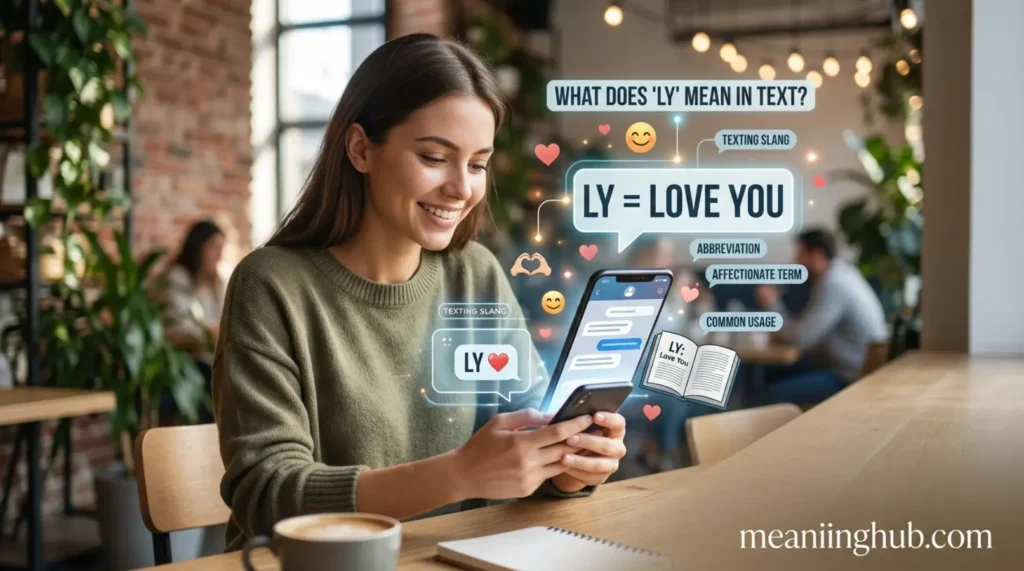
LY Full Form
The LY full form is:
LY = Love You
This abbreviation became popular because it is short, easy to type, and immediately understood by many internet users.
In some contexts, people may use:
- LYSM = Love You So Much
- ILY = I Love You
- ILYSM = I Love You So Much
Among these, LY is one of the shortest ways to communicate affection.
Is LY Rude, Offensive, or Neutral?
LY is generally considered positive and friendly.
Neutral Situations
- Texting close friends
- Chatting with family members
- Social media comments
- Casual conversations
Affectionate Situations
- Romantic relationships
- Best friends
- Family group chats
Situations to Avoid
While LY is not offensive, it may feel too personal in:
- Professional emails
- Workplace communication
- Formal business conversations
- Messages to people you barely know
The meaning remains positive, but context matters.
Where Is LY Commonly Used?
You can find LY across many digital platforms.
Text Messages
Friends and family often use LY at the end of conversations.
Example:
“Have a great day! LY.”
Social Media
Users may comment:
“Happy birthday! LY.”
Messaging Apps
LY frequently appears on:
- Messenger
- Snapchat
- Telegram
- Instagram DMs
Online Communities
Some online friends use LY to express appreciation and support.
Real-Life Examples of LY Usage
Understanding real examples helps clarify the LY meaning slang users encounter online.
Example 1: Family Conversation
Mom: “Drive safely.”
Child: “I will. LY.”
Example 2: Friendship
Friend 1: “Thanks for helping me today.”
Friend 2: “Anytime. LY.”
Example 3: Romantic Relationship
Partner: “Good night.”
Partner: “Sweet dreams. LY.”
Example 4: Social Media Comment
“Congratulations on your achievement! LY!”
These examples show how naturally LY fits into digital conversations.
Origin and Background of LY
The rise of LY is closely tied to texting culture.
When SMS messaging became popular, users often shortened words and phrases to save time and character space. Expressions such as:
- LOL
- BRB
- OMG
- ILY
became common.
Eventually, people started using LY as an even shorter version of “Love You.”
As social media platforms grew, LY spread across online communities and became part of everyday internet communication.
Today, it remains a simple and recognizable way to express affection digitally.
LY vs Similar Slang Terms
Many abbreviations have meanings similar to LY.
| Slang | Full Form | Meaning | Strength of Emotion |
|---|---|---|---|
| LY | Love You | Affection and care | Medium |
| ILY | I Love You | Direct expression of love | High |
| LYSM | Love You So Much | Strong affection | Very High |
| ILYSM | I Love You So Much | Deep affection | Very High |
| XOXO | Hugs and Kisses | Warm affection | Medium |
| BFF | Best Friends Forever | Close friendship | Medium |
This comparison helps explain what does LY stand for compared with similar internet slang.
When to Avoid Using LY
Although LY is generally harmless, there are situations where it may not be suitable.
Professional Communication
Avoid LY in:
- Business emails
- Client communications
- Job applications
Formal Relationships
People who don’t know you well may misunderstand the tone.
Sensitive Conversations
In serious discussions, a full expression of feelings may be more appropriate than an abbreviation.
Using complete words often feels more sincere when discussing important matters.
Polite Alternatives to LY
If you want to express warmth without using slang, consider these alternatives:
- Take care
- Wishing you the best
- Appreciate you
- Thank you so much
- Thinking of you
- Have a wonderful day
- Sending my best wishes
These phrases work well in both personal and semi-formal situations.
Why Do People Use LY?
There are several reasons why LY remains popular.
Saves Time
Typing two letters is faster than writing “Love You.”
Expresses Emotion Quickly
Users can communicate affection instantly.
Fits Modern Communication
Short messages dominate texting culture.
Feels Casual and Friendly
Many people prefer relaxed communication styles online.
Widely Understood
Most internet users recognize the abbreviation immediately.
Because of these benefits, LY continues to appear frequently in digital conversations.
Impact of Using Slang in Communication
Internet slang changes how people communicate.
Advantages
- Faster conversations
- Greater convenience
- More casual interactions
- Easy emotional expression
Disadvantages
- Potential misunderstandings
- Less suitable in formal settings
- Different interpretations across age groups
Understanding slang like LY helps users navigate modern communication more effectively.
Is LY Safe for Social Media?
Yes, LY is generally safe to use on social media.
It does not contain offensive language and is commonly viewed as a positive expression.
However, consider:
- Your audience
- The platform
- Your relationship with the recipient
Using LY appropriately helps ensure your message is interpreted correctly.
Examples of LY in Different Contexts
Friendly Tone
“Thanks for always making me laugh. LY!”
Casual Tone
“Talk to you later. LY.”
Argument Resolution
“I’m glad we worked things out. LY.”
Gaming Context
“Great match today, team. LY guys!”
Social Media Context
“Happy birthday! Hope you have an amazing year. LY!”
These examples demonstrate the flexibility of the phrase across various situations.
Frequently Asked Questions
What does LY mean in text?
LY usually means “Love You.” It is a common texting abbreviation used to express affection.
What does LY stand for?
LY stands for Love You.
Is LY the same as ILY?
Not exactly. Both express affection, but ILY means “I Love You” and is often considered slightly more direct.
Is LY romantic?
It can be romantic, but it is also commonly used between friends and family members.
Can I use LY in professional messages?
Generally, no. Professional communication usually requires more formal language.
Is LY popular on social media?
Yes. LY is commonly used on social media platforms, messaging apps, and text conversations.
Conclusion
Understanding the LY meaning in text helps you interpret modern digital conversations more confidently. In most cases, LY stands for “Love You” and is used to express affection, appreciation, or emotional closeness.
The abbreviation is widely used among friends, family members, romantic partners, and social media users. While LY is friendly and positive, it is best reserved for casual communication rather than professional settings.
Whenever you encounter LY in a message, consider the context and relationship between the people involved. Doing so will help you understand the tone correctly and use the abbreviation appropriately in your own conversations.

Emily Johin is a passionate writer who enjoys creating simple, engaging, and reader-friendly content. She specializes in topics like text meanings, online trends, and modern lifestyle ideas. Her writing style is clear, conversational, and designed to connect with everyday readers. Outside of writing, Emily loves reading blogs, exploring new cafés, and discovering fresh creative inspiration.