Emma name meaning is a topic many parents, name enthusiasts, and curious readers search for when exploring beautiful and timeless baby names. Emma has been a favorite choice for generations because it sounds elegant, simple, and easy to pronounce across many cultures.
Whether you’re considering Emma for a baby girl, researching your own name, or simply interested in name origins, understanding the meaning behind a name can add a deeper level of appreciation. Emma carries a rich history, positive symbolism, and a charming personality that has helped it remain popular around the world.
Quick Answer
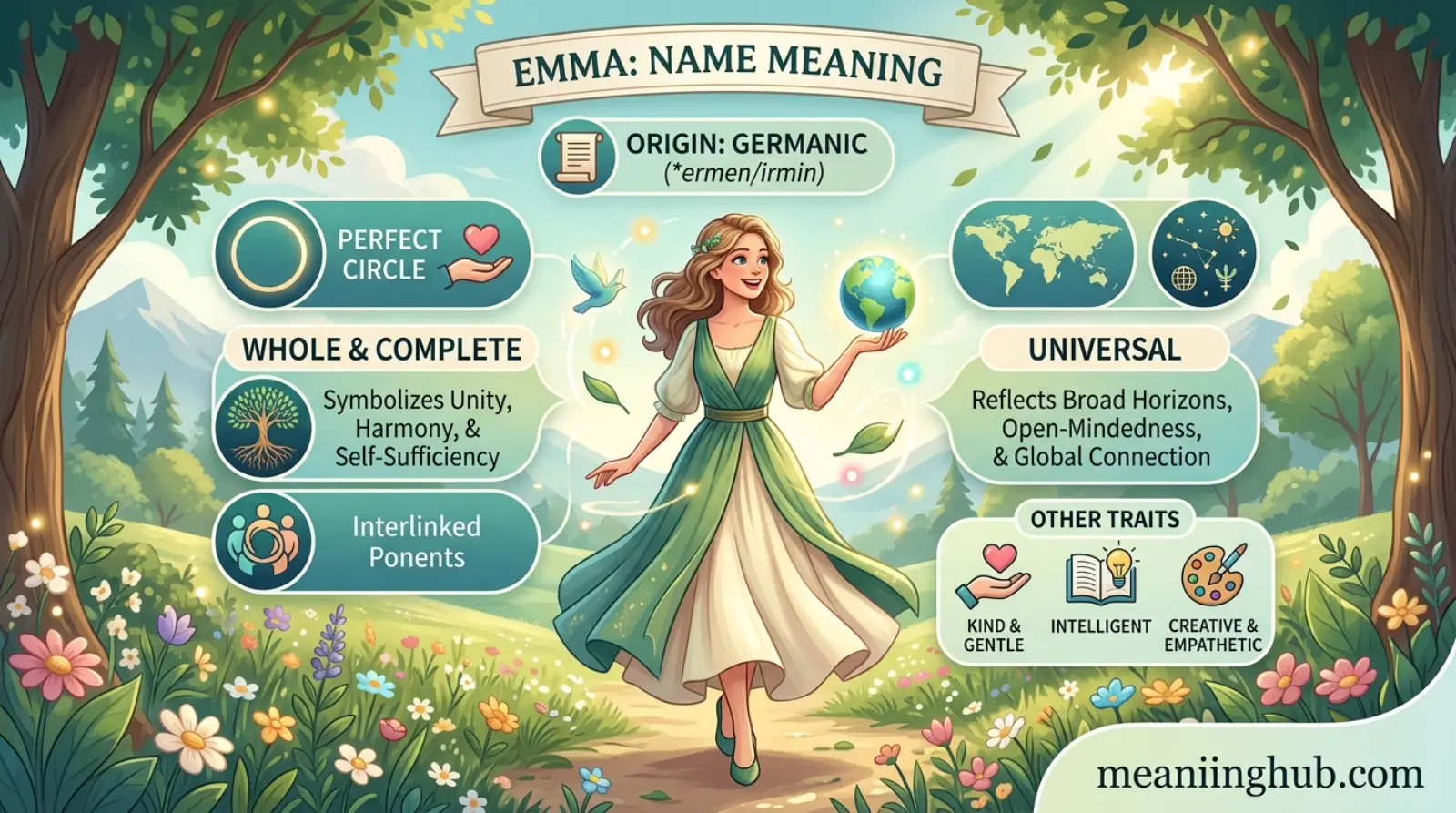
Emma means “whole,” “universal,” or “complete.” The name comes from ancient Germanic roots and has long been associated with strength, intelligence, and timeless beauty.
What Does Emma Name Mean?
The Emma name meaning comes from the Germanic word ermen or irmin, which means:
- Whole
- Universal
- Complete
- Entire
Because of this meaning, Emma is often associated with someone who is well-rounded, balanced, and capable. The name symbolizes completeness and strength, making it a meaningful choice for parents.
Many people view Emma as a name that represents confidence, kindness, and leadership.
Emma Name Origin
Emma has a long and fascinating history.
The name originated from ancient Germanic languages and was commonly used among European royalty during the Middle Ages. Over time, it spread throughout England, France, and many other countries.
One of the most famous historical figures bearing the name was Emma of Normandy, a queen who played an important role in English history during the 11th century.
Today, Emma is recognized internationally and remains popular in:
- United States
- United Kingdom
- Canada
- Australia
- Ireland
- New Zealand
- Scandinavian countries
Emma Name Meaning in Different Cultures
Although Emma has Germanic origins, many cultures have embraced the name.
English Usage
In English-speaking countries, Emma is associated with elegance, intelligence, and friendliness.
French Usage
French speakers often view Emma as a stylish and sophisticated name.
German Usage
In Germany, Emma retains its historical connection to the meaning “universal” and “whole.”
Scandinavian Usage
Scandinavian countries have long appreciated Emma for its simplicity and timeless charm.
Emma Name Meaning in the Bible
A common question is whether Emma appears in the Bible.
The name Emma is not directly mentioned in the Bible. However, many Christian families choose the name because of its positive qualities and long-standing use throughout Christian history.
Although not a biblical name, Emma is often associated with virtues such as:
- Kindness
- Compassion
- Faithfulness
- Wisdom
Emma Name Personality Traits
While a person’s character is shaped by many factors, names are often linked to certain personality traits.
People named Emma are frequently described as:
1. Friendly
Emma is often associated with warm and approachable personalities.
2. Intelligent
The name carries a reputation for wisdom and strong decision-making abilities.
3. Creative
Many people connect Emma with imagination and artistic talent.
4. Confident
The meaning “whole” and “complete” reflects self-assurance and independence.
5. Caring
Emma is commonly linked to empathy and compassion toward others.
Emma Name Meaning in Numerology
The number 5 symbolizes:
- Freedom
- Adventure
- Curiosity
- Adaptability
- Communication
People connected with this number are often energetic, social, and eager to explore new opportunities.
Famous People Named Emma
Emma Watson
Known worldwide for her acting career and advocacy work.
Emma Stone
An award-winning actress recognized for her versatility and talent.
Emma Thompson
A respected actress, screenwriter, and author.
These well-known figures have helped keep the name Emma modern and appealing.
Emma in Literature and Popular Culture
Emma has an important place in literature.
One of the most famous examples is the novel “Emma” by Jane Austen, published in 1815.
The book follows Emma Woodhouse, a clever and confident young woman whose matchmaking efforts create both humor and life lessons.
The novel remains popular today and has inspired numerous films and adaptations.
Why Is Emma So Popular?
Emma has remained one of the world’s favorite girl names for several reasons.
Simple Pronunciation
The name is easy to say in many languages.
Timeless Appeal
Emma feels classic without sounding old-fashioned.
Positive Meaning
Its meaning of “whole” and “universal” carries a strong and uplifting message.
Global Recognition
People around the world recognize and appreciate the name.
Literary Influence
Famous books, movies, and public figures continue to boost its popularity.
Emma Name Popularity Over Time
The popularity of Emma has experienced several waves throughout history.
| Time Period | Popularity Trend |
|---|---|
| Middle Ages | Common among royalty |
| 1800s | Popular in Europe |
| Early 1900s | Moderate usage |
| Late 1900s | Rapid growth |
| 2000s–Present | One of the top baby names worldwide |
The name consistently ranks among the most popular girls’ names in many English-speaking countries.
Nicknames for Emma
Parents and friends often use affectionate nicknames for Emma.
Popular options include:
- Em
- Emmy
- Emmie
- Ems
- Mimi
- Emsie
These nicknames add a playful and personal touch to the name.
Names Similar to Emma
If you like Emma, you may also enjoy names with a similar style and feel.
| Name | Meaning |
|---|---|
| Ella | Fairy maiden |
| Emily | Rival or industrious |
| Ava | Life or bird |
| Olivia | Olive tree |
| Mia | Mine or beloved |
| Grace | Elegance and goodness |
| Amelia | Hardworking |
| Sophia | Wisdom |
These names share Emma’s timeless elegance and broad appeal.
Advantages of Choosing the Name Emma
Many parents select Emma because it offers several benefits.
Easy to Spell
Emma is straightforward and rarely misspelled.
International Appeal
The name works well across many cultures.
Positive Associations
It carries meanings related to completeness and strength.
Classic Yet Modern
Emma feels both traditional and contemporary.
Strong Reputation
Potential Considerations
Very Popular
Because of its popularity, many children may share the name.
Limited Variations
Compared to longer names, Emma offers fewer formal variations.
Emma Name Meaning for Parents
When choosing a baby name, meaning often matters as much as sound.
Emma provides a combination of:
- Beautiful pronunciation
- Rich history
- Positive symbolism
- Global recognition
- Lasting popularity
Its meaning of “whole” and “complete” makes it a meaningful choice that can grow gracefully from childhood into adulthood.
Frequently Asked Questions
What is the Emma name meaning?
Emma means “whole,” “universal,” or “complete.” It comes from ancient Germanic roots.
Is Emma a biblical name?
Emma is not directly mentioned in the Bible, but it is widely used by Christian families because of its positive associations.
What is the origin of the name Emma?
Emma originates from Germanic languages and derives from the word ermen, meaning whole or universal.
Is Emma a popular baby name?
Yes. Emma has consistently ranked among the most popular baby girl names in many countries.
What personality traits are associated with Emma?
Emma is often linked to intelligence, kindness, confidence, creativity, and friendliness.
What are common nicknames for Emma?
Popular nicknames include Em, Emmy, Emmie, Ems, and Mimi.
Conclusion
The Emma name meaning reflects ideas of wholeness, universality, and completeness. With its Germanic origins, royal history, literary connections, and worldwide popularity, Emma has become one of the most beloved girl names of all time.
Its simple beauty, positive symbolism, and timeless appeal make it a wonderful choice for parents and an interesting name to explore. Whether you love Emma for its meaning, sound, or history, it remains a classic name that continues to shine across generations.

Alexander Ford is a passionate writer who specializes in modern text slang, internet culture, and digital communication trends. He is known for his simple, engaging, and reader-friendly writing style that makes online language easy to understand. With a love for research and creativity, Alexander enjoys helping readers stay updated with the latest social media expressions and texting terms.