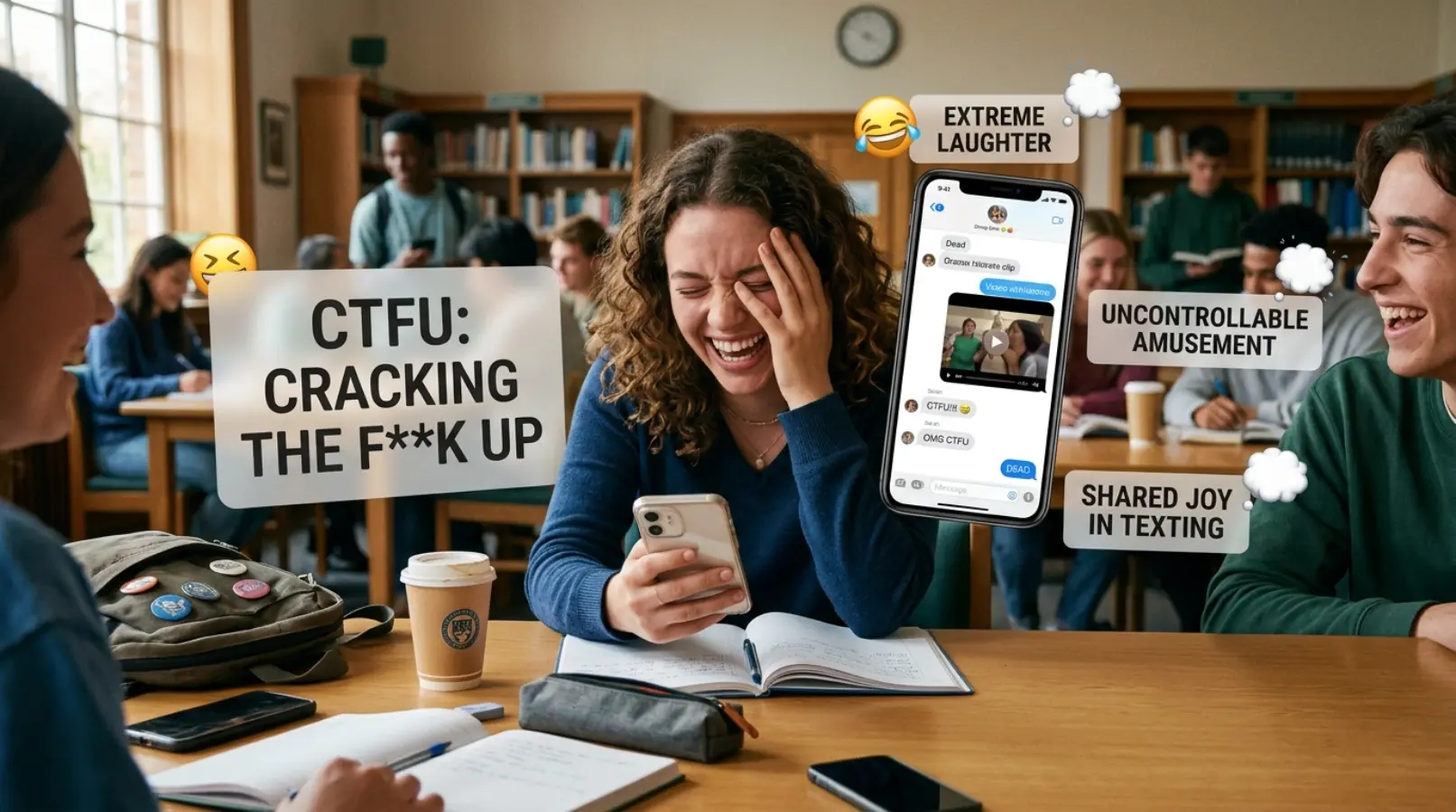
CTFU meaning in text is a common search query because internet slang changes quickly, and many people come across unfamiliar abbreviations while texting, scrolling social media, or chatting online. If you’ve recently received a message containing “CTFU” and wondered what it means, you’re not alone.
Online conversations are filled with acronyms that make communication faster and more expressive. Some slang terms are harmless and funny, while others can be a bit stronger in tone. Understanding the meaning behind these abbreviations helps you communicate better and avoid misunderstandings.
Quick Answer:
CTFU stands for “Cracking The F* Up.”** It is used to show that someone finds something extremely funny and is laughing very hard.
What Does CTFU Mean in Text?
CTFU is a slang acronym used in texting, social media posts, online chats, and gaming conversations. It expresses intense laughter or amusement.
When someone says “CTFU,” they are usually reacting to something hilarious. It is similar to saying:
- “I’m laughing so hard.”
- “That’s extremely funny.”
- “I can’t stop laughing.”
The phrase is often used as an exaggerated reaction to jokes, memes, funny videos, or humorous comments.
Example
Friend: Did you see the video of the dog stealing pizza?
You: CTFU! That was the funniest thing I’ve seen all day.
CTFU Full Form
The CTFU full form is:
Cracking The F* Up**
The phrase is derived from the expression “cracking up,” which means laughing uncontrollably.
Adding the profanity intensifies the expression and shows a stronger emotional reaction.
What Does CTFU Stand For?
If you’re asking “what does CTFU stand for?”, the answer is:
CTFU = Cracking The F* Up**
It indicates that someone is laughing extremely hard or finds something incredibly funny.
Is CTFU Rude, Offensive, or Neutral?
CTFU falls into a gray area.
| Context | Appropriate? |
|---|---|
| Close friends | Yes |
| Casual texting | Usually |
| Social media comments | Often |
| Workplace communication | No |
| Professional emails | No |
| School assignments | No |
Because the full phrase contains profanity, some people may consider it offensive or inappropriate in formal settings.
Tone Analysis
- Funny: Yes
- Casual: Yes
- Informal: Yes
- Professional: No
- Family-friendly: Not always
Always consider your audience before using it.
Where Is CTFU Commonly Used?
CTFU is popular across many online platforms.
Text Messages
Friends often use it when sharing jokes or funny stories.
Social Media
You’ll frequently see it in comments on:
- Memes
- Viral videos
- Funny tweets
- Comedy content
Gaming Chats
Gamers use CTFU when something unexpected or hilarious happens during gameplay.
Group Chats
Group conversations often include slang like CTFU because it quickly communicates laughter.
Real-Life Examples of CTFU Usage
Here are some examples of how people use CTFU in everyday digital conversations.
Friendly Example
Sarah: Look at this cat wearing sunglasses.
Mike: CTFU! That’s amazing.
Casual Example
Friend: I accidentally sent my boss a meme instead of a report.
You: CTFU, please tell me you’re joking.
Social Media Example
“This video got me CTFU at 2 a.m.”
Gaming Example
“Did you see him walk straight into the trap? CTFU.”
Reaction Example
“CTFU, I wasn’t expecting that ending.”
Origin and Background of CTFU
Like many internet abbreviations, CTFU emerged from online communities and text messaging culture.
As texting became more popular, users began shortening common expressions to save time and characters. Similar abbreviations such as LOL and LMAO gained widespread adoption, and CTFU followed as a stronger expression of laughter.
The slang became particularly popular on:
- Twitter/X
- Gaming forums
- Online message boards
Its popularity increased because it effectively communicates a stronger reaction than traditional laughter acronyms.
Why People Use CTFU
People use CTFU for several reasons.
It Saves Time
Typing four letters is faster than writing an entire sentence explaining how funny something is.
It Shows Strong Emotion
CTFU communicates more intense laughter than simply saying “haha.”
It Fits Internet Culture
Online communication favors short, expressive abbreviations.
It Adds Personality
Slang helps users sound more relaxed and relatable in casual conversations.
CTFU vs Similar Slang Terms
Many slang terms express laughter, but they vary in intensity.
| Slang | Meaning | Intensity |
|---|---|---|
| LOL | Laughing Out Loud | Low |
| LMAO | Laughing My Ass Off | Medium |
| ROFL | Rolling On the Floor Laughing | High |
| LMFAO | Laughing My F***ing Ass Off | Very High |
| CTFU | Cracking The F*** Up | Very High |
CTFU is generally considered one of the stronger laughter expressions because it suggests uncontrollable amusement.
CTFU Meaning Slang Compared to LOL
Many people wonder whether CTFU and LOL mean the same thing.
The answer is no.
LOL
- Mild laughter
- Commonly used
- Family-friendly
- Less emotional
CTFU
- Strong laughter
- Contains profanity
- More expressive
- Informal only
Someone saying “LOL” may simply find something amusing, while “CTFU” suggests they find it extremely funny.
When Should You Avoid Using CTFU?
There are situations where using CTFU may not be appropriate.
Professional Settings
Avoid using it in:
- Business emails
- Work chats
- Client communication
- Professional networking
Formal Education
Teachers and professors may view it as unprofessional.
Older Audiences
Some people may not understand the acronym or may dislike the profanity behind it.
Serious Conversations
Using laughter slang during serious discussions can appear insensitive.
Polite Alternatives to CTFU
If you want to express laughter without profanity, consider these alternatives.
| Alternative | Meaning |
|---|---|
| LOL | Laughing Out Loud |
| Haha | Standard laughter |
| That’s hilarious | Direct and polite |
| I’m dying laughing | Strong but cleaner |
| ROFL | Rolling On the Floor Laughing |
| Too funny | Casual and friendly |
These options work better in mixed audiences or professional environments.
Impact of Using Slang in Communication
Slang plays an important role in modern communication.
Positive Effects
- Makes conversations faster
- Creates a friendly atmosphere
- Helps express emotions clearly
- Builds social connections
Potential Drawbacks
- Can confuse people unfamiliar with slang
- May appear unprofessional
- Some terms may offend certain audiences
The key is using slang appropriately based on the situation.
Is CTFU Safe for Social Media?
Generally, yes.
CTFU is widely used on social media platforms and is unlikely to cause issues in casual conversations.
However, remember:
- Some users may find the implied profanity offensive.
- Professional accounts should avoid it.
- Public posts may reach audiences with different expectations.
Before posting, consider who will see your content.
Examples of CTFU in Different Contexts
Friendly Tone
“CTFU, that joke made my day.”
Casual Tone
“I’m still CTFU over what happened yesterday.”
Argumentative Tone
“You really thought that excuse would work? CTFU.”
Gaming Context
“CTFU, our whole team fell into the same trap.”
Social Media Context
“That meme has me CTFU every time I see it.”
Family Group Chat
You may want to avoid CTFU and use “LOL” instead, depending on the audience.
Frequently Asked Questions
What does CTFU mean in text?
CTFU means “Cracking The F* Up.”** It is used to express intense laughter.
Is CTFU the same as LOL?
No. LOL indicates mild laughter, while CTFU suggests much stronger amusement.
Is CTFU a bad word?
The acronym itself is not a swear word, but its full form contains profanity.
Can I use CTFU at work?
It’s generally not recommended because it is considered informal and potentially offensive.
Is CTFU popular on social media?
Yes. It is commonly used on social media platforms, messaging apps, and gaming communities.
What is a cleaner alternative to CTFU?
LOL, ROFL, “That’s hilarious,” and “I’m laughing so hard” are popular alternatives.
Conclusion
Understanding the CTFU meaning in text helps you interpret online conversations more accurately. The acronym stands for “Cracking The F* Up”** and is used to express intense laughter or amusement. It is a highly informal slang term commonly found in text messages, social media posts, gaming chats, and casual online discussions.
While CTFU is popular and effective for showing strong reactions, it should be used carefully because its full form includes profanity. Consider your audience, the platform, and the situation before using it. In casual conversations with friends, it can be perfectly acceptable, but professional and formal settings usually call for cleaner alternatives. By understanding its meaning, tone, and context, you can use CTFU appropriately and communicate more effectively online.

Alexander Ford is a passionate writer who specializes in modern text slang, internet culture, and digital communication trends. He is known for his simple, engaging, and reader-friendly writing style that makes online language easy to understand. With a love for research and creativity, Alexander enjoys helping readers stay updated with the latest social media expressions and texting terms.