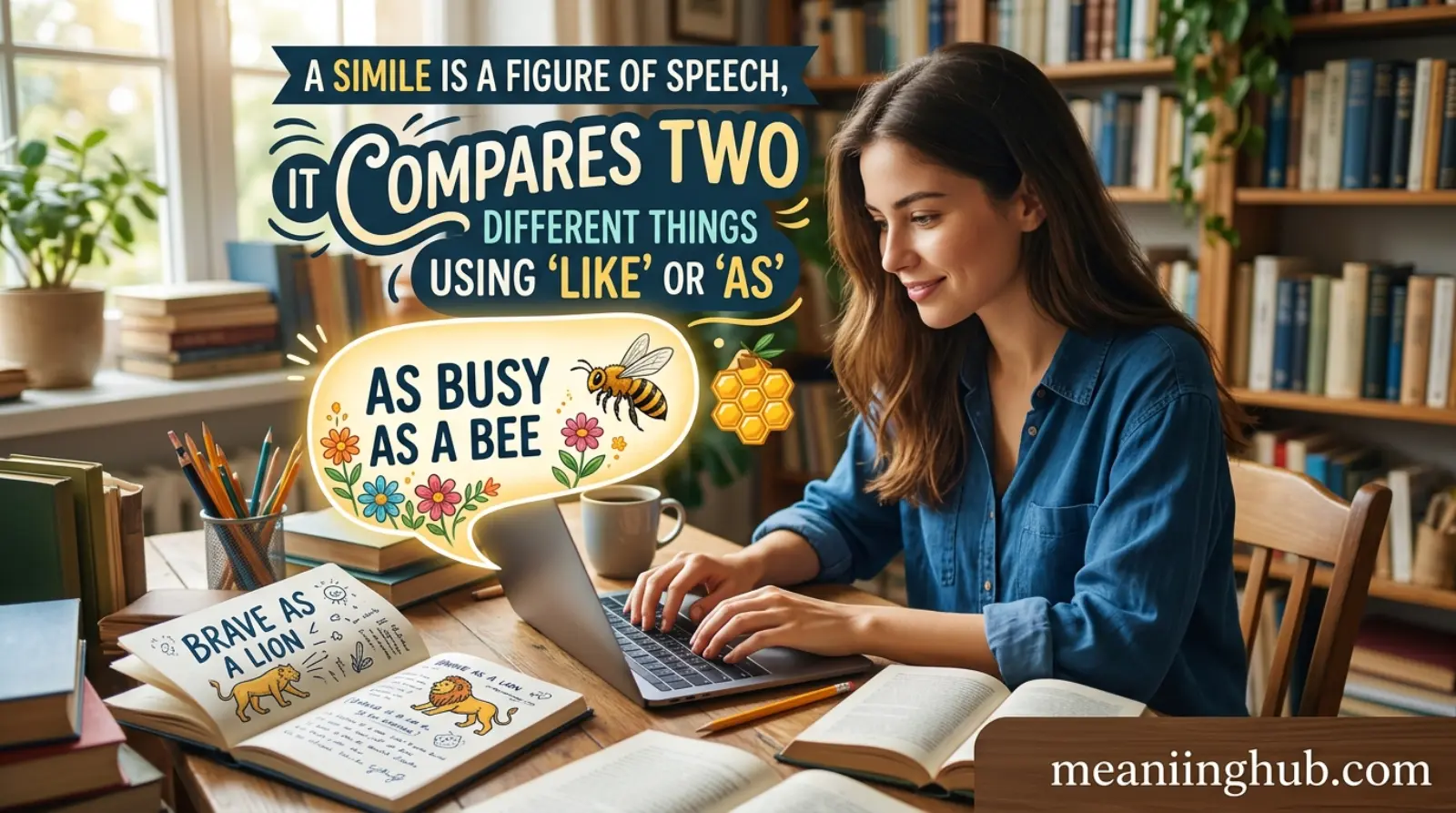
Simile meaning is a common topic people search for when they come across phrases like “as brave as a lion” or “runs like the wind.” These expressions appear in books, poems, conversations, social media posts, and even everyday speech. Understanding similes can help you improve your reading, writing, and communication skills.
A simile is one of the most popular figures of speech in the English language. It makes descriptions more vivid and interesting by comparing two different things. Whether you’re a student, writer, or simply curious about language, learning about similes can help you express ideas more creatively.
Quick Answer:
A simile is a figure of speech that compares two different things using the words “like” or “as.” It helps create clearer and more imaginative descriptions.
What Does Simile Mean?
A simile is a literary device that compares one thing to another using the words like or as.
The purpose of a simile is to help readers or listeners understand something by relating it to something familiar.
Examples of Similes
- As busy as a bee
- As cold as ice
- Runs like the wind
- Sleeps like a baby
- Shines like a star
In each example, one thing is compared to another to create a stronger image in the reader’s mind.
Simile Definition
The formal definition of a simile is:
A figure of speech that directly compares two unlike things using the words “like” or “as.”
Unlike a metaphor, which states that something is another thing, a simile only suggests a similarity between them.
Simile Meaning in Simple Words
A simile is simply a comparison.
For example:
- “She is as gentle as a lamb.”
- “The water was as clear as crystal.”
These comparisons make descriptions more colorful and easier to imagine.
Simile Full Form
Many people search for simile full form, but simile is not an acronym and does not have a full form.
It is an English literary term derived from the Latin word similis, which means similar or like.
What Does Simile Stand For?
Since simile is not an abbreviation, it does not stand for anything.
Instead, it refers to a specific writing technique used to compare two things in a descriptive way.
Is Simile Positive, Negative, or Neutral?
A simile can be positive, negative, or neutral depending on how it is used.
Positive Similes
- As bright as the sun
- As kind as an angel
- Strong like a bull
Negative Similes
- As stubborn as a mule
- As slow as a snail
- Like a storm waiting to happen
Neutral Similes
- As tall as a tree
- Like a rolling stone
- As quiet as the night
The tone depends entirely on the comparison being made.
Where Is Simile Commonly Used?
Similes appear in many forms of communication.
Literature
Authors use similes to create vivid imagery.
Example:
“Her smile was like sunshine.”
Poetry
Poets often use similes to add emotion and beauty.
Example:
“My love is like a red, red rose.”
Everyday Conversations
People naturally use similes in speech.
Examples:
- “I’m as hungry as a wolf.”
- “He’s as fast as lightning.”
Social Media
Many captions and posts contain similes.
Examples:
- “Feeling like a queen today.”
- “Busy as a bee this week.”
Advertising
Brands use similes to make products memorable.
Example:
- “Soft as a cloud.”
Origin and Background of Simile
The word simile comes from the Latin word similis, meaning “similar.”
Similes have been used for thousands of years in storytelling, poetry, and speeches. Ancient Greek and Roman writers frequently used similes to make their stories more engaging.
Some of the world’s most famous literary works contain similes because they help readers visualize scenes and emotions more clearly.
Over time, similes became a fundamental part of English grammar and creative writing.
Why People Use Similes
People use similes because they make communication more effective.
Benefits of Using Similes
- Create vivid mental images
- Make writing more engaging
- Help explain complex ideas
- Add emotion and personality
- Improve storytelling
For example, saying:
“The classroom was noisy.”
is clear, but saying:
“The classroom was as noisy as a marketplace.”
creates a stronger image.
Types of Similes
Simple Similes
Short and direct comparisons.
Examples:
- Cold as ice
- Bright as gold
- Fast like lightning
Extended Similes
Longer comparisons that provide more detail.
Example:
“He moved through the crowd like a ship sailing through rough waters.”
Humorous Similes
Used to create humor.
Examples:
- As useful as a chocolate teapot
- As confused as a penguin in the desert
Real-Life Examples of Simile Usage
Here are common similes used in daily life:
| Simile | Meaning |
|---|---|
| As brave as a lion | Very courageous |
| As busy as a bee | Very hardworking |
| As light as a feather | Extremely light |
| As quiet as a mouse | Very silent |
| As cool as a cucumber | Calm and relaxed |
| As blind as a bat | Unable to see well |
| As strong as an ox | Very strong |
| Like a fish out of water | Feeling uncomfortable |
Simile vs Metaphor
People often confuse similes and metaphors because both compare things.
| Feature | Simile | Metaphor |
|---|---|---|
| Uses “like” or “as” | Yes | No |
| Direct comparison | Yes | No |
| Example | “He is as brave as a lion” | “He is a lion” |
| Purpose | Show similarity | Create symbolic meaning |
Example
Simile:
“Her voice is like music.”
Metaphor:
“Her voice is music.”
The simile compares, while the metaphor equates.
Comparison With Similar Literary Devices
| Literary Device | Description | Example |
|---|---|---|
| Simile | Comparison using like or as | As cold as ice |
| Metaphor | Direct comparison | Time is money |
| Personification | Giving human traits to objects | The wind whispered |
| Hyperbole | Extreme exaggeration | I’ve told you a million times |
| Idiom | Phrase with non-literal meaning | Break a leg |
Understanding these differences helps improve reading comprehension and writing skills.
Impact of Similes in Communication
Similes make communication more memorable.
In Writing
They help readers visualize scenes.
Example:
“The lake was as smooth as glass.”
In Speaking
They make conversations more expressive.
Example:
“I feel like a million dollars.”
In Education
Teachers use similes to explain concepts in a simple way.
In Marketing
Businesses use similes to make slogans stand out.
Example:
“Fresh as morning dew.”
Is It Safe to Use Similes on Social Media?
Yes, similes are completely safe to use on social media.
They can make posts more creative and engaging.
Examples:
- “Happy as a kid in a candy store.”
- “Shining like a star tonight.”
- “Busy as a bee but loving every minute.”
Using similes can help your content feel more expressive and relatable.
When to Avoid Using Similes
Although similes are useful, they should not be overused.
Avoid them when:
- Writing highly technical documents
- Giving precise scientific explanations
- Creating formal legal content
- Repeating the same similes too often
Too many similes can make writing feel exaggerated or repetitive.
Examples of Similes in Different Contexts
Friendly Tone
“You’re as dependable as a best friend.”
Casual Conversation
“I’m as tired as a dog after work.”
Argumentative Context
“Your excuse is as weak as paper.”
Gaming Context
“He moves like lightning in that game.”
Social Media Context
“Today’s weather is as perfect as a postcard.”
Academic Writing
“The cells spread like branches of a tree.”
Common Simile Examples Everyone Knows
- As cool as a cucumber
- As blind as a bat
- As clear as day
- As light as a feather
- As busy as a bee
- As happy as a clam
- As gentle as a lamb
- As quick as a flash
- As free as a bird
- Like a dream
FAQs
What is the simple meaning of simile?
A simile is a comparison between two different things using the words like or as.
What does simile stand for?
Simile does not stand for anything. It is a literary term, not an abbreviation.
What is an example of a simile?
“As brave as a lion” is a common simile.
What is the difference between a simile and a metaphor?
A simile uses like or as, while a metaphor directly states that one thing is another.
Why are similes important?
They make writing and speech more vivid, creative, and easier to understand.
Can similes be used in everyday conversation?
Yes. Many people use similes naturally in daily speech without even realizing it.
Conclusion
Understanding simile meaning can greatly improve your communication and writing skills. A simile is a figure of speech that compares two different things using the words like or as, helping create stronger imagery and clearer descriptions.
If you encounter similes in books, poetry, conversations, advertisements, or social media, they play an important role in making language more expressive and engaging. By learning what a simile is, how it works, and when to use it, you can better appreciate creative language and communicate your ideas more effectively. Similes may be simple, but they remain one of the most powerful tools for bringing words to life.

Alexander Ford is a passionate writer who specializes in modern text slang, internet culture, and digital communication trends. He is known for his simple, engaging, and reader-friendly writing style that makes online language easy to understand. With a love for research and creativity, Alexander enjoys helping readers stay updated with the latest social media expressions and texting terms.